My Pest Pros provides effective termite treatments in Washington, D.C., for both homes and businesses. While termites don't pose a direct threat to your health, they are dangerous pests that can cause irreparable damage to your property, eating and tunneling through the foundation and framework of your building in just weeks. If you are looking for a professional termite exterminator in Washington, D.C., contact us today.
Treatment methods will differ depending on the type of termite infestation. Our home termite inspection in Washington, D.C. thoroughly inspects your building and quickly works to get rid of them. At My Pest Pros, we help identify, prevent, and treat various termite species, including:
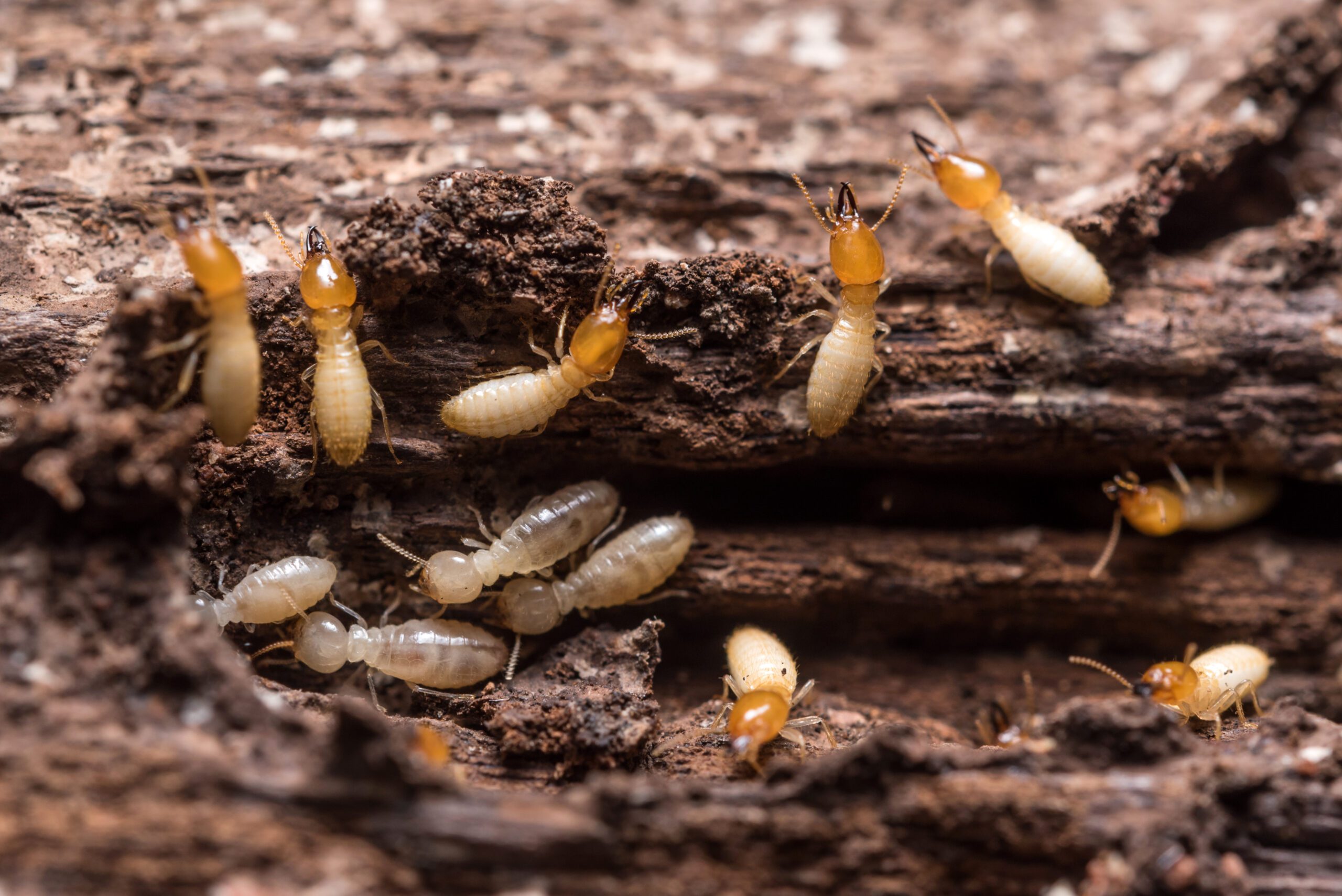
Subterranean Termites: subterranean, meaning they live in the ground, are the most common species in the DC Metro area. Their workers are cream-colored and about 1/8 inch long, accompanied by orange soldiers with large jaws, measuring around 1/4 inch. They thrive in soil, building mud tubes to access cellulose-rich food sources, primarily softwoods like pine and cedar. Subterranean termites are known for their large colonies, consisting of up to 365,000 individuals.
Drywood termites: Drywood termites range from light yellow to black, with wings that appear clear or smoky gray. Their workers are up to 3/8 inch long and soft-bodied, while soldiers possess enlarged brown heads. Unlike subterranean termites, drywood termites typically infest furniture and dry wood, displaying their unique life cycle behaviors.
Dampwood termites: These pests prefer damp, decaying wood and are often found in logs or dead trees. Dampwood termites require an open water source and are less likely to invade homes and businesses.
Signs of a Termite Infestation
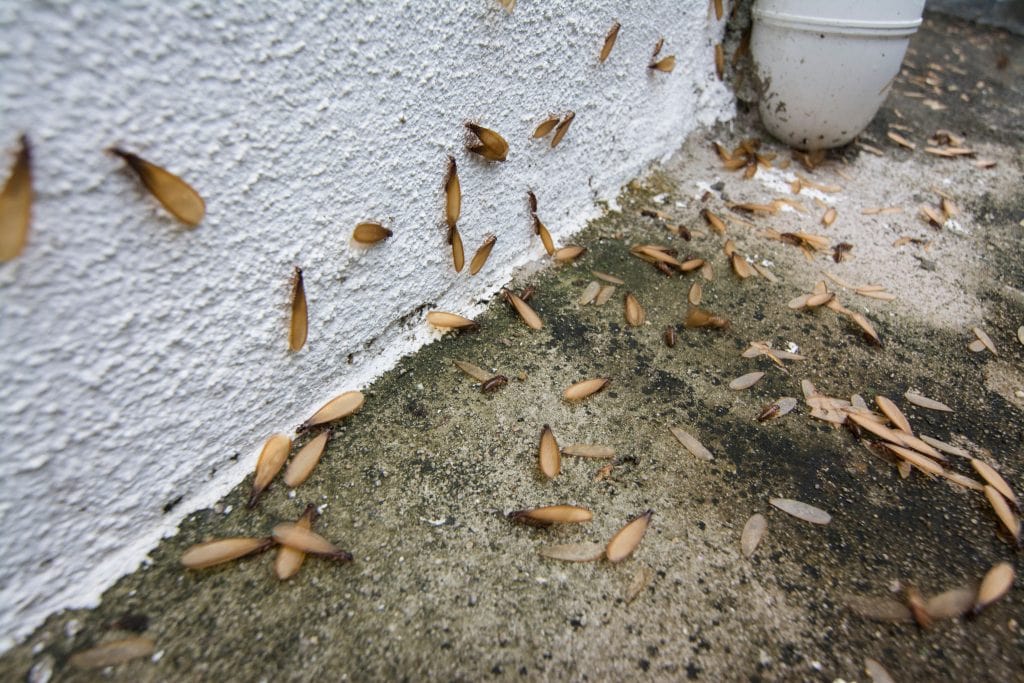
The sight of winged termites in or around your home is one of the earliest signs that your property may be at risk of wood destroying insect damage. Recognizing the signs of a termite infestation early on is important to prevent irreparable damage. Below are common indicators that you may need to hire a professional termite exterminator in Washington, D.C.:
Swarm Behavior and Discarded Wings: Finding discarded wings near windows or doors may indicate serious infestation. Termite swarmers shed their wings after mating, typically in the spring, and often near light sources.
Mud Tube Identification: Narrow, muddy tubes around your home's foundation, crawlspaces, or basements serve as hidden pathways for subterranean termites, connecting them to moisture sources and food.
Structural Damage: Hollow or softwood can indicate that termites are eating the wood from the inside out. Blistered or sagging surfaces can also suggest termite damage in your structure.
Frass: Tiny wood pellet droppings found near infested areas.
Bubbling or Peeling Paint: Uneven, bubbled paint or sagging floors can indicate moisture damage from termites, especially in areas where termites are active.
Common Sources of Termite Infestations
Understanding where termites come from and what attracts them to your space can help prevent infestations and minimize damage. Some common sources of termite infestations in Washington, D.C. include the following:
Moisture: Most termites thrive in regions with excessive moisture, including areas with leaky pipes, improper drainage, poor airflow, and water-damaged wood.
Wood: Each termite species has specific preferences regarding wood but all termites have a cellulose-based diet. This makes any wooden materials in and around your property more susceptible to termite infestations. Termites can also eat and tunnel through the foundation, compromising the building’s structure.
Soil: As their name suggests, subterranean termites live in soil and typically enter buildings through wood-to-ground contact. They travel in mud tubes that connect them to moisture and food sources.
Cracks in Buildings: Gaps or cracks in a property’s foundation and around windows and doors provide easy access for termites to enter your home or business.
Tips for Preventing Termites in Your Home
Get rid of moisture around the foundation and crawlspaces of your home or business.
Prevent wood from touching the building.
Add additional drainage to ensure no standing water is near your property.
Seal up any cracks in windows and doorframes.
Schedule regular termite inspections.
Use termite-resistant wood.
Maintain the landscape around your building.
Professional Termite Inspections in Washington, D.C.
If homemade solutions haven't solved your problem, it's time to consider professional termite treatment. With over ten years of experience in this industry, we know what it takes when it comes to termite control, prevention, and protection. Remove termites and ensure they stay away with our certified termite treatments in Washington, D.C.
Termites are most active during the warmer months, such as spring and summer, especially after a rainy day. While they can survive year-round in some environments, swarming season typically occurs when temperatures rise.
Termites can enter your home through gaps or cracks in the foundation and around windows and doors. They often create tunnels through wood that is in contact with the ground. Subterranean termites are common in the Washington, D.C. area and travel via mud tubes to find moisture and food sources. To protect your property, it’s essential to check for signs of termite damage or schedule a professional termite inspection.
While there are natural home termite treatments, like using neem oil or cayenne pepper, these solutions are unlikely to fully eradicate these pests. For complete control, our comprehensive approach includes thorough inspections, targeted treatments, and ongoing monitoring to ensure your home remains termite-free.
During a termite inspection, expect a thorough evaluation of both the interior and exterior of your home or business. Inspectors will examine walls and the foundation for mud tubes and damaged wood, crawl spaces and basements for moisture and termite activity, and any wooden structures outside. They will also assess cracks and joints for potential termite entry points. Experts will use flashlights, moisture meters, and probes to uncover hidden signs of a termite infestation. At the end, you will receive a detailed report outlining the findings, conditions conducive to infestations, and any treatment recommendations.
Antoyne was friendly, explained every step and was incredibly efficient. Couldn’t recommend him enough!
read moreread less
Aaron Trejo
Antoynne has done excellent work in his inspection being thorough and giving insight to help us as well. As well he was very friendly and overall amazing to have.
read moreread less
Alexa Rehmat
John is the best!!! He was very thorough.
read moreread less
Kenneth Alcain
Corad Williams did our service and provided insight and showed attention to detail for prepping our new house to move into.
read moreread less
Allison Shanley
John was awesome. Listened to all of our concerns and corrected other pest control companies oversights. Reassured us that we were taking control of our home. He’s the 🐐
read moreread less
Violet Dancheck
Corad was wonderful - thorough, friendly, and professional. He explored each level of the house in detail looking for pests. He was able to treat areas inside with pet friendly solutions right away. On the outside he implemented some other treatments that are less pet friendly but he checked with me to make sure where my cat goes and doesn’t first. He took lots of photos for his report and even showed me how the treatment outside was already helping to attract the ants. In addition, he explained how the treatment worked and how I might see an increase in activity at first but after 7-10 days it should be in full effect and I shouldn’t see them anymore. Though he was not able to get onto the roof, he made recommendations for getting g that checked and things like cutting back beaches close to the house to limit squirrels from direct access to the roof. Overall, excellent customer service!
If you have a pest-control question, we answer and respond around the clock. We don’t rush treatments; we get them right! We treat our customers like family; because to us, you are. So whenever you have a pest problem, you can rely on the team at My Pest Pros to take care of it.
Our Satisfaction Guarantee
Our promise to you is simple: You will be 100% satisfied with our pest control programs. Guaranteed.*
To provide the best experiences, we use technologies like cookies to store and/or access device information. Consenting to these technologies will allow us to process data such as browsing behavior or unique IDs on this site. Not consenting or withdrawing consent, may adversely affect certain features and functions.
Functional
Always active
The technical storage or access is strictly necessary for the legitimate purpose of enabling the use of a specific service explicitly requested by the subscriber or user, or for the sole purpose of carrying out the transmission of a communication over an electronic communications network.
Preferences
The technical storage or access is necessary for the legitimate purpose of storing preferences that are not requested by the subscriber or user.
Statistics
The technical storage or access that is used exclusively for statistical purposes.The technical storage or access that is used exclusively for anonymous statistical purposes. Without a subpoena, voluntary compliance on the part of your Internet Service Provider, or additional records from a third party, information stored or retrieved for this purpose alone cannot usually be used to identify you.
Marketing
The technical storage or access is required to create user profiles to send advertising, or to track the user on a website or across several websites for similar marketing purposes.