Ticks Control Service in Virginia, Maryland and Washington D.C.
Ticks are notorious pests that cling to animals and humans and suck their blood. Ticks are a leading Lyme disease transmitter and can be incredibly difficult to eliminate. Their tiny bodies are covered by a hard exoskeleton that makes them hard to kill. Similarly, once they make their way inside your home, they are fast breeders and can quickly infest your space.
Whether you’re dealing with an infestation in or out of your home, My Pest Pros is there. We understand the sense of fear and uncertainty that can accompany discovering a tick on you. That is why we trump other tick control companies in Maryland, Washington, D.C., and Virginia.
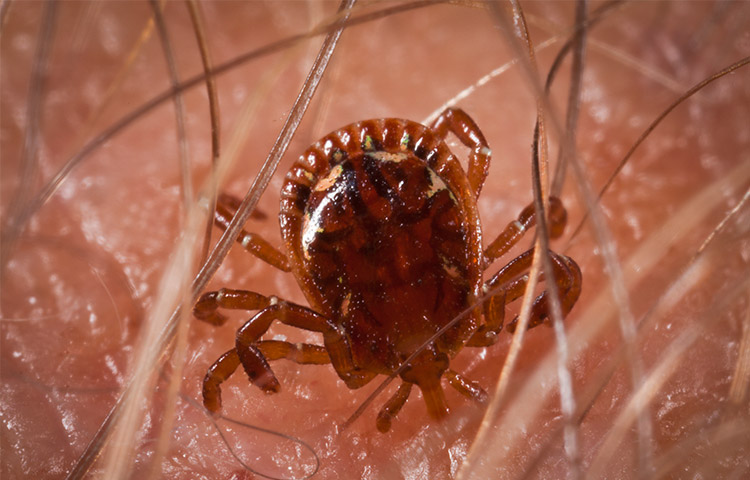
Ticks are tiny blood-sucking pests that attach to humans and animals searching for blood. Ticks typically have eight legs, a small head, and round/flat bodies. The most common type of tick yard treatment in Virginia, D.C. Metro area, and Maryland tackles the black-legged tick (also known as the deer tick).
Depending on the gender, deer ticks are either dark black with a light brown ring on the edge of their body or a dark red/brown color with a dark black spot behind the head.
Typically ticks are accidental intruders in your home. They are usually found in areas with tall grass, shrubs, or trees. As humans or animals walk through these areas, ticks brush up against them and hitch a ride.
Once they are on you or the animal, they will try to find a warm/moist area of the body to attach themselves. Many people do not notice them at first and only see them once the site becomes itchy from the bite. They are most active in the warmer months.
Blacklegged ticks, commonly known as deer ticks, are one of the most concerning tick species in our area because they are the primary carriers of Lyme disease, along with anaplasmosis and babesiosis. They are small and reddish-brown with dark legs, typically found in wooded areas, leaf litter, and shaded yards.
American Dog Tick
The American dog tick, sometimes called a wood tick, is larger than a deer tick and has a brown body with grayish-white markings on its back. They are commonly found in tall grass, open fields, and along trails or lawn edges. This species can transmit Rocky Mountain spotted fever and tularemia.
Lone Star Tick
Lone star ticks are reddish-brown and medium-sized, with adult females easily identified by the single white dot on their back. Males have scattered white markings instead of a single spot. They are common in wooded and brushy areas and are known to transmit ehrlichiosis.
Brown Dog Tick
Brown dog ticks are small to medium-sized and solid reddish-brown in color. Unlike many other tick species, they can live and reproduce indoors, often infesting homes and kennels. They primarily feed on dogs and can transmit diseases such as Rocky Mountain spotted fever.
Our Tick Extermination Process
Inspect
We begin with a thorough inspection to identify the type of pest, locate entry points or nesting sites, and determine the extent of the infestation.
Eliminate
We apply targeted treatments inside and outside your property to efficiently eliminate pests at the source and prevent new ones from getting in.
While Ticks do not actively seek out your home, they will quickly take advantage of it and reproduce. Similarly, your outdoor space is the perfect place for them to find something to attach to. Make sure you protect your pets and loved ones with the help of My Pest Pros.
Our technicians know where ticks like to hide in your home and on your property. We perform a thorough inspection before formulating a plan of action. Whether you have an outdoor or indoor tick infestation, My Pest Pros is here to help set your mind at ease with organic tick control in Virginia, Washington, D.C., and Maryland.
Examine yourself and your pets after going outside.
Take a shower after going for a walk.
Wear long pants, socks, and sleeves if you are going into wooded areas.
Check clothing for ticks and wash them thoroughly.
Frequently Asked Questions About Ticks
Ticks can be very dangerous to humans and pets. In addition to sucking blood, they are also known carriers of Lyme disease. Infected with this bacterial disease can face lifelong effects, including a permanent allergy to red meat and fatigue. An improperly removed tick can also leave a wound prone to infection.
Tick prevention starts with reducing favorable habitat around your property. Keep grass trimmed, remove leaf litter, clear brush, and create a barrier between wooded areas and your lawn. Limiting wildlife access and checking pets regularly also helps reduce tick activity. Because ticks often live in shaded, humid areas, professional yard treatments can provide an added layer of protection during peak season.
Ticks can be dangerous to you and your loved ones and are challenging to remove alone. You may be tempted to spray pesticides around your home, but this can be dangerous to yourself, your animals, and potentially plants. DIY solutions also rarely eliminate the source of the problem. For ongoing or widespread activity, a comprehensive professional tick treatment is your best course of action.
Most tick species prefer outdoor environments, but some can be brought inside on pets or clothing. The brown dog tick is unique because it can live and reproduce indoors, especially in homes with dogs. While indoor tick infestations are less common than yard activity, they can occur if ticks are introduced and not addressed quickly.
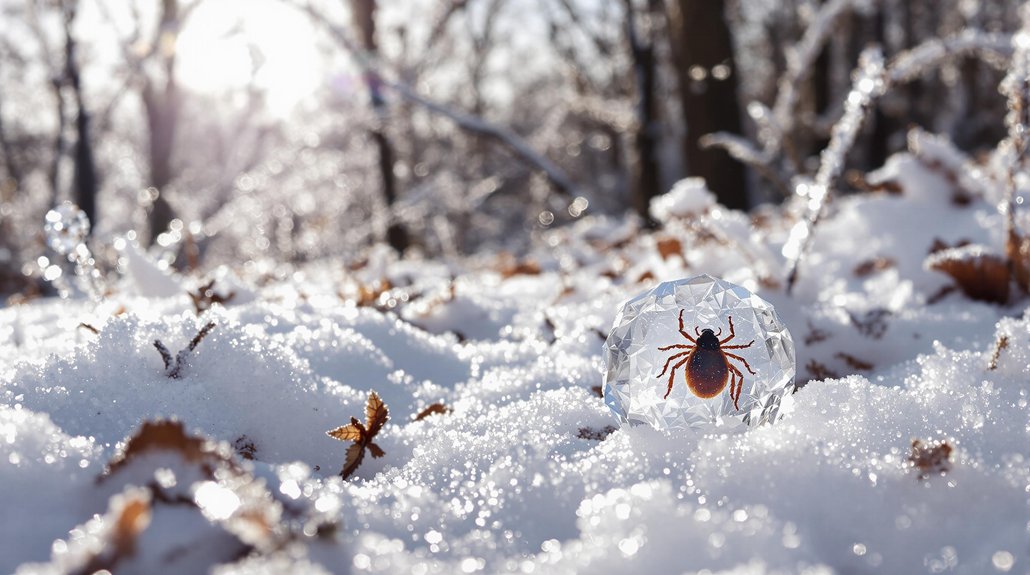
In Virginia, Maryland, and Washington DC, ticks are most active in the spring and summer, typically from April through September when temperatures rise above 45°F. However, ticks do not die off completely in the winter. Many species survive by hiding under leaf litter, soil, or snow for insulation and can become active during mild winter days when temperatures rise above freezing. This means tick prevention should not stop entirely once summer ends.
Ticks do not jump or fly. Instead, they climb vegetation and attach to a host as it brushes past. This behavior, known as questing, allows them to latch onto people, dogs, or wildlife moving through infested areas.
If you find a tick attached to your skin or your pet, remove it promptly using fine-tipped tweezers by grasping it as close to the skin as possible and pulling straight out with steady pressure. Clean the area thoroughly with soap and water or an antiseptic. Monitor for symptoms such as rash, fever, fatigue, or changes in behavior, and contact a healthcare provider or veterinarian if symptoms develop.
Antoyne was friendly, explained every step and was incredibly efficient. Couldn’t recommend him enough!
read moreread less
Aaron Trejo
Antoynne has done excellent work in his inspection being thorough and giving insight to help us as well. As well he was very friendly and overall amazing to have.
read moreread less
Alexa Rehmat
John is the best!!! He was very thorough.
read moreread less
Kenneth Alcain
Corad Williams did our service and provided insight and showed attention to detail for prepping our new house to move into.
read moreread less
Allison Shanley
John was awesome. Listened to all of our concerns and corrected other pest control companies oversights. Reassured us that we were taking control of our home. He’s the 🐐
read moreread less
Violet Dancheck
Corad was wonderful - thorough, friendly, and professional. He explored each level of the house in detail looking for pests. He was able to treat areas inside with pet friendly solutions right away. On the outside he implemented some other treatments that are less pet friendly but he checked with me to make sure where my cat goes and doesn’t first. He took lots of photos for his report and even showed me how the treatment outside was already helping to attract the ants. In addition, he explained how the treatment worked and how I might see an increase in activity at first but after 7-10 days it should be in full effect and I shouldn’t see them anymore. Though he was not able to get onto the roof, he made recommendations for getting g that checked and things like cutting back beaches close to the house to limit squirrels from direct access to the roof. Overall, excellent customer service!
If you have a pest-control question, we answer and respond around the clock. We don’t rush treatments; we get them right! We treat our customers like family; because, to us, you are. So whenever you have a pest problem, you can rely on the team at My Pest Pros to take care of it.
Our Satisfaction Guarantee
Our promise to you is simple: You will be 100% satisfied with our pest control programs. Guaranteed.*
To provide the best experiences, we use technologies like cookies to store and/or access device information. Consenting to these technologies will allow us to process data such as browsing behavior or unique IDs on this site. Not consenting or withdrawing consent, may adversely affect certain features and functions.
Functional
Always active
The technical storage or access is strictly necessary for the legitimate purpose of enabling the use of a specific service explicitly requested by the subscriber or user, or for the sole purpose of carrying out the transmission of a communication over an electronic communications network.
Preferences
The technical storage or access is necessary for the legitimate purpose of storing preferences that are not requested by the subscriber or user.
Statistics
The technical storage or access that is used exclusively for statistical purposes.The technical storage or access that is used exclusively for anonymous statistical purposes. Without a subpoena, voluntary compliance on the part of your Internet Service Provider, or additional records from a third party, information stored or retrieved for this purpose alone cannot usually be used to identify you.
Marketing
The technical storage or access is required to create user profiles to send advertising, or to track the user on a website or across several websites for similar marketing purposes.