
House centipedes aren't typically dangerous to you, but they can bite if threatened. While their bites may lead to localized pain, swelling, or redness, serious reactions are rare. The anxiety they provoke due to their appearance can be unsettling as well. On the other hand, these creatures play a beneficial role in controlling pest populations within your home. By understanding their behavior and potential risks, you can feel more at ease. If you're curious about how to manage their presence effectively, you'll discover some practical strategies that can help maintain a comfortable living environment.
Key Takeaways About House Centipedes
- House centipedes can bite if threatened, causing localized pain, swelling, or redness.
- Some individuals may experience allergic reactions to centipede bites.
- Their presence can induce anxiety or stress due to their appearance.
- Despite their potential to bite, they are not considered dangerous to humans.
- House centipedes help control pest populations, offering ecological benefits.
Understanding House Centipedes
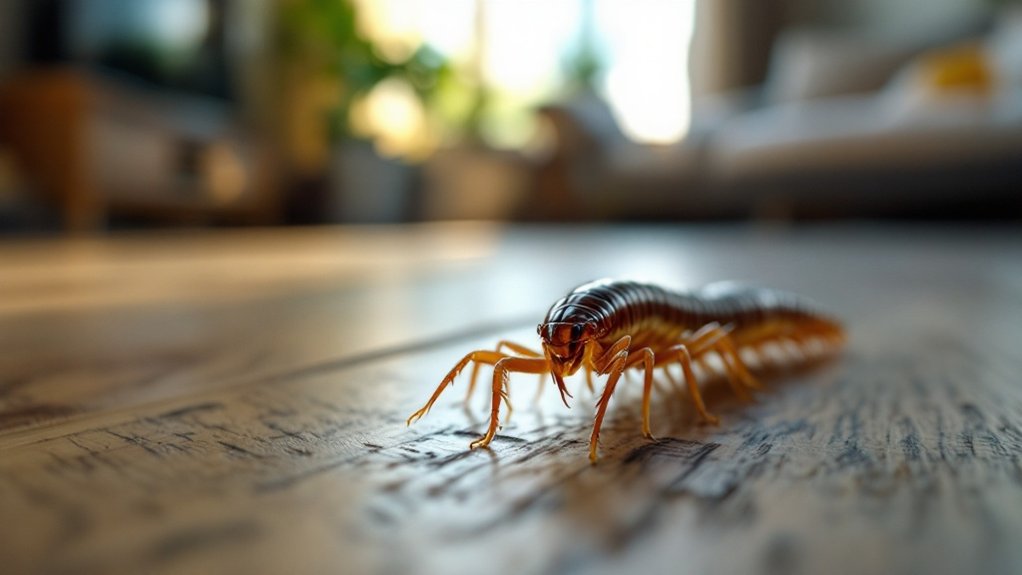
House centipedes dart around your home, often eliciting surprise or concern. Understanding their anatomy and habitat can help you feel more at ease with these intriguing creatures.
House centipedes possess long, segmented bodies, typically measuring about 1 to 4 inches in length. Their most striking feature is the numerous long legs—up to 30 pairs—that allow them to move swiftly. This unique anatomy aids in their survival, enabling them to escape predators and navigate through tight spaces.
In terms of habitat, house centipedes thrive in damp, dark areas, often finding refuge in basements, bathrooms, or under piles of debris. They prefer environments that provide moisture, as this is essential for their survival. By keeping your home dry and tidy, you can minimize their presence, as they're attracted to excess humidity.
House centipedes aren't harmful to humans; instead, they help control pest populations by feeding on insects like cockroaches and spiders. By familiarizing yourself with their anatomy and habitat, you can better understand their role in your home and appreciate their presence as part of a balanced ecosystem.
House Centipede Behavior
Observing house centipedes can reveal fascinating insights into their behavior. These creatures are primarily nocturnal, allowing them to hunt for prey under the cover of darkness. Their hunting techniques are quite effective; they use their long, slender bodies to navigate tight spaces, quickly pouncing on insects like cockroaches and spiders. This agility not only aids in capturing prey but also helps them evade potential threats.
In terms of habitat preferences, house centipedes thrive in damp, humid environments. You might find them in basements, bathrooms, or kitchens—areas where moisture accumulates. They tend to seek shelter in crevices and cracks, making your home an ideal environment for them. This penchant for moisture explains their presence in homes, as they prefer spaces that support their survival needs.
Understanding these behaviors can foster a sense of belonging and awareness in your household. By recognizing their role in controlling pest populations, you can appreciate the benefits house centipedes bring, even if their appearance can be startling.
Embracing this knowledge can transform your perspective and help you coexist more harmoniously with these intriguing creatures.
Potential Risks to Humans
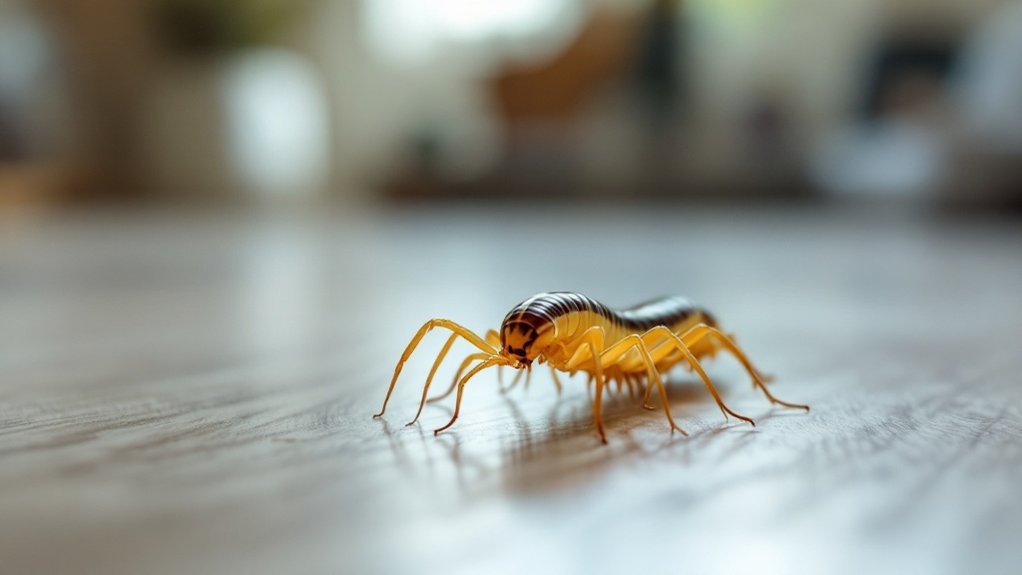
While house centipedes are generally harmless, understanding the potential risks they pose to humans can help mitigate any concerns. One of the main risks is their ability to bite when threatened. Although these bites aren't common, they can occur, and when they do, you might experience bite symptoms such as localized pain, swelling, or redness. For most people, these symptoms are mild and resolve quickly.
However, it's crucial to acknowledge that some individuals may be more sensitive. Allergic reactions to a house centipede's bite can occur, leading to more severe symptoms like hives, difficulty breathing, or swelling beyond the bite site. If you notice any unusual symptoms after a bite, seeking medical attention is essential.
In addition to bites, the presence of house centipedes can cause anxiety or stress for some people, primarily due to their appearance. While these creatures are unlikely to harm you, understanding their risks can help you feel more in control of your environment.
Benefits of House Centipedes
Centipedes, though often met with apprehension, play a significant role in maintaining a balanced ecosystem within your home. These fascinating creatures act as natural pest control agents, helping to keep populations of unwanted insects in check. By preying on pests like cockroaches, spiders, and silverfish, house centipedes contribute to the overall health of your residential environment.
When you allow centipedes to coexist in your area, you're facilitating an ecosystem balance that can reduce the need for chemical pest control methods. This not only benefits your immediate surroundings but also promotes a healthier indoor atmosphere.
Since centipedes are nocturnal hunters, they tend to thrive in areas that may otherwise attract a variety of pests, efficiently managing these populations while you sleep.
Moreover, house centipedes are efficient predators due to their speed and agility. Their presence indicates a degree of biodiversity in your home, which is essential for a well-rounded ecosystem.
How to Manage Their Presence
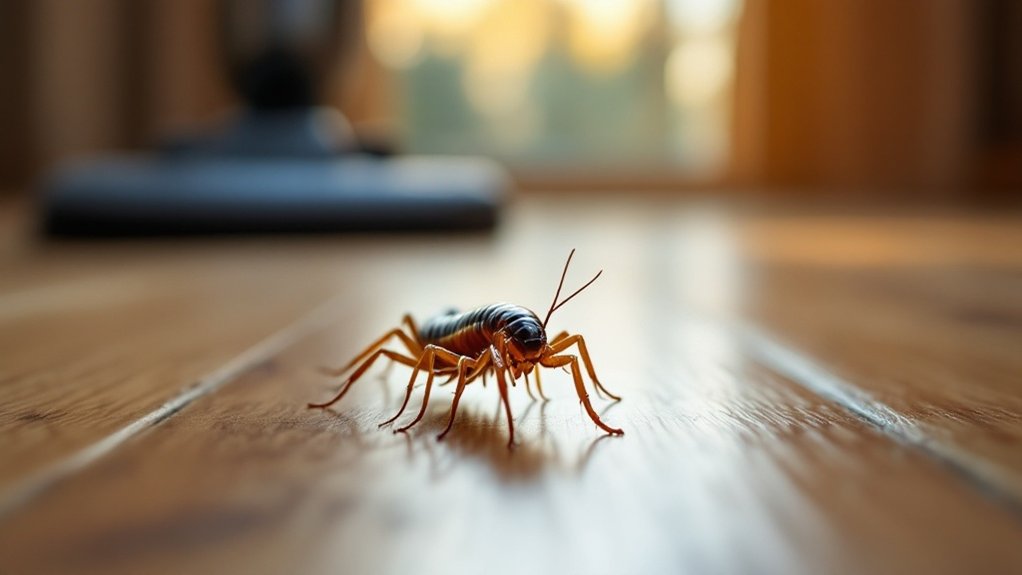
Managing the presence of house centipedes in your home can be straightforward, especially when you recognize their beneficial role in controlling other pests. To keep these creatures in check, it's crucial to implement effective prevention methods.
Start by reducing moisture in areas like bathrooms and basements, as centipedes thrive in damp environments. Guarantee proper ventilation and fix any leaks to deter them.
Additionally, you can use natural repellents to create an unwelcoming atmosphere for centipedes. Essential oils such as peppermint or tea tree oil can be mixed with water and sprayed around entry points. This not only helps keep centipedes at bay but also leaves your home smelling fresh.
Regularly cleaning your home and decluttering spaces allows you to spot potential hiding places for centipedes and other pests. Vacuuming frequently can eliminate both centipedes and their food sources.
House Centipede Pest Control
Do you need help controlling house centipedes? Give My Pest Pros a call at 703-665-4455 to schedule a pest treatment. Our pest management professionals can help identify the causes of a house centipede infestation and the best house centipede treatment.