
During bee swarming season, overcrowding and the need for reproduction trigger bee swarming. When the old queen prepares to leave, worker bees raise new queens. Swarming helps establish new colonies and maintain genetic diversity. To manage swarming, monitor hive conditions, check for queen cells, and guarantee there's enough space for expansion. Regular inspections can prevent complications. By staying proactive, you can keep your apiary thriving, and there's more you can learn to enhance your bee pest control skills.
Most bee swarming is not dangerous. However, a bee infestation and swarming can be a concern when it occurs in an area around people and pets. While you may be able to ignore bee swarming in some cases, safety concerns may require the help of a bee exterminator to help with bee removal. While we want to protect pollinators such as honey bees, which tend to not be aggressive around people, yellow jackets, bald-faced hornets, wasps, and other stinging pests can be extremely dangerous. If you are dealing with any of these stinging pests or have safety concerns, consult a professional pest management company for bee pest control.
Bee Pest Control Key Takeaways
- Swarming occurs when overcrowding in the hive prompts the old queen to leave with a portion of the colony.
- New queens are raised from larvae fed royal jelly, ensuring the continuity of the colony after swarming.
- Regular hive inspections for queen cells can help beekeepers prevent swarming by managing hive space.
- Environmental factors, such as food availability, significantly influence the timing and likelihood of swarming events.
- Requeening every few years can strengthen the colony and reduce the risk of swarming due to a healthy, productive queen.
Understanding the Swarming Process

When bees decide to swarm, it's a fascinating yet complex process that involves several key steps. First, the colony senses the need to reproduce, often triggered by environmental factors like warmth and blooming flowers. As the old queen prepares to leave, worker bees start raising new queens by feeding larvae a special diet called royal jelly.
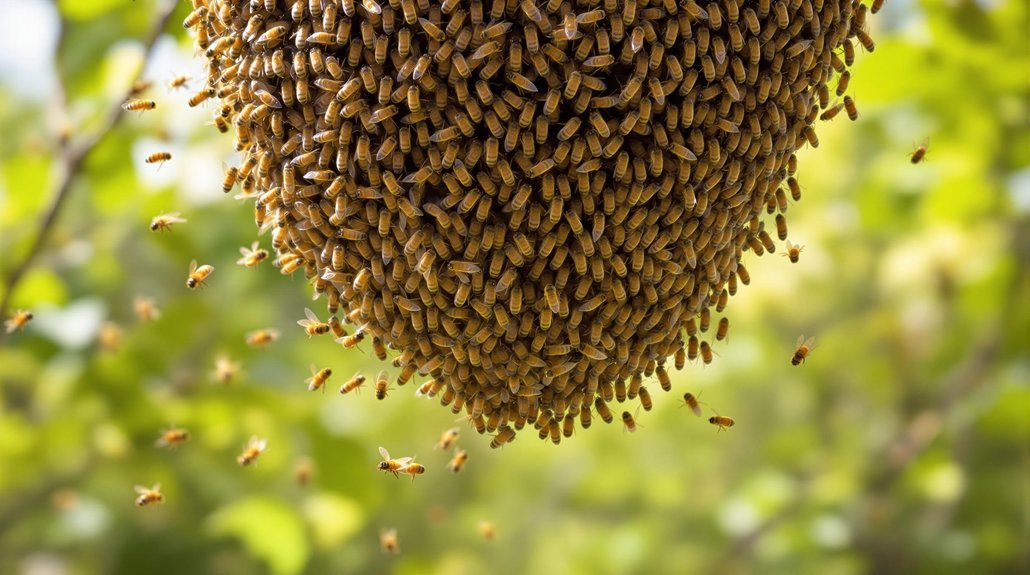
Next, the hive becomes crowded with bees, leading to a buzz of excitement. You'll notice the bees clustering around the entrance, indicating they're ready to take flight. When the time is right, the old queen leads the swarm, and a large group of workers follows her outside the hive.
As they settle temporarily on a nearby branch or structure, scouts search for a suitable new home. This dynamic dance showcases the bees' incredible communication and organization, ensuring the survival and growth of the colony. Understanding this process can deepen your appreciation for these amazing creatures.
Reasons Why Bees Swarm
Bee swarming primarily occurs for a few reasons, each crucial for the colony's survival. First, when a hive becomes overcrowded, the bees need more space. They'll produce a new queen, prompting the old queen and a portion of the workers to leave and find a new home. This guarantees that the colony can thrive in a less cramped environment.
Second, swarming happens as a natural reproductive strategy. When conditions are right, a colony will create multiple queens, allowing for the establishment of new colonies. This process helps spread the population and maintain genetic diversity.
Lastly, environmental factors like food availability and weather conditions also trigger swarming. If resources are abundant, bees feel secure enough to expand. So, understanding these reasons can help you appreciate the complex life of bees and the crucial role swarming plays in their survival.
Bees and other stinging pests will also swarm as a defensive mechanism. If you go over a yellow jacket nest while mowing the lawn or accidentally bump into a hornets nest, stinging pests will swarm. Swarming bees and wasps will be extremely dangerous in these situations. Professional bee control from a bee pest control expert is highly recommended in these situations. A bee exterminator has the experience and protective equipment to for safe bee removal.
Managing and Preventing Swarms
To effectively manage and prevent swarms, it's vital to monitor your hive regularly. Check for queen cells, as their presence indicates swarm preparation. If you spot them, consider splitting the hive to reduce congestion and discourage swarming. Maintaining adequate space in your hive is essential; make certain your bees have room to expand.
Regularly inspect the queen's health, as a strong, healthy queen can help stabilize the colony. Be mindful of your hive's population; overcrowding is a common trigger for swarming. If you notice excessive bee activity, you might need to add another box or super.
Lastly, consider requeening your hive every couple of years. A young queen can help keep the colony robust and less likely to swarm. By staying proactive and attentive, you can greatly reduce the chances of swarming and guarantee a thriving apiary.
Professional Bee Pest Control
While bees are important pollinators, contact My Pest Pros if you need help with bee removal or other pest management help, Call today and schedule a pest treatment at 703-665-4455.