
You've probably noticed unwanted pests invading your home, and it's time to take action. A DIY pest control guide can help you tackle these nuisances effectively, using natural and safe methods that protect your home and family. From common household pests to effective natural repellents, you'll find that there are numerous strategies to keep your living environment comfortable. But before you gather your supplies, consider what specific pests you need to address and how their habits might complicate your efforts. What's the first step you should take?
Key Takeaways
- Utilize natural repellents like garlic, mint, and essential oils to deter common household pests naturally.
- Create DIY traps using vinegar, dish soap, and sugar to effectively catch fruit flies and yellowjackets.
- Seal entry points around your home with weatherstripping and caulk to prevent pest access.
- Maintain low indoor humidity and proper ventilation to reduce moisture, a key attractant for pests.
- Regularly clean and remove food sources to minimize pest attraction and maintain a pest-free environment.
Common Household Pests
When it comes to common household pests, understanding their characteristics and behaviors is key to effective prevention and DIY pest control. Start by employing pest identification techniques that help you recognize these invaders. For instance, ants and cockroaches often seek food and moisture, making your kitchen a prime target.
Bed bugs, tiny and parasitic, hide in mattresses and furniture, feeding on your blood while you sleep. Many pests act as vectors for diseases and can pose health risks to your family.
Pest behavior insights can guide your control measures. Silverfish thrive in moist environments, consuming organic materials, while termites silently cause structural damage by feasting on wood.
Rodents like rats and mice are attracted to food sources and nesting materials, often entering through small gaps in your home's foundation. Meanwhile, raccoons and possums can invade through chimneys and trees, carrying diseases.
Additionally, spiders and other arachnids enter your home in search of insects to feast upon. By understanding these pests' behaviors and preferred environments, you can take proactive measures to seal entry points, reduce attractants, and ultimately safeguard your home from these unwelcome guests.
Natural Repellents
Understanding common household pests sets the stage for exploring effective natural repellents. You'll find that using natural ingredients can be a powerful DIY pest control way to keep pests at bay without harmful chemicals.
Two standout options are garlic and mint, both of which boast impressive pest-repelling properties.
Here are three natural repellents you can easily implement:
- Garlic Solutions: Garlic's benefits are well-documented; it repels ticks, ants, and even slugs. Simply mix chopped garlic with water and spray it around your garden to deter various insects.
- Mint Plants: The properties of mint make it a formidable opponent against pests like aphids and cabbage worms. Plant mint near your garden or use it in a homemade spray for a revitalizing way to repel unwanted insects.
- Herb Combinations: Combining plants like basil, rosemary, and sage can enhance your defenses. Basil repels flies, while rosemary can help keep mosquitoes and other pests away. Additionally, many homeowners find that using natural ingredients can lead to effective pest control solutions.
Essential Oils for DIY Pest Control
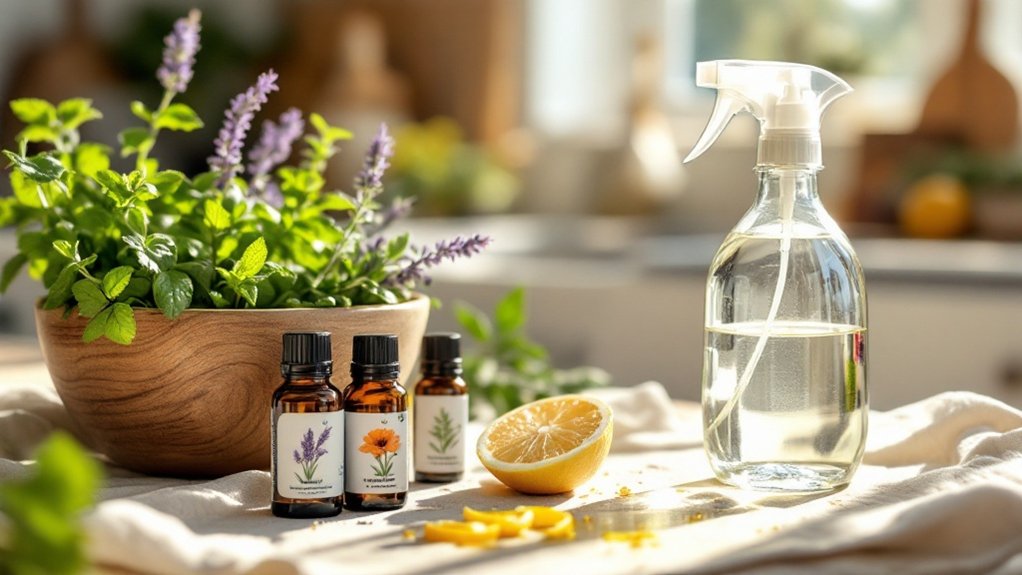
Essential oils provide a powerful, natural solution for DIY pest control that's both effective and easy to implement. By using essential oil blends, you can considerably enhance pest control effectiveness against a wide range of common invaders.
For instance, lemongrass oil is excellent for repelling mosquitoes and flies, while lavender oil effectively deters moths and other pests with its calming scent. Recent studies have shown that essential oils mixed with sunflower oil significantly reduce fly presence, making them a great addition to your pest control arsenal.
You can create DIY bug repellent sprays by mixing these oils with witch hazel and distilled water or incorporating them into diffusers around entry points. Peppermint oil acts as a natural barrier against ants and spiders, and eucalyptus oil is particularly useful against fleas and ticks.
For topical applications, combine essential oils with carrier oils like sweet almond oil and apply them to your skin for personal protection. Additionally, placing cotton balls soaked in essential oils near entry points can help keep pests at bay in your home.
Remember to reapply these solutions regularly to maintain their pest control effectiveness. Embracing essential oils not only promotes a pest-free environment but also supports a healthier, eco-friendly lifestyle.
DIY Pest Control Traps and Baits
Building upon the natural solutions provided by essential oils, creating DIY traps and baits is another effective strategy for managing pests in your home and garden.
Effective trap design and strategic bait placement can greatly enhance trap effectiveness. For instance, using vinegar and dish soap to create a trap is a simple yet effective way to attract and drown fruit flies.
Here are three DIY traps you can easily make:
- Yellowjacket Trap: Cut the top off a plastic soda bottle, apply cooking oil inside to prevent climbing, and invert the top into the bottom. Bait with sugary soda or juice.
- Ant Trap: Mix 1 liter of water with 1 teaspoon of Borax and 1 cup of sugar. Soak cotton balls in this solution and place them in a small container with holes for easy access.
- Mosquito Trap: Combine 1 cup of warm water, 1 cup of sugar, and 1 teaspoon of yeast. Let it froth, then pour it into a soda bottle.
For best results, make sure bait placement is near trails or nests to encourage pests to find them quickly.
Regularly monitor and refresh your traps and baits to maintain their trap effectiveness.
Remember to keep them out of reach of pets and children for safety.
Preventative Measures

How can you keep pests from invading your home and garden? Start with entry point sealing. Inspect the exterior of your home for gaps and cracks in foundations, door frames, and windows. Use caulk, steel wool, or mesh to seal these openings effectively.
Don't forget about dryer vents and large soffit gaps; make certain they're properly sealed to block any unwelcome visitors.
Next, focus on moisture management. Pests thrive in damp environments, so use dehumidifiers in basements and crawlspaces to keep humidity levels down. Maintain your drainage systems to eliminate standing water, and avoid leaving pet dishes out overnight. Insects prefer moist environments, so ensuring your foundation remains dry will further deter them.
In your yard, keep the grass short, remove debris, and elevate wood piles to discourage pests. Trim overhanging branches to prevent animals from accessing your roof.
Regularly inspect for signs of pests around windows and doors, and stay aware of seasonal behaviors that could prompt infestations. By combining these strategies, you'll create an uninviting environment for pests, making it harder for them to invade your home and garden.
Cleaning and Maintenance Tips
Keeping your home and garden clean and well-maintained is essential for effective pest control. By establishing consistent cleaning routines and maintenance schedules, you can greatly reduce the chances of pests invading your home.
Here are three key tips to help you maintain a pest-free environment:
- Daily Cleaning: Make it a habit to clean dishes daily, wipe down kitchen surfaces, and drain dirty dishwater. These simple tasks prevent food residue from attracting pests.
- Yard Maintenance: Regularly remove debris like leaves and wood from your yard, as these can serve as breeding grounds for pests. Make sure that vegetation is trimmed back from the house to minimize entry points. Additionally, removing debris around the home can significantly reduce pest habitats.
- Moisture Control: Inspect your home for leaks and make sure proper drainage in your yard. Using dehumidifiers can help eliminate excess moisture, which pests love.
Safe Pest Removal Techniques

Effective pest removal techniques are essential for maintaining a safe and healthy environment in your home and garden. Start by using pest identification techniques to determine which pests are invading your home. This knowledge will guide your approach and help you select the right organic pest solutions.
Seal all entry points with weatherstripping, caulk, and foam to prevent re-infestation. Regular inspection and monitoring are vital, as they allow you to catch pest activity early. Keep your areas clean and free from food and water sources that attract pests. Utilizing natural products, such as common household items, can significantly reduce your reliance on harmful chemicals.
Consider non-chemical pest removal methods like diatomaceous earth for a non-toxic solution or introduce natural predators to control pest populations biologically. Additionally, heat treatments can effectively eliminate pests like bed bugs and fleas without harmful chemicals.
For DIY pest control remedies, vinegar can disrupt ant trails, while essential oils like eucalyptus repel mosquitoes. Using baking soda and sugar mixtures can help eliminate ants, and placing bay leaves strategically can deter cockroaches.
Always prioritize safety by using chemical-free products and protective gear, ensuring a healthy environment for you and your family.
When to Seek Professional Help
Recognizing when to seek professional help for pest control is essential to maintaining a safe and healthy home. While DIY methods can be effective for minor issues, some situations require the expertise and resources of professionals.
Here are key indications that it's time to call in the experts:
- Widespread Infestations: If you notice infestation signs across multiple areas of your home, it's a clear signal that professional solutions are needed.
- Persistent Problems: When infestations worsen over time and become increasingly difficult to manage, don't hesitate to seek professional assistance.
- Health Risks: The presence of disease-carrying pests or allergens poses serious health risks, making immediate professional intervention necessary. Professionals possess tools and expertise for large-scale issues, which can effectively address the situation.
Ignoring these signs could lead to more severe issues and health hazards.
Professionals can thoroughly inspect your property, identify all potential pest entry points, and develop customized treatment plans. Pest control companies such as My Pest Pros use software such as FieldRoutes to help track conditions that contribute to pest issues. Professional pest control software also helps to track product usage, bait consumption and other data to ensure safe and effective treatments.
With their expertise, they'll address the root cause of the infestation, ensuring lasting solutions.
Don't let your home become a breeding ground for pests—know when it's time to enlist the help of pest control professionals.
Professional Pest Control Help With My Pest Pros
Keeping your home pest-free often begins with simple DIY strategies, but sometimes the scale or complexity of an infestation calls for professional intervention. If you’re facing stubborn pests or notice the signs of a growing problem, don’t wait. My Pest Pros offers personalized, effective pest control solutions to safeguard your home and family.
Ready to take the next step? Call us at 703-665-4455 to schedule an inspection or discuss your concerns. Our team of pest control professionals will work with you to develop a treatment plan that fits your needs, giving you peace of mind and a pest-free environment.