
If you're dealing with an ant problem in your home, it's vital to tackle it systematically. Start by identifying the type of ants you're facing, as different species require different approaches. Once you know what you're up against, assess how severe the infestation is and take steps to seal off entry points. Keeping your space clean is important, but that's just the beginning. There are natural remedies and chemical solutions to explore, each with its own benefits and drawbacks. Curious about the most effective strategies to guarantee these tiny invaders don't return?
Key Takeaways
- Identify the ant species by examining physical traits and behaviors to choose the most effective control methods.
- Maintain a clean environment, removing food residues and sealing trash to deter ant attraction.
- Seal entry points in your home to prevent ants from entering, using appropriate materials for gaps and cracks.
- Use natural remedies like Diatomaceous Earth and essential oils, alongside chemical solutions for immediate control when necessary.
- Monitor bait stations regularly to track ant activity and adjust strategies based on observed behaviors for effective results.
Identify the Ant Species
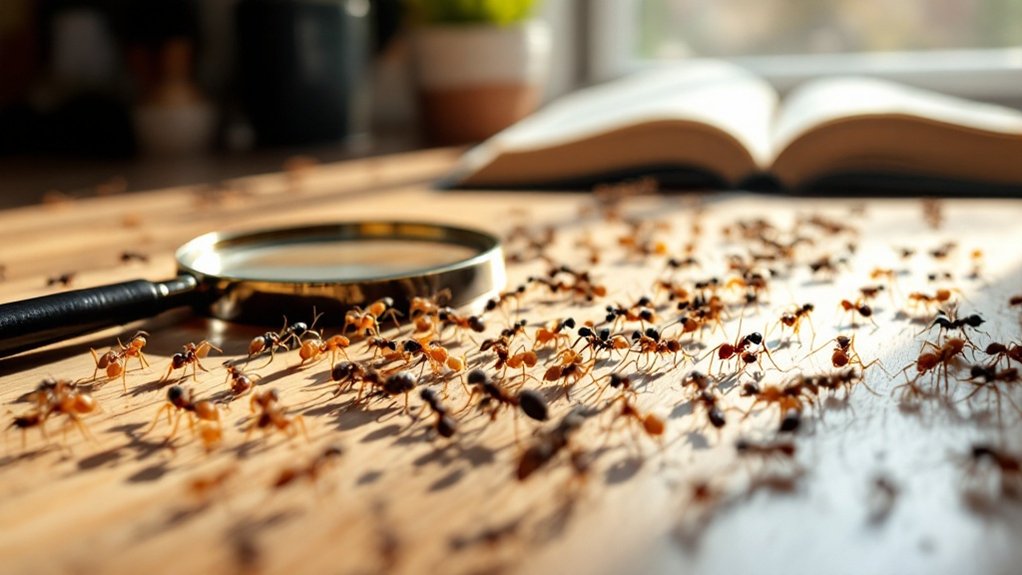
When it comes to effective ant control, identifying the specific species is essential. Different ant species exhibit varied behaviors and habitats, making precise identification critical for choosing the right control methods.
Start by examining the physical characteristics of the ants you encounter. Look for key features like node count; species such as Argentine and Carpenter ants have one node, while Fire ants have two. Additionally, understanding that nearly 1,000 ant species exist in the United States can help you recognize the diversity of ants you may encounter.
Next, consider coloration. You might spot black Carpenter ants or reddish-brown Fire ants, with sizes ranging from 1/16 inch for Ghost ants to 1/2 inch for Carpenter ants.
Also, note their behavior; some species are nocturnal, while others are diurnal. Understanding species distribution can further aid your identification. For instance, Odorous ants prefer sweet foods, while Pharaoh ants thrive on protein.
A thorough visual inspection, combined with behavioral observation, will help you pinpoint the species. Check for stingers as well—Fire ants will defend their nests aggressively if disturbed.
Assess the Infestation Level
Evaluating the infestation level is essential for effective ant control. Start by observing signs of ant activity, such as numerous live ants crawling around and trails leading to food or water sources.
Look for visible nests or small piles of dirt outside your home, which indicate nesting habits. Inspect kitchens, bathrooms, and pantries closely, as these are common areas where ants gather.
Check for damage, particularly in wood or other materials, to identify burrowing ants. Use tools like a flashlight to illuminate dark spaces and a magnifying glass for closer inspection.
Document your findings with a checklist, and create a map marking ant trails and potential entry points. Additionally, be mindful that ants can enter homes through tiny cracks and crevices, making it crucial to inspect various entry points.
Be aware that hidden nests can complicate your assessment, along with the presence of multiple ant species with varying behaviors.
Regular inspections are essential in catching early signs of infestations before they escalate. By understanding ant behavior and nesting habits, you can accurately assess the severity of the situation, providing you with the necessary information to implement effective control measures.
Seal Entry Points
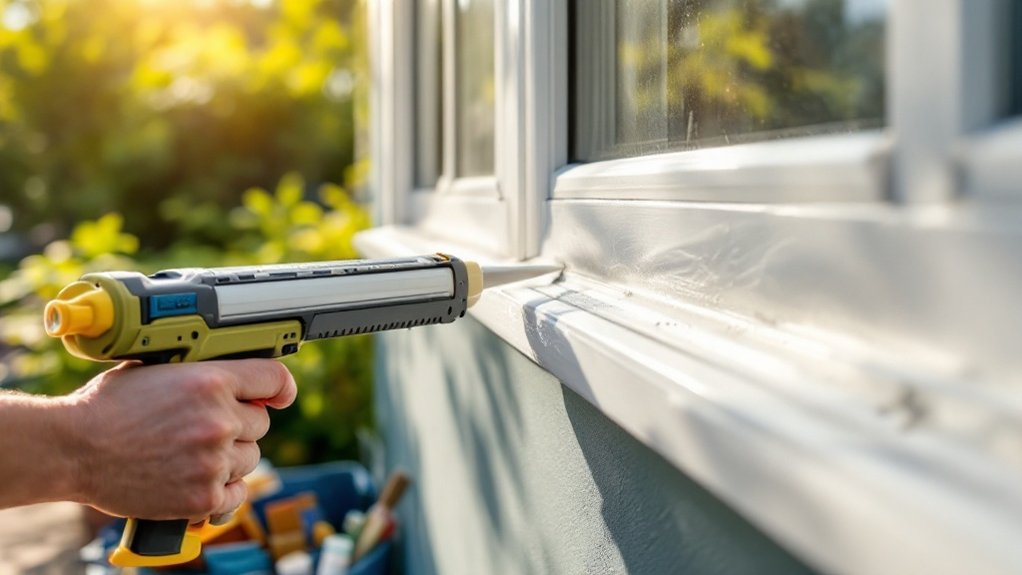
Sealing entry points is an essential step in preventing ant invasions in your home. Conducting a thorough entry point inspection allows you to identify where ants might be entering. Here are some common areas to focus on:
- Cracks in walls and foundations - These are often caused by settling or temperature fluctuations.
- Gaps around windows and doors - Weathering can deteriorate seals, creating easy access for ants.
- Utility openings - Small gaps around pipes and electrical lines can be exploited by ants.
- Vents and air conditioning units - These can provide not only entry but also a potential food source. Additionally, it's important to ensure that moisture management is a priority, as it can significantly reduce the likelihood of attracting ants.
Once you've identified these entry points, use appropriate sealing materials.
Applying caulk effectively seals small gaps, while expanding foam insulation fills larger openings. For areas that caulk can't seal, consider using steel wool or mesh to block access.
Remember to confirm that all surfaces are clean and dry before applying any sealing materials to prevent moisture issues.
Regular inspections are essential to address any new gaps promptly and maintain a barrier against future ant invasions.
Maintain Cleanliness
To effectively control ants in your home, maintaining cleanliness is crucial. Regular cleaning removes food residues and potential attractants, making your home less appealing to these pests. Ants are particularly attracted to sugary or greasy substances, and even tiny traces can pique their interest. Unclean areas with crumbs or spills provide abundant food sources that entice ants.
Establish a consistent cleaning routine. Sweep and vacuum floors daily, especially in kitchen areas, to eliminate crumbs and food particles. Wipe down surfaces, such as countertops and tables, with mild detergent or a vinegar-water solution to remove food residues. Additionally, be mindful that moist environments can provide hydration and potential nesting sites for ants.
Store food properly in airtight containers to prevent ants from accessing it. Promptly dispose of garbage in sealed containers and regularly clean trash areas to minimize food residue buildup.
Be attentive to spills and crumbs throughout the day, cleaning them up as they occur. Set aside time for thorough weekly deep cleaning sessions, including vacuuming and mopping all floors.
Regularly maintain pet areas and make sure pet bowls are cleaned to prevent attracting ants. By implementing these effective cleaning practices, you considerably reduce the likelihood of an ant infestation.
Use Natural Remedies

Using natural remedies offers an effective and eco-friendly approach to ant control. These methods can help you keep ants at bay without relying on harsh chemicals.
Here are four effective natural remedies to take into account:
- Diatomaceous Earth: This powdery substance damages ants' exoskeletons through abrasion, leading to dehydration and death. Sprinkle it around entry points and trails for best results.
- Essential Oils: Oils like peppermint and cinnamon are natural repellents. Mix a few drops with water in a spray bottle and apply it to ant trails to deter them effectively. Regular application of these oils ensures their repellent effect remains strong over time.
- Coffee Grounds: The natural bitterness and aroma of coffee deter ants. Spread used coffee grounds around infested areas and refresh them periodically to maintain their effectiveness.
- Vinegar Solution: Combine equal parts vinegar and water, then spray it on surfaces where you notice ants. This disrupts their pheromone trails, preventing them from maneuvering back to their food sources.
Apply Chemical Solutions
While natural remedies can be effective, applying chemical solutions is often necessary for more immediate and thorough ant control. Fast-acting sprays target potential entry points, while insecticide dusts work well in voids where ants may enter your home. Baits are particularly effective, as they help eliminate entire colonies over time. For indoor use, choose non-repellent sprays that ants can carry back to their nests, enhancing long-term effectiveness. Understanding ant behavior can also guide your choice of treatments, ensuring that you select methods that align with the specific habits of the ant species you are dealing with.
When applying chemical solutions, prioritize chemical safety. Always keep treatments out of reach of children and pets. Use application techniques like placing bait stations near ant trails and renewing them weekly.
For perimeter control, apply non-repellent sprays liberally around your yard and structures, and use ant granules around your home's exterior. If you spot large groups of ants or ant hills, ant liquids can provide immediate results.
Remember to follow label directions for safe pesticide use and wear masks and gloves when handling substances like Diatomaceous Earth (DE). Apply DE in thin layers and avoid areas where food is prepared, ensuring a safe environment while effectively controlling ant populations.
Monitor and Follow Up

Monitoring and following up on ant control efforts is essential for long-term success. By regularly evaluating your bait and observing ant behavior, you can adapt your strategy to guarantee effective control.
Here are some key actions to take:
- Daily Checks: Inspect bait stations daily, especially during the initial days, to assess bait consumption and ant activity.
- Bait Evaluation: Note the rate at which ants consume the bait. If it's low, consider changing the bait type or its placement. Continuous availability of bait is crucial for colony elimination.
- Track Ant Activity: Observe the number of ants at bait stations. A decrease indicates that your efforts are working, while an increase may signal a need for adjustments.
- Adjust Locations: Move bait stations to areas where you've observed increased ant movement, guaranteeing that they remain effective in attracting ants.
Consider Professional Help
When it comes to effectively managing an ant infestation, your home's well-being can greatly benefit from professional help. Licensed and trained pest control experts understand ant behavior and provide guaranteed ant control services tailored to your specific situation.
They conduct thorough inspections to identify problematic areas and locate ant colonies, ensuring no infestation goes unnoticed. Professionals develop effective treatment plans based on the ant species and severity of the infestation. By utilizing advanced technology and species-specific treatments, they apply targeted applications like baits, which are proven to be highly effective.
Many services also offer integrated pest management (IPM) approaches, ensuring treatments are both thorough and environmentally friendly. Regular monitoring can help identify potential infestations early and prevent them from escalating.
Choosing a professional service with experience in both residential and commercial ant control can greatly enhance your results. Look for companies that provide ongoing inspections and monitoring to prevent future infestations.
In addition, most professionals offer satisfaction guarantees, giving you peace of mind that they'll continue support until your ant problem is fully resolved.
Effective Ant Control Near You
My Pest Pros can provide effective ant control for your home. Our professional ant exterminators will identify where ants are coming, get rid of them, and continue to protect your home and family from ants and other pest issues. Contact us at 703-665-4455 to schedule an ant treatment near you.