
When you suspect a bed bug problem, knowing how to identify bed bugs is essential. Start by examining your mattress, box springs, and bed frame closely for live bugs or signs like black fecal spots and blood stains. These small, reddish-brown insects, about the size of an apple seed, often leave behind eggs and molted skins. If you notice bed bug bites that appear as red, swollen areas, it's time to investigate further. But before you panic, consider some common misconceptions that could lead you astray in your identification efforts.
Key Takeaways
- Look for small red to reddish-brown fecal spots on bedding, upholstery, or walls as signs of bed bug presence.
- Inspect seams of mattresses, box springs, bed frames, and baseboards for live bugs, molted skins, and sticky white eggs.
- Note bed bug bite marks, which appear as red, swollen areas on skin, often in random patterns on exposed areas.
- Use detection tools like the TruDetx Bed Bug Rapid Test and Slider Bed Bug Monitor for accurate identification of infestations.
- Seek professional help if infestations spread significantly or DIY methods fail after 6-8 weeks of treatment.
Physical Appearance of Bed Bugs

When examining bed bugs, their distinct physical characteristics are essential to identification. Bed bug morphology reveals that these pests are flat and oval-shaped, resembling mini apple seeds. Adults measure about 4-7 mm long and 2-3 mm wide, but after feeding, their abdomen can elongate up to 13 mm.
Nymphs, on the other hand, range from 1.3 mm to 4-5 mm in length and appear nearly colorless at hatching, turning brownish as they mature.
Bed bug coloration also plays a vital role in identification. Unfed adults are typically brown or reddish-brown, while fed bed bugs take on a darker red hue due to ingested blood. You might notice fed nymphs appearing brilliantly red, similar to plump raspberry seeds.
Each bed bug has six legs and two antennae, and while they lack wings, adults are easily visible to the human eye, particularly in mattress seams or box springs. Males have pointed tips on their abdomens, whereas females' abdomens are smooth and rounded. Additionally, bed bugs' ability to reproduce quickly means that timely identification is crucial to prevent larger infestations.
Understanding these physical traits can help you accurately identify bed bugs in your environment.
Common Signs of Infestation
Spotting the common signs of a bed bug infestation can help you take swift action to address the problem. Clearly bed bug bites are an obvious sign of a bed bug infestation. However, pest identification from pest bites alone is often hard. Look for small, red to reddish-brown fecal spots on your mattress, upholstery, or walls. These fecal spots often accumulate around the bed area, indicating a nearby infestation.
Bloodstains on sheets and bedding can also be a clear sign of bed bugs. These stains occur when bed bugs are disturbed while feeding, leading to a noticeable mark on your fabric.
In addition to fecal spots and bloodstains, you should inspect potential hiding places. Check the seams and piping of your mattress and box springs, as well as cracks in your bedframe and headboard. Bed bugs often hide along baseboards and in the crevices where the wall meets the carpet. Regular inspections can aid in early detection and help you spot signs before they escalate into a larger problem.
Behind wallpaper and within electrical outlets are other common hiding spots.
While inspecting, keep an eye out for other signs like molted skins or white, sticky eggs. If you notice a musty odor, it may indicate an accumulation of blood, feces, and pheromones.
Taking prompt action at the first sign of these indicators can help you effectively manage and eliminate the infestation.
Bed Bug Bites and Symptoms
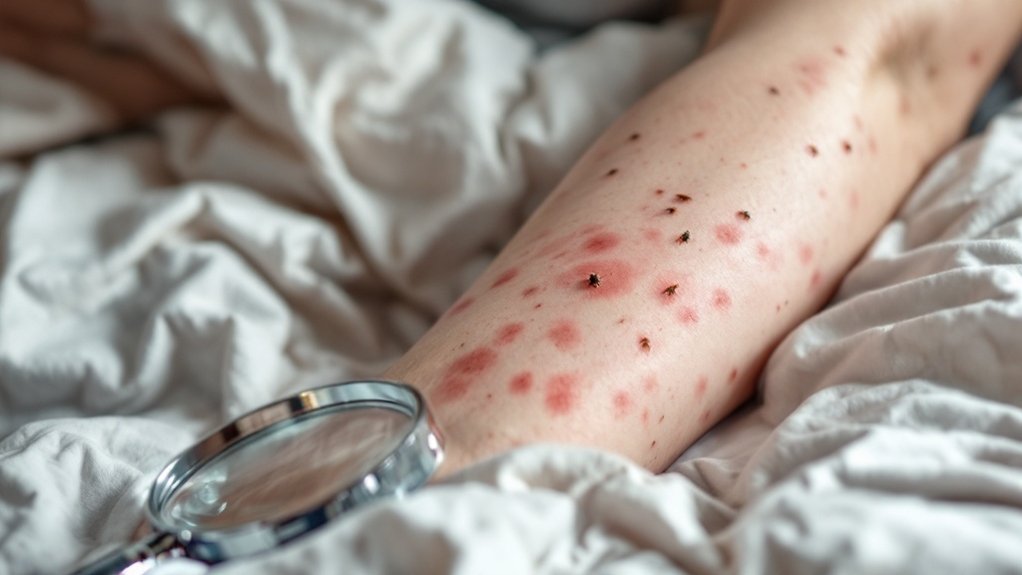
Bed bug bites can manifest in various ways, often causing discomfort and confusion. Typically, you'll notice red, slightly swollen areas on your skin, which may appear flat or raised. The bite marks often exhibit a random pattern, sometimes in a straight line or zigzag. Commonly affected areas include your hands, neck, face, shoulders, legs, and arms.
Symptoms usually include itching, welts, and swelling, and they can take several days to appear—up to 14 days in some cases. While some individuals may not react at all, others might experience intense itching and a burning sensation, potentially leading to papules or wheals. Bed bugs can be difficult to detect as they are primarily nocturnal, making it challenging to identify an infestation early.
If you notice large, painful, swollen marks, it could indicate an allergic reaction. Scratching these bites can increase the risk of infection and other complications.
To aid in bed bug prevention, inspect your sleeping area regularly and consider using protective encasements for your mattress.
If you do get bitten, effective bite treatment includes topical antihistamines or corticosteroids to reduce itching and inflammation. Always consult a dermatologist for severe reactions or if you're unsure about the cause of your bites.
Where to Look for Bed Bugs
Identifying the presence of bed bugs requires a thorough inspection of various areas in your home, especially where you sleep and relax.
To effectively locate these pests, focus on their preferred bed bug habitats and hiding behaviors. Here's where to look:
1. Mattresses and Bed Frames: Check the seams, tufts, and folds of your mattress.
Don't forget to inspect underneath the mattress and box spring, along with the cracks and crevices of the bed frame and headboard.
2. Furniture and Upholstery: Look in the seams, creases, and folds of couches, chairs, and ottomans.
Remove cushions and inspect between them, as well as behind wall art and decor. Additionally, upholstered furniture can be a common hiding place for bed bugs, so be sure to check all surfaces thoroughly.
3. Baseboards and Other Areas: Examine gaps between the wall and baseboards, behind loose wallpaper, and at carpet seams.
Bed bugs can also hide in electrical outlets and where walls meet ceilings.
Different Life Stages of Bed Bugs

Understanding the different life stages of bed bugs is essential for effective detection and management of infestations. The life cycle begins with bed bug eggs, which are small, pearl-white, and about 1mm long, resembling a pinhead. Females lay these eggs in clusters within tight cracks or crevices, producing up to 500 eggs in their lifetime, with a hatch time of 12-14 days. Female bed bugs can lay up to 500 eggs.
Once hatched, the bugs enter the nymph development stage, undergoing five distinct stages. Newly hatched nymphs are translucent or whitish-yellow, similar to sesame seeds. They require a blood meal to progress through each molt, growing in size and darkening in color, eventually reaching about 4.5mm. Under favorable conditions, over 80% of nymphs survive to adulthood.
The adult stage features oval-shaped, reddish-brown bugs approximately 5mm long. While adults generally feed weekly, they can survive for up to a year without feeding.
The entire life cycle can be completed in as few as 4 to 5 weeks, making it vital to identify all stages for effective pest control.
Distinguishing Bed Bugs From Other Pests
Distinguishing bed bugs from other pests requires careful observation of their unique characteristics. To effectively differentiate them, consider these key factors:
- Size and Shape: Bed bugs are about 1/4 inch long, flat, and broad-oval when unfed. In contrast, fleas are notably smaller, measuring just 1.5–3 mm. Engorged bed bugs appear more elongated and swollen. Juvenile bed bugs can vary in size from pinhead to adult as they grow through five instars, adding to the complexity of identification.
- Color and Antennae: Unfed bed bugs have a mahogany to rusty brown color, while engorged ones turn red-brown. Their short, segmented antennae are distinct from cockroaches, which have flexible, thread-like antennae.
- Behavior and Habitat: Bed bug behavior further sets them apart. They feed on human blood at night, often hiding in mattress seams or bed frames during the day. Unlike bat bugs, which thrive in bat habitats, bed bugs prefer human sleeping areas.
Understanding these differences aids in accurate pest comparison. By recognizing bed bug behavior and physical traits, you'll enhance your ability to identify these pests effectively and take action if needed.
Tools for Bed Bug Detection

Once you've recognized the unique characteristics of bed bugs, the next step is to employ the right tools for detection. Visual inspection tools are your first line of defense. You should look for live bed bugs, empty shells, and signs like black fecal spots or small blood stains on bedding.
Inspect thoroughly around beds, baseboards, and luggage stands, focusing on cracks and crevices.
For a more advanced approach, consider canine inspections or rapid detection devices like the Envu TruDetx Bed Bug Rapid Test. This device boasts over 90% accuracy and delivers results in just five minutes, making it a quick and user-friendly option. The test is designed to detect bed bug residues from previous infestations up to 90 days old, providing valuable information for assessment.
Trapping and monitoring devices also play a significant role in detection technology. Bed Bug Monitors captures bed bugs on an adhesive surface, allowing for early identification in various settings, including multi-unit dwellings and hotels.
Lastly, professional detection methods provide highly effective monitoring strategies. Bed bug inspection dogs can accurately sniff out infestations, and licensed pest management professionals offer thorough inspections.
When to Seek Professional Help
Knowing when to seek professional help for a bed bug infestation is essential for effective management. If you notice signs of an infestation, it's critical to assess the situation promptly.
Here are three key indicators that you should call in the experts:
- Extent of Infestation: If you've created an infestation timeline and discovered that the problem has spread considerably, it's time to contemplate professional help.
- Persistent Symptoms: If you continue to find bites, bloodstains, or droppings despite your efforts to clean and treat the area, the situation likely requires advanced treatment options. Timely management is essential due to the increasing resistance to treatments.
- Limited Success with DIY Methods: If your attempts at eradication, such as vacuuming and washing bedding, haven't yielded results after 6-8 weeks, professional intervention is needed.
Professional pest control services can effectively address the hidden nature and resilience of bed bugs. They possess specialized equipment and expertise to provide thorough inspections and treatments, ensuring a detailed solution.
Call My Pest Pros to Get Rid of Bed Bugs
Whether you want to have a bed bug inspection to identify bed bugs or need a bed bug exterminator, give us a call. My Pest Pros' professional pest management experts can help get rid of bed bugs and protect your family and home from other pests. Contact us now at 703-665-4455!