
When you encounter small pests in your home, it's crucial to know whether you're dealing with carpet beetles or bed bugs. While both can be annoying, they differ significantly in appearance, habitat, and what they feed on. Understanding these key differences can help you tackle the problem more effectively. For instance, have you noticed where these pests appear most often? The answer might surprise you and could guide you in developing the right approach to manage them.
Physical Characteristics
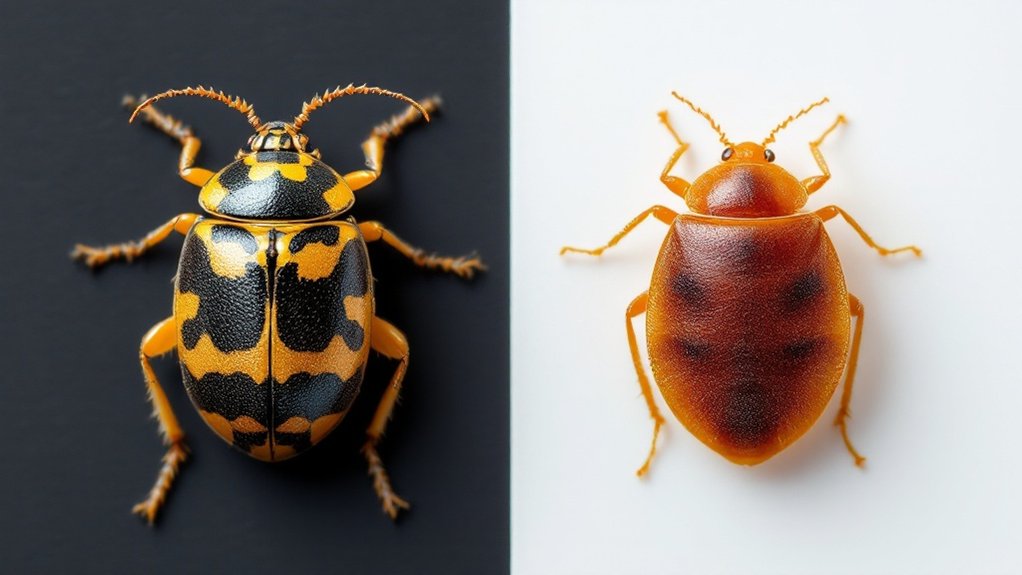
When distinguishing between carpet beetles and bed bugs, their physical characteristics reveal significant differences.
You'll notice that adult carpet beetles are generally smaller, ranging from 1/10 to 1/8 inch long, and exhibit round to oval body shapes. Their surfaces often display intricate color patterns, featuring scales of brownish-yellow, white, and black, with some species showcasing three wavy bands. Additionally, adult varied carpet beetles measure 2-3 mm in length and are oval-shaped with wings.
In contrast, bed bugs typically measure 4-5 mm in length and possess a flat, oval shape, characterized by their reddish-brown color without any scales or patterns.
When assessing larvae, carpet beetle larvae are elongated and resemble a hairy, elongated carrot or cigar, while juvenile bed bugs appear as smaller, lighter versions of adults, lacking the bristled appearance.
Additionally, bed bugs have uniformly colored legs and less prominent antennae compared to carpet beetles, which have clubbed antennae and legs that can be yellowish or brownish.
Habitat Preferences
Understanding habitat preferences is crucial for effectively managing infestations of carpet beetles and bed bugs.
Carpet beetles thrive in low humidity environments and prefer temperatures ranging from 60°F to 90°F. You'll typically find them in carpets, rugs, upholstered furniture, and even clothing. They favor dark or shaded areas, often hiding in cracks and crevices, which reflects their nesting behaviors. Unlike bed bugs, carpet beetles don't form large colonies; instead, they may gather in small groups near food sources, often in enclosed spaces like closets.
On the other hand, bed bugs prefer areas with high human presence, thriving in temperatures between 64°F and 90°F. Their nesting behaviors are distinctly social; they often form large colonies in mattresses, box springs, and bed frames. They seek out low-visibility areas with easy access to human hosts, hiding in places such as couches, chairs, and wall voids.
Understanding these environmental factors can help you identify potential infestation sites and implement effective management strategies tailored to each pest's unique habitat preferences.
Feeding Habits
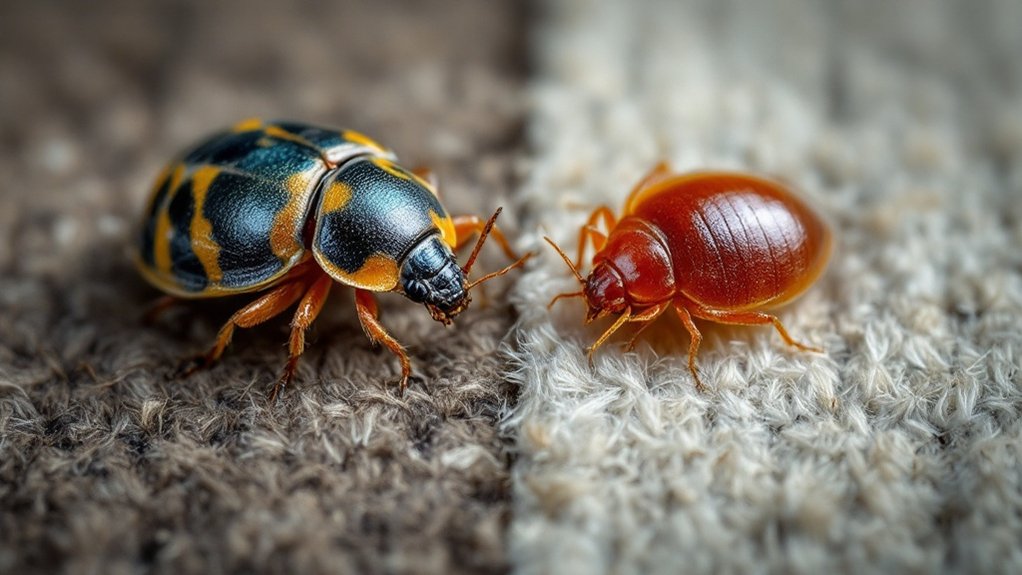
In examining the feeding habits of carpet beetles and bed bugs, distinct differences emerge that highlight their unique ecological roles.
Carpet beetles, particularly in their larval stage, exhibit a strong preference for organic materials. These larvae thrive on animal-produced debris, often found in hidden spaces like nests or within your home. They consume a range of materials, including wool, silk, and pet food, leading to significant damage to carpets and upholstery. Infestations can cause damage over larger areas compared to clothes moths, which tend to damage scattered locations.
In contrast, adult carpet beetles shift their diets to nectar and pollen from flowering plants, primarily outdoors. They don't cause visible damage when feeding, unlike their larvae.
Bed bugs, however, are exclusively hematophagous, meaning they feed solely on blood—human or animal. Attracted by warmth and carbon dioxide, they target exposed skin at night, causing itchy bites.
These contrasting feeding habits underscore the ecological niches each pest occupies: while carpet beetles contribute to the breakdown of organic materials, bed bugs rely on blood for survival.
Understanding these feeding preferences can help you effectively address infestations and maintain a healthy living environment.
Life Cycle Stages
The life cycles of carpet beetles and bed bugs reveal critical differences that influence their behavior and management. Carpet beetles undergo four distinct stages: egg, larval, pupal, and adult. A female can lay 25-100 eggs in hidden areas, often near food sources.
The larval stage is prolonged, sometimes lasting several months to years, depending on food availability and environmental conditions. After the larval stage, they enter the pupal stage for 1-3 weeks before emerging as adults, whose primary focus is mating and laying more eggs. Adult lifespan is short, typically only a few weeks, indicating a rapid turnover in their population.
In contrast, bed bugs progress through three main stages: egg, nymph, and adult. A female bed bug can lay up to 500 eggs in tight crevices. Their nymph growth occurs in five stages, each requiring a blood meal to molt and grow, taking approximately 1-4 months to reach adulthood.
Unlike carpet beetles, bed bugs mature quickly, typically within 21 days at room temperature.
Understanding these life cycle stages and the factors influencing egg development and nymph growth is crucial for effective pest management strategies tailored to each pest's unique behavior and life span.
Signs of Infestation

Identifying signs of infestation is crucial for effective pest management, as both carpet beetles and bed bugs exhibit distinct indicators of their presence. When inspecting your home, look for specific infestation signs.
For carpet beetles, you might notice damage to fibrous materials like carpets, rugs, and clothing. This damage often manifests as holes or frayed edges. Additionally, you may find shed skins of larvae or tiny, rounded fecal pellets in affected areas, indicating an ongoing infestation. Adult carpet beetles are frequently spotted on windowsills, serving as an initial telltale sign. Regular inspection of stored clothing can prevent damage caused by carpet beetle larvae.
In contrast, bed bugs primarily inflict damage through bites, resulting in small, red, itchy welts on your skin. Look for bloodstains or rust-colored spots on your sheets and mattresses, as well as tiny, pale yellow eggs in crevices.
Bed bug feces appear as black dots, similar in size to a period. Recognizing these specific signs will help you differentiate between carpet beetles and bed bugs and take appropriate action to address the infestation, ultimately protecting your belongings from further carpet damage.
Health Risks
Health risks associated with carpet beetles and bed bugs can significantly impact your well-being, making awareness essential for effective pest management.
Carpet beetles primarily present respiratory issues and allergic reactions. Their shed hairs can become airborne, aggravating asthma and allergies, while their presence can lead to skin irritations. Although they don't transmit diseases, their allergens can still pose health concerns, especially for sensitive individuals. Furthermore, the shedding particles from carpet beetles can worsen indoor air quality, leading to increased health risks.
In contrast, bed bugs are notorious for causing allergic reactions through their bites, which can lead to intense itching and even secondary infections. The discomfort from these bites can disrupt your sleep and lead to a significant psychological impact, increasing stress and anxiety levels.
This discomfort, coupled with the stigma surrounding infestations, can affect your mental health.
Both pests carry unique health risks, but while carpet beetles affect indoor air quality and may cause digestive issues through contaminated food, bed bugs primarily disturb your peace through bites and psychological distress.
Understanding these risks is crucial for protecting your health and well-being. Early detection and proactive measures can mitigate these issues effectively.
Control Methods
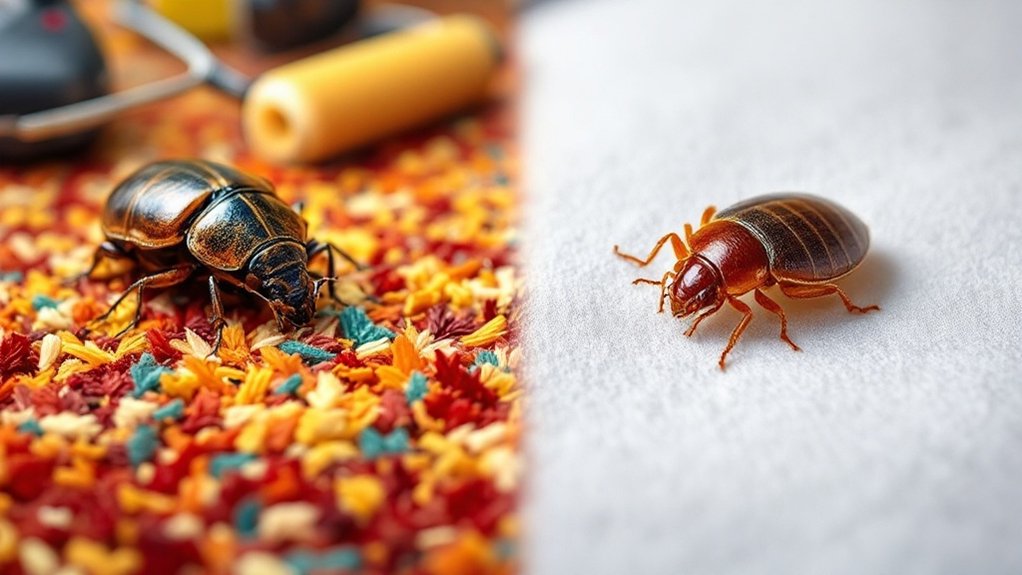
When dealing with infestations, understanding control methods for both carpet beetles and bed bugs is crucial for effective management.
For carpet beetles, heat treatment is highly effective; you can kill them by washing fabrics in hot water or steam cleaning carpets. Employing monitoring techniques, like sticky traps, helps gauge beetle populations, while eliminating food sources—like lint and debris—also plays a vital role. Larvae prefer dark, secluded areas for feeding and pupation, making it important to inspect such locations when addressing infestations.
Chemical controls can be necessary for persistent infestations. Applying insecticides labeled for carpet beetles in non-cleanable areas is recommended, and using insect growth regulators can help prevent larvae from hatching.
For bed bugs, thermal treatments are similarly effective, along with regular inspections to catch early signs of infestation. You should utilize traps designed for bed bugs and monitor hiding places, particularly in bedding and furniture.
Both species require diligence; check traps regularly to understand the extent of the infestation. By employing these targeted methods, you can reclaim your space from carpet beetles and bed bugs, ensuring a cleaner, healthier environment for everyone in your home.
Prevention Strategies
Effective prevention strategies are essential for keeping both carpet beetles and bed bugs at bay. Start with thorough cleaning techniques—regularly vacuum carpets, rugs, upholstered furniture, and curtains to eliminate potential food sources. Don't forget to clean up spills and dispose of garbage promptly, as these can attract pests. For pet owners, store pet food in sealed containers and regularly clean up pet hair to minimize food availability. Implement effective storage solutions by placing clothes in airtight containers to prevent infestations. Use dehumidifiers to control humidity levels, especially in basements and bathrooms where moisture can accumulate. Regular inspections of furniture and carpets in less disturbed areas can help identify problems early, as conducting routine checks allows you to catch infestations before they spread. For bed bug prevention, inspect bedding and furniture frequently, using protective covers on mattresses. Minimize clutter in high-traffic areas to limit hiding spots for both pests. Seal cracks and crevices around your home's entry points and furniture to prevent access.
Contact My Pest Pros
In summary, understanding the key differences between carpet beetles and bed bugs is crucial for effective pest management. Carpet beetles thrive in low-humidity environments and feed on organic materials, while bed bugs prefer high-human contact areas and solely consume blood. Recognizing their distinct habitats, feeding habits, and signs of infestation can help you employ the right control methods and prevention strategies. By being vigilant and informed, you can protect your home from these unwanted pests.
If you suspect an infestation, don't hesitate to contact My Pest Pros for professional pest control assistance. Call us today at 571-512-5817 to ensure your home remains pest-free!