
After a spring storm hits your Virginia home, you'll need to act quickly to prevent pest invasions. Start by removing storm debris and inspecting your property for new entry points around the foundation, roof, and utility lines. Seal gaps immediately with appropriate materials like caulk or steel wool, and clear your gutters to prevent water accumulation. Setting up targeted pest control measures and scheduling professional inspections will help you develop a thorough defense against post-storm invaders.
Key Takeaways About Virginia Pest Prevention After Storms
- Remove fallen branches, wet leaves, and storm debris immediately from your property to prevent creating pest habitats near your home.
- Check and repair storm-damaged areas of your roof, siding, and foundation, as Virginia's termites and carpenter ants target water-damaged wood.
- Empty all standing water from containers, birdbaths, and depressions to prevent mosquito breeding during Virginia's humid spring.
- Install weather stripping and door sweeps to seal entry points, particularly effective against rodents seeking shelter after storms.
- Schedule a professional pest inspection to identify vulnerable areas and implement targeted prevention strategies specific to Virginia's climate.
Common Post-Storm Pest Threats in Virginia

After severe storms sweep through Virginia, homeowners often face an influx of unwanted pests seeking shelter and sustenance. You'll encounter several key threats that demand your immediate attention, particularly as standing water and damaged structures create ideal conditions for pest invasions.
Mosquito breeding accelerates rapidly in water-filled containers, ditches, and depressions left by storms. These insects can multiply within days, turning your property into a breeding ground. You'll need to eliminate standing water promptly to prevent populations from exploding.
Storm damage to your home's exterior often creates entry points for wood-destroying insects. Termite infestations become more likely when moisture-damaged wood remains untreated, as these pests are drawn to softened structural materials. You'll notice increased ant activity as well, particularly carpenter ants that target water-damaged areas. Additionally, rodents frequently seek higher ground in your home's walls and attic spaces to escape flood-prone areas. To protect your home from these threats, consider scheduling a home termite inspection to identify any potential infestations before they cause significant damage.
Identifying Storm Damage Entry Points
Storm damage creates numerous entry points that can turn your home into an open invitation for pests. You'll need to conduct a thorough inspection of your property's exterior to identify vulnerable areas where insects and rodents might infiltrate.
Start by examining your roof for missing shingles, damaged flashing, or compromised vents. Check your home's foundation for new cracks or gaps that may have formed during the storm. Pay special attention to areas where utilities enter your house, as storm damage often affects these connection points. Inspect window frames, door frames, and weather stripping for signs of water damage or warping.
Don't overlook loose siding, damaged fascia boards, or separated joints around your home's exterior. Even small openings can provide access for pests. Document each potential entry point you discover, measuring gaps when possible, to guarantee proper repairs can be made promptly and effectively. Additionally, consider contacting a local pest control company to assess and address any potential pest issues before they become a larger problem.
Essential Steps for Immediate Pest Prevention
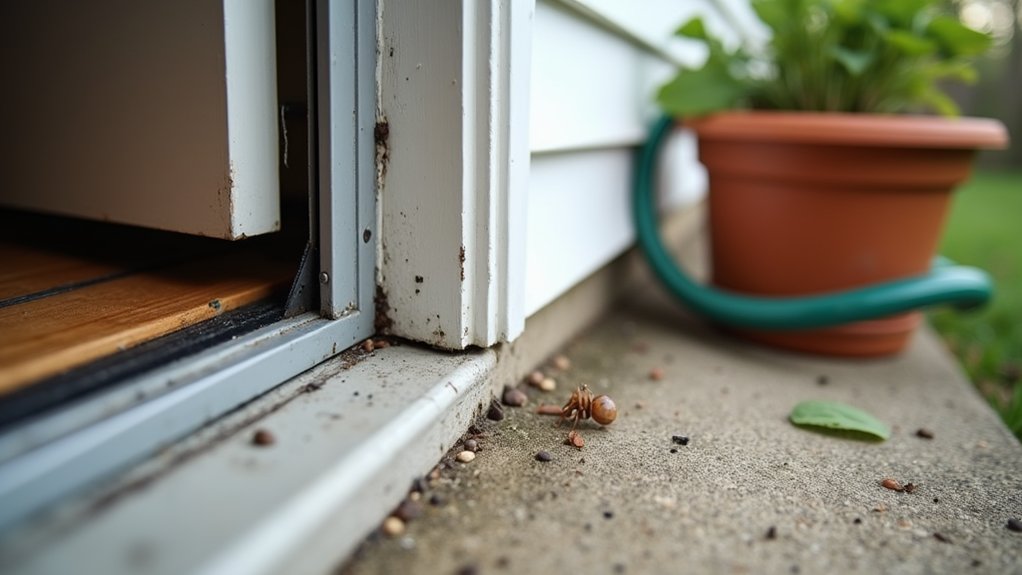
Taking immediate action with three critical steps can help prevent pests from exploiting storm-created vulnerabilities in your home. First, remove all storm debris from your property, especially scattered wood, branches, and wet cardboard that can attract termites and other wood-boring insects. During storm recovery, inspect and clear your gutters to prevent water accumulation that draws mosquitoes and creates moisture-loving pest habitats.
Second, seal any gaps, cracks, or holes in your home's exterior using appropriate materials like caulk, steel wool, or concrete patches. Pay special attention to areas around utility entry points and damaged siding. Finally, implement targeted pest control measures by placing deterrents and traps around potential entry points. You'll want to focus on areas where storm damage has created new access routes for pests. Consider using weather-resistant bait stations and maintaining them throughout the recovery period. Additionally, remember that preventative measures are crucial in avoiding future infestations and maintaining a pest-free environment.
Long-Term Storm Protection Strategies
While immediate actions help address urgent pest concerns, implementing long-term storm protection strategies will fortify your home against future pest invasions. Start by establishing a preventive maintenance schedule that includes quarterly inspections of your property's drainage systems, foundation, and potential entry points.
You'll need to conduct seasonal inspections of your roof, gutters, and weatherstripping to identify and repair vulnerabilities before they become pest highways. Install permanent mesh screens over vents, chimneys, and other openings that could serve as access points during storms. Replace worn door sweeps and seal gaps around utility entrances with weather-resistant materials.
Consider upgrading your outdoor lighting to pest-resistant LED bulbs, as these attract fewer flying insects. Install permanent drainage solutions like French drains or grading corrections to prevent water accumulation near your foundation. These long-term investments will greatly reduce your home's susceptibility to post-storm pest infestations.
Contact My Pest Pros For Pest Management
After a spring storm, your Virginia home's pest defense is like a fortress that needs immediate reinforcement. Just as one small crack in a dam can lead to catastrophic flooding, a single storm-damaged entry point can invite thousands of unwanted pests—mice, for instance, can squeeze through holes as small as a dime. To ensure your home remains protected, consider following these pest prevention strategies. Contact My Pest Pros to schedule a pest treatment or a pest control maintenance program to help protect your home against pests.
Call My Pest Pros at 703-665-4455 for pest prevention to protect your home against nature's uninvited guests.