
To manage pests effectively in urban areas, you need a thorough approach that addresses unique challenges like high population density and food availability. Start with Integrated Pest Management (IPM) principles, focusing on accurate pest identification and eco-friendly strategies. Regular sanitation practices are essential; guarantee waste is disposed of correctly and eliminate standing water to cut pest breeding grounds. Utilize biological control methods and exclusion techniques to keep pests out. Finally, implementing systematic inspections can help you catch infestations early. There are many more strategies you can explore to enhance your pest control efforts effectively.
Understanding Urban Pest Challenges

Urban areas face significant pest control challenges due to their unique characteristics. The high population density and limited space in cities create ideal conditions for pests to thrive. Urban pest behavior is influenced by readily available food sources and shelter, making infestations more likely.
As you navigate urban environments, you'll notice that densely populated areas complicate large-scale control efforts, increasing the risk of health implications associated with pest-related diseases.
Moreover, human behavior plays a vital role in exacerbating these challenges. Poor sanitation practices, such as irregular waste disposal and inadequate food handling, attract pests. Overfilled trash containers are common, and without daily cleaning and prompt garbage removal, infestations can quickly spiral out of control. Effective pest control is crucial in mitigating these risks and ensuring the safety of urban residents.
Public awareness campaigns can help promote better sanitation practices, but their effectiveness depends on community engagement.
Additionally, pesticide resistance complicates these efforts. The misuse and overuse of chemical pesticides lead to resistance in common pests like cockroaches and mosquitoes, necessitating alternative control strategies.
Ultimately, understanding these urban pest challenges is essential for developing effective pest management approaches that can safeguard public health and maintain urban livability.
Principles of Integrated Pest Management

Effective pest control relies on the principles of Integrated Pest Management (IPM), a systematic approach designed to minimize pest populations while reducing reliance on chemical treatments.
To begin, you need to employ effective pest identification techniques. Accurately identifying pests allows you to develop targeted management strategies, taking into account economic injury levels (EIL) and economic thresholds (ET) for major pests. Utilizing monitoring tools like traps can enhance your ability to track pest populations and optimize sampling times. This process emphasizes the importance of identifying all pests to ensure effective strategy development.
Implementing integrated strategies is vital. Start with prevention—maintaining cleanliness, sealing entry points, and removing standing water can greatly reduce pest attraction.
When pests do appear, consider biological control methods, such as introducing natural predators like ladybugs, which can effectively manage pest populations without harsh chemicals.
Regular inspections and continuous monitoring are essential for evaluating pest levels and determining the need for control measures. By reviewing the effectiveness of your IPM strategies, you can continuously improve your approach, ensuring a sustainable and environmentally conscious pest management system.
In urban settings, this integrated approach not only addresses pest issues but also fosters community involvement in maintaining pest-free environments.
Eco-Friendly Pest Control Options

Adopting eco-friendly pest control options is a natural progression from the principles of Integrated Pest Management (IPM). You can implement biological control by introducing natural predators or parasites that specifically target pest populations, reducing reliance on chemicals.
Organic pesticides offer another alternative; these naturally derived substances are less toxic to non-target species, promoting a healthier ecosystem. Engaging in habitat manipulation is essential as well. By modifying environments—such as removing standing water or debris—you can prevent pest infestations before they start. Exclusion techniques, like sealing entry points, further bolster your defenses against unwanted invaders.
While these methods may take longer to yield results compared to conventional treatments, they focus on long-term sustainability and environmental safety. You'll find that these approaches not only preserve biodiversity but also reduce the risk of chemical resistance among pests. Green pest control practices also align with the growing consumer demand for eco-friendly solutions, making them increasingly relevant in today's market.
Additionally, educating your community about these strategies fosters awareness and encourages collective action towards eco-friendly pest management. Ultimately, by choosing sustainable practices, you can create healthier habitats for yourself and future generations while addressing pest issues effectively.
Monitoring and Inspection Techniques
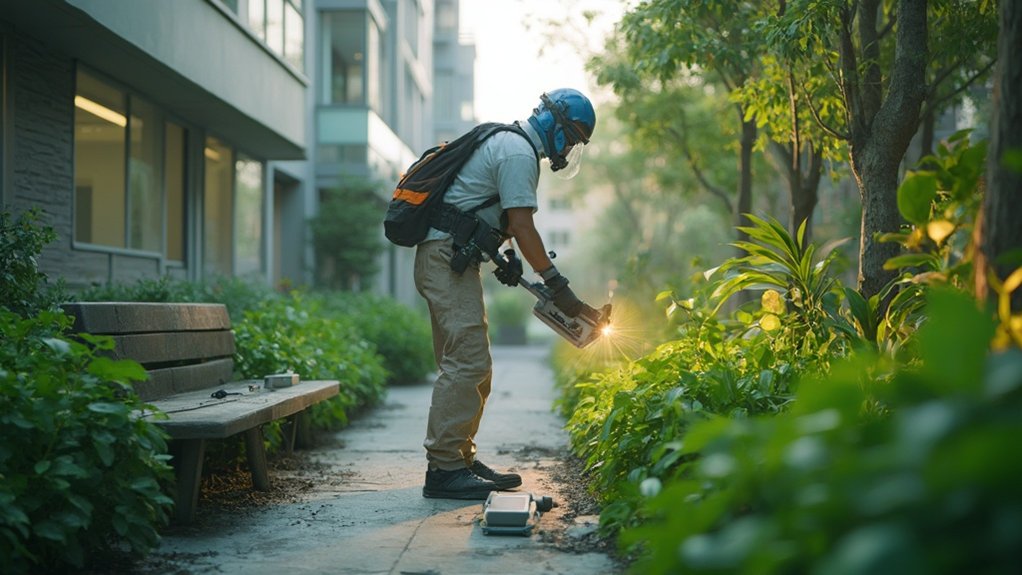
Monitoring and inspection techniques are fundamental components of successful pest management in urban environments. You need to conduct systematic inspections regularly to catch infestations early and assess their severity.
Employ pest identification techniques by combining visual inspections with trapping methods, like sticky traps and baited traps. This approach allows you to pinpoint pest activity and communicate findings effectively.
Follow inspection frequency guidelines to guarantee you're monitoring adequately throughout the year, especially during peak pest seasons. Seasonal monitoring helps you identify emerging issues or those that have evaded previous treatments. Additionally, understanding the role of insects in agriculture can provide insights into managing pests that affect urban gardens.
Structural inspections are essential—examine buildings for potential entry points and conditions that foster pest harborage. Don't forget to monitor plant health; early signs of damage can indicate pest presence.
Utilizing tools like smart traps and remote sensing technologies enhances your monitoring capabilities, providing real-time data on pest activity.
Keep accurate records of pest sightings and trap placements; this data is invaluable for determining action thresholds and making informed management decisions.
Continuous monitoring after treatment is critical for evaluating success and adjusting future strategies as necessary, maintaining a proactive approach to urban pest management.
Prevention Strategies for Urban Areas

In urban areas, implementing prevention strategies is essential to managing pest populations before they become problematic. Regular garbage disposal is critical; maintaining a clean environment minimizes food sources and habitats for pests. Make sure that your community adheres to proper waste management practices, as improper garbage disposal can lead to increased pest activity.
Entry sealing is another key tactic. Identify and seal cracks, gaps, and openings in buildings, as even small entry points can allow pests access. Repairing damaged window screens and door sweeps can greatly reduce the likelihood of pests infiltrating your space.
Additionally, inspect utility lines and seal any gaps to further fortify your defenses. Incorporating regular sanitation practices helps to reduce food sources for pests and further strengthen your pest prevention efforts.
Eliminating standing water is crucial, too. Regularly check for and remove sources of standing water, such as birdbaths and clogged gutters. These areas can become breeding grounds for pests if not managed properly.
Lastly, consider physical modifications to your environment. Using screens and barriers, along with regular landscaping, can deter pests and reduce their habitats.
Community Involvement in Pest Control

Community involvement plays an essential role in effective pest control within urban settings. By engaging in community education, residents gain valuable insights into common pests, their behaviors, and effective prevention methods. Workshops and seminars can empower you and your neighbors to take proactive measures, while informational campaigns heighten awareness about pest issues and encourage collective action.
Establishing local partnerships with organizations and stakeholders enhances these efforts. Collaborative initiatives, such as neighborhood clean-up events, foster a shared commitment to maintaining pest-free environments. By forming neighborhood watch groups for pest monitoring, you can facilitate early detection of infestations and improve the efficacy of pest control efforts.
Community-led initiatives, like New York City's "Rat Patrol," highlight the effectiveness of your collective involvement. This empowerment fosters resilience, ensuring that you and your community can address pest issues sustainably. Additionally, implementing Integrated Pest Management (IPM) strategies can further enhance your community's ability to manage pest populations effectively.
In addition, adopting eco-friendly pest control alternatives and encouraging biodiversity through natural predators can enhance the overall health of your urban ecosystem.
Ultimately, community involvement not only strengthens bonds among residents but also leads to cost-effective and environmentally friendly pest control solutions. By working together, you can build a safer, healthier urban environment for everyone.
Evaluating Pest Control Effectiveness

Evaluating pest control effectiveness hinges on a systematic approach that incorporates various metrics to measure outcomes accurately. To start, you should set clear goals, such as reducing pest population density or damage caused by pests.
Begin by establishing a baseline, measuring pest activity before implementing control measures. After treatment, track pest activity through methods like traps and observations to gauge pest activity effectively.
Data analysis plays a vital role in this evaluation process. By regularly monitoring pest populations and comparing results to your baseline, you can determine the success of your techniques. If pest numbers remain high, it may be necessary to make treatment adjustments. This could involve altering the integrated pest management (IPM) strategies you employ, whether that's switching chemical controls or increasing biological methods.
Don't forget to assess customer satisfaction through surveys, as this feedback provides valuable insight into your pest control effectiveness. Additionally, consistently measuring compliance with regulations helps ensure that your pest control methods remain effective and safe for the environment.
Ultimately, a thorough evaluation framework will help you refine your approach and guarantee long-term pest management success in urban settings.
Effective Pest Control in Fairfax and Northern Virginia
Whether you're struggling with a pest infestation or want to prevent a pest control problem in Fairfax, My Pest Pros can help. Contact My Pest Pros at 703-665-4455 for pest control Northern Virginia.