
Pest control methods have come a long way from ancient times. You'd find civilizations using natural herbs and sulfur compounds for pest issues. As the years went by, chemical pesticides like DDT became popular, especially after World War II. However, due to environmental concerns, Integrated Pest Management (IPM) emerged, blending various strategies for sustainable control. Today, technology plays a key role with smart monitoring systems and IoT solutions.
Historical Overview of Pest Control Practices
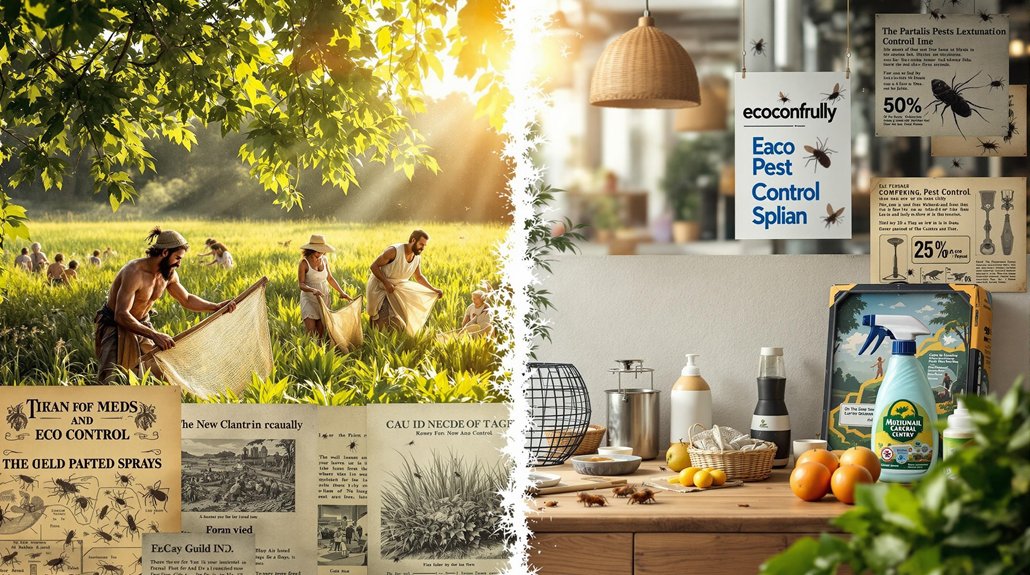
Throughout history, people have sought effective ways to manage pests, and the methods they've used have evolved considerably.
Ancient civilizations, like the Sumerians, relied on sulfur compounds around 2500 BC for insect control. Egyptians and Chinese turned to natural herbs and oils for home pest treatment, showcasing early pest management techniques.
By the 1600s, stronger methods emerged, including tobacco infusions and arsenic. The Industrial Revolution brought synthetic pesticides, like Paris Green, marking a turning point in chemical approaches.
By the 1960s and 1970s, Integrated Pest Management (IPM) gained traction, merging various strategies for sustainable pest control.
Today, you might call a local exterminator who applies these advanced techniques, ensuring a safer environment while effectively addressing pest issues in your home.
The Transition to Chemical Pesticides
As agriculture evolved, the shift to chemical pesticides became a pivotal moment in pest control history. Starting in the 17th century, toxic substances like arsenic and mercury were used despite their risks.
The industrial revolution in the 1860s introduced synthetic pesticides such as Paris Green, revolutionizing local pest control. By 1939, DDT emerged, widely applied during World War II for pest control treatment.
The post-war era saw chlorinated hydrocarbons and organophosphates take center stage, fueling the Green Revolution of the 1950s and 60s. However, growing environmental concerns about biomagnification and pest resistance led to a reevaluation of reliance on these chemicals.
This prompted the search for more sustainable pest management strategies, setting the stage for future innovations.
The Rise of Integrated Pest Management
Integrated Pest Management (IPM) emerged in the 1960s and 1970s as a revolutionary approach to pest control, responding to the growing need for sustainable practices.
You’ll find that IPM combines biological, chemical, and physical control methods to effectively manage pest populations. By closely monitoring and identifying pests, IPM allows you to target interventions that reduce chemical pesticide reliance.
This strategy focuses on treating only significant pest threats, minimizing ecological impact, and protecting beneficial organisms, which promotes a healthier environment. Increased research funding for IPM has led to improved pest control outcomes.
As a result, adopting IPM has reduced pesticide exposure for you, your family, and pets, contributing to safer living environments while maintaining effective pest management.
Technological Advancements in Pest Control

With the rapid pace of technological innovation, pest control has seen remarkable advancements that enhance efficacy and sustainability.
You might be surprised to learn that the first electric fly killer was patented in 1902, using alternating current to effectively eliminate insects.
Fast forward to the 1970s, and UV light technology revolutionized electric traps by attracting more insects than before.
The introduction of the Mouse Alert system in 1992 allowed for improved monitoring of rodent populations through wireless communication.
In 2014, PestConnect integrated IoT technology for humane pest management and data collection.
Finally, the 2017 launch of LED technology in the Lumnia range created a more energy-efficient solution for attracting flying insects, making pest control smarter and more effective than ever.
Future Trends in Pest Management Solutions
The future of pest management is set to be shaped by innovative technologies and data-driven strategies that enhance efficiency and sustainability.
You’ll see increasing reliance on real-time monitoring systems, providing alerts that enable you to act before infestations escalate. With the integration of Internet of Things (IoT) technology, pest control will become more humane and data management will improve greatly.
Sustainable practices like Integrated Pest Management (IPM) will minimize chemical pesticide use while focusing on ecological balance. Advances in artificial intelligence and machine learning will revolutionize how you identify and treat pests, improving accuracy and response time.
Additionally, ongoing research into biological controls will lead to new, effective deterrents, further enhancing sustainability in pest management solutions.
How My Pest Pros Can Help With Effective Home Pest Treatments
When it comes to effective home pest treatments, My Pest Pros stands out. Our clients rave about the customer experience our staff provides. We hire people to perform your home pest treatments who we would want in our own homes or would not mind grabbing a drink with. We train them on employing Integrated Pest Management (IPM) strategies that focus on understanding pest life cycles and their environmental interactions.
They use advanced technology for real-time monitoring and data analysis, allowing them to tailor proactive measures for specific infestations. By emphasizing reduced chemical use, their solutions not only protect your home but also the health of your family, pets, and beneficial insects. And, when it comes to pesticide use, we aim to use reduced toxicity pesticides to help protect your family while eliminating pests.
My Pest Pros develops personalized pest treatment plans that consider your home's unique characteristics and pest pressures. Their ongoing monitoring and preventative strategies minimize the chances of repeat infestations, ensuring your home remains safe and structurally sound.
We want o provide you with effective, sustainable pest control solutions.
Contact My Pest Pros For Local Pest Control Treatments
Pest control has significantly evolved from ancient practices to today's sophisticated methods. One notable advancement is integrated pest management, which can cut pesticide usage by up to 50%. This transition not only safeguards crops but also positively impacts the environment. By adopting sustainable practices and utilizing innovative technologies, we are moving towards a safer and more efficient pest control approach. If you're dealing with pest problems, don't hesitate to reach out to My Pest Pros to schedule a pest treatment. Call us today at 703-665-4455 for tailored solutions for your home!