
Boxelder bugs are distinctive insects with black bodies and orange or red markings. They mainly congregate around boxelder trees and seek shelter in your home as the weather cools down. They're drawn to sunny spots around windows and doors, looking for warmth rather than food. While they're harmless, their presence can be annoying. If you want to know more about their life cycle and how a boxelder exterminator can keep them out, keep exploring the best pest treatment options available.
Boxelder bug control focuses on keeping these insects from entering your home and removing the ones that make it inside. Sealing gaps around windows, doors, and foundations, reducing places where they can shelter, and removing indoor bugs promptly can help limit recurring problems. If large numbers keep returning, professional treatment may be the most practical next step.
Key Takeaways About Boxelder Bug Treatment
- Boxelder bugs are distinct black insects with orange or red markings, primarily associated with boxelder trees.
- They feed on seeds and leaves but are not harmful to plants or humans.
- As temperatures drop in fall, they seek warmth and shelter indoors, clustering around windows and doors.
- Nearby boxelder trees increase the likelihood of their invasion into homes.
- Sealing entry points and removing host plants can help prevent infestations.
Understanding Boxelder Bugs: Identification and Characteristics

Boxelder bugs are easily recognizable insects that can become a nuisance around your home. You'll notice their distinct black bodies with orange or red markings, particularly along the edges of their wings and thorax. Adult boxelder bugs typically measure about half an inch long, making them relatively easy to spot. During warmer months, they often congregate on sunny sides of buildings, drawn to the heat and light.
These pests are primarily associated with boxelder trees, as they feed on the seeds and leaves. However, they're not harmful to your plants, and they don't bite or sting. Instead, their main concern is the sheer number of them; when they invade your living space, they can leave behind stains and unpleasant odors. Knowing what boxelder bugs look like and their preferred habitats can help you prevent them from settling in around your home.
The Life Cycle of Boxelder Bugs
Understanding the life cycle of boxelder bugs can help you manage their presence around your home. These pests go through five nymph stages before reaching adulthood. It all starts with the female laying eggs, typically in clusters on the bark of boxelder trees or nearby surfaces. Within a week, the eggs hatch into nymphs, which are small and red or orange. As nymphs grow, they'll shed their skin several times, evolving through their nymph stages.
You might notice these bugs more in the fall, as they seek shelter to survive the colder months. Once they reach maturity, boxelder bugs can live for several months. Understanding this cycle allows you to take proactive steps, like sealing entry points or removing potential egg-laying sites, to reduce their chances of invading your space. By being aware of their life cycle, you can effectively manage and minimize their presence around your home.
Why Boxelder Bugs Invade Homes
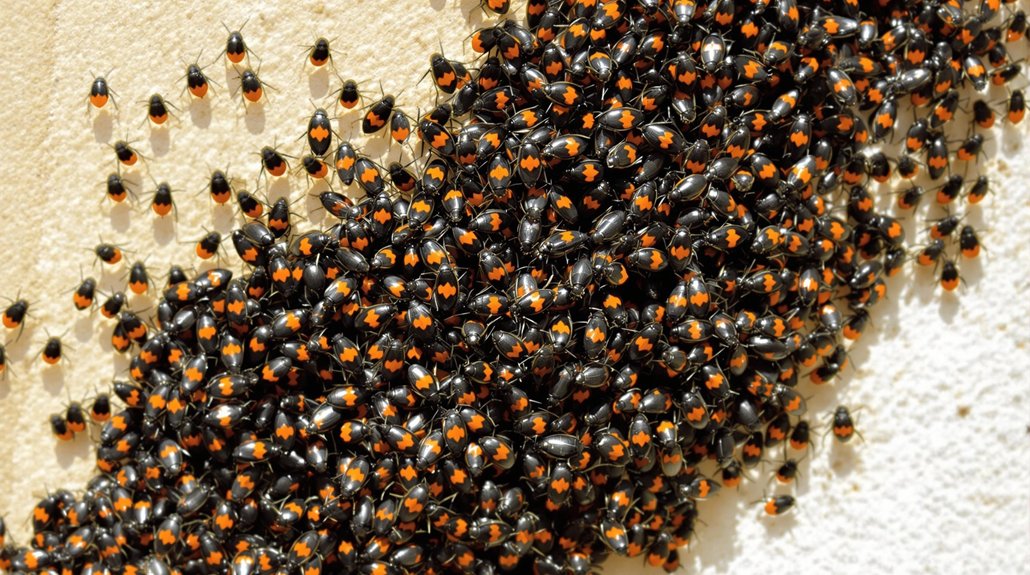
As the weather cools in the fall, these pests instinctively seek warmth and shelter, prompting them to invade homes. You might notice boxelder bugs clustering around your windows and doors, drawn by the warmth inside. They're not after your food or belongings; they're simply looking for a cozy spot to ride out the colder months.
These bugs are particularly attracted to sunny areas of your home, where they can soak up heat. If your home has boxelder trees nearby, you're even more likely to see them, as they feed on the seeds and leaves. Unfortunately, once they find their way inside, they can be quite a nuisance. They often gather in large numbers, which can be unsettling. Understanding why they invade your space helps you prepare for their seasonal visits, making it easier to manage them when they do show up.
Preventing Boxelder Bug Infestations
To keep boxelder bugs from invading your home, it is essential to take proactive measures before the cold weather sets in. Start by sealing any cracks and gaps around windows, doors, and foundations. These tiny openings can serve as entry points for these pests. Make certain to repair any damaged screens and install door sweeps to block them out.
Next, consider removing boxelder trees or other host plants within proximity to your home. If that's not possible, regularly clean up fallen leaves and debris, as these can attract bugs seeking shelter.
You should also confirm that outdoor lights are not overly bright, as they can draw boxelder bugs closer to your home. Finally, keep your yard tidy and trim back shrubs that might provide hiding spots. By implementing these strategies, you'll greatly reduce the chances of a boxelder bug infestation.
These prevention steps are an important part of boxelder bug control because they focus on stopping the bugs from getting inside your home in the first place.
Effective Methods for Removing Boxelder Bugs From Your Home
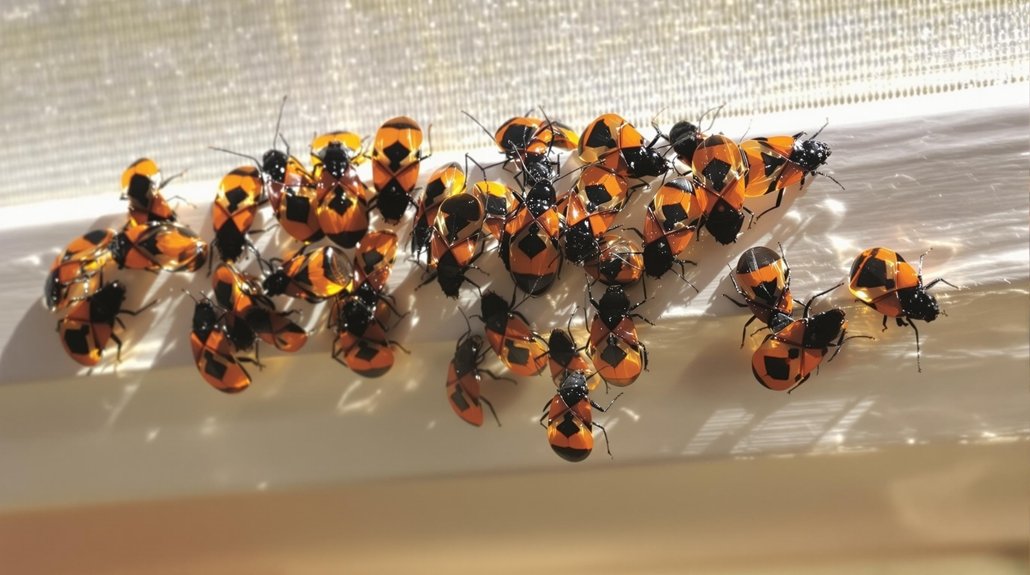
If you find boxelder bugs inside your home, acting quickly can help minimize their presence. Start by vacuuming them up with a handheld vacuum or a regular vacuum cleaner. Make sure to dispose of the bag or empty the canister outside to prevent them from coming back. Next, seal any cracks and crevices around windows, doors, and walls to block their entry points.
For a more natural approach, consider mixing equal parts water and dish soap in a spray bottle and applying it directly to the bugs. This solution suffocates them and is safe for indoor use.
When Do You Need Professional Boxelder Bug Control?
If boxelder bugs are showing up in large numbers or keep returning after you vacuum them up and seal visible entry points, it may be time to consider professional boxelder bug treatment.
Boxelder Bug Treatment
Call My Pest Pros if you need professional boxelder bug control at your home in Virginia or Maryland. Whether you are dealing with bugs already inside or want help preventing a recurring problem, our team has the experience and training to provide effective boxelder bug treatment. Schedule your treatment or call us today at 703-665-4455.