
Spiders eat a variety of prey, primarily focusing on insects like flies and mosquitoes. Some even go for small arachnids, worms, and small vertebrates when they can. Each spider species has unique dietary preferences and hunting strategies. For example, orb-weavers capture prey in intricate webs, while wolf spiders actively hunt them down. Their adaptability to different food sources makes them fascinating predators. If you're curious about their hunting techniques and ecological roles, there's much more to discover! If you’re dealing with spiders in your home, understanding what they eat can also help you understand what may be attracting them. Knowing their common food sources can provide useful context when deciding whether professional spider control is needed.
What Do Spiders Eat?
Most spiders eat insects such as flies, mosquitoes, and beetles. Depending on the species, spiders may also eat small arachnids, worms, and small vertebrates. They capture prey using different strategies, including webs, active stalking, and jumping.
Key Takeaways About What Spiders Eat
- Spiders primarily consume insects such as flies, mosquitoes, and beetles as their main food source.
- Some spider species also prey on small arachnids, worms, and even small vertebrates.
- Unique dietary adaptations, like those of Bagheera kiplingi, allow some spiders to eat plant material.
- Spiders employ various hunting techniques, including web-building and active stalking, to capture prey.
- Their predatory role helps regulate insect populations, contributing to ecological balance.
The Carnivorous Diet of Spiders

Spiders are fascinating predators, and their carnivorous diet plays an essential role in the ecosystem. You might not realize it, but their predatory behavior is finely tuned for capturing prey efficiently. When a spider catches its victim, it uses specialized mouthparts to inject digestive enzymes, starting the process of spider digestion. This allows the spider to break down the soft tissues of its prey, turning it into a nutrient-rich soup that it can absorb.
Common Prey: Insects and Beyond
While many people associate spiders primarily with insects, their diet extends well beyond just these small creatures. In fact, spiders exhibit diverse feeding habits that allow them to thrive in various environments. You'll find that many spiders target insects like flies, mosquitoes, and beetles due to their abundance and nutritional value. However, your average spider might also indulge in other prey, including small arachnids, worms, and even small vertebrates like lizards or frogs, depending on their size and habitat.
Prey selection often hinges on the spider's unique adaptations and hunting strategies. For instance, orb-weavers prefer insects caught in their silk webs, while wolf spiders actively pursue their prey. This flexibility in diet guarantees spiders can survive in different conditions, making them effective predators in ecosystems worldwide. So, the next time you spot a spider—or wonder what a spider bite may look like—remember that spiders are not just insect eaters; they’re versatile hunters.
Understanding these feeding habits can also be useful when dealing with spiders around your home. Since spiders commonly feed on insects such as flies, mosquitoes, and beetles, knowing what they are hunting can provide helpful context when evaluating a spider problem and planning spider control.
Does What Spiders Eat Matter for Spider Control?
Yes. Spiders commonly feed on insects such as flies, mosquitoes, and beetles, so understanding what they are eating can provide useful context when dealing with spiders in your home. Spider control can then focus on the spider problem while taking the surrounding pest activity into consideration.
Unique Dietary Preferences Among Spider Species
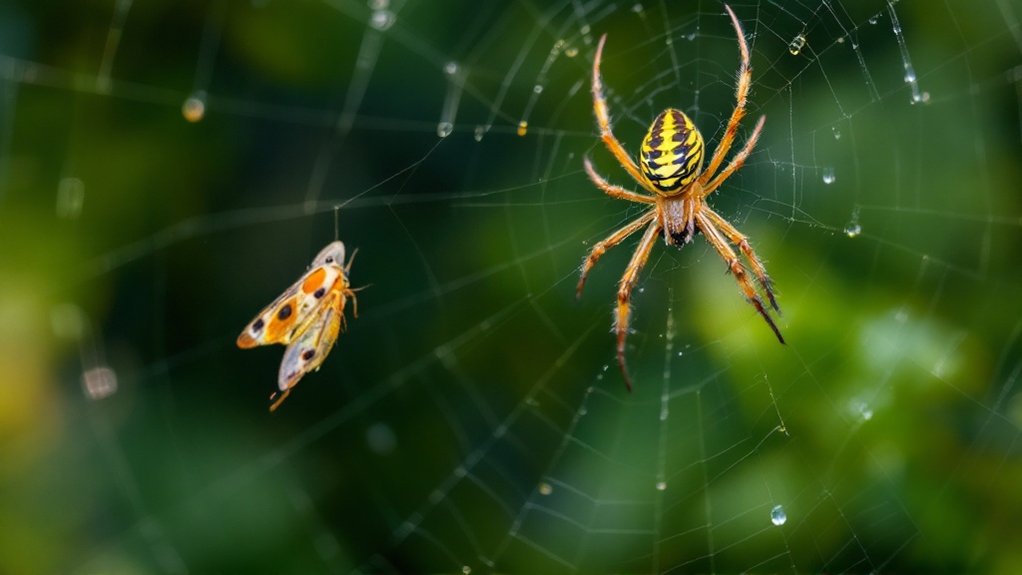
Many spider species showcase unique dietary preferences that go beyond just insects. For instance, some spiders, like the Bagheera kiplingi, have developed a taste for plant material, particularly the small, nutrient-rich structures of acacia plants. This dietary adaptation allows them to thrive in environments where traditional prey might be scarce.
In contrast, other species, such as the infamous redback spider, stick to more standard diets, yet they display fascinating web building behaviors that help them capture a variety of prey, including small vertebrates. These variations in feeding preferences illustrate the incredible adaptability of spiders.
Hunting Techniques and Feeding Strategies
When it comes to hunting, spiders employ a variety of techniques that showcase their adaptability and cunning. Many species rely on intricate web-building techniques to capture unsuspecting prey. These webs can be designed in various shapes, like orb or funnel, ensuring efficiency in trapping.
Others, like wolf spiders, use hunting adaptations that allow them to actively stalk and pounce on their food. They rely on speed and stealth, making them formidable predators without the need for webs.
Jumping spiders take it a step further, using their exceptional vision and agility to leap towards their targets.
While some spiders wait patiently in their webs, others are on the move, demonstrating the diverse strategies within the arachnid world. No matter the method, each spider's approach is fine-tuned to maximize their chances of a successful meal. Understanding these techniques reveals just how resourceful these creatures can be.
Need Help With Spider Control?
While spiders are fascinating carnivores with a varied diet, finding them throughout your home can still be unsettling. Understanding what spiders eat can provide useful clues about why they may be present, but some spider problems may require professional treatment.
If you need help with spider control, contact My Pest Pros at 703-991-5451 to schedule a pest treatment. Our spider exterminators can help manage spider populations with a treatment plan designed to keep your home comfortable and protected.