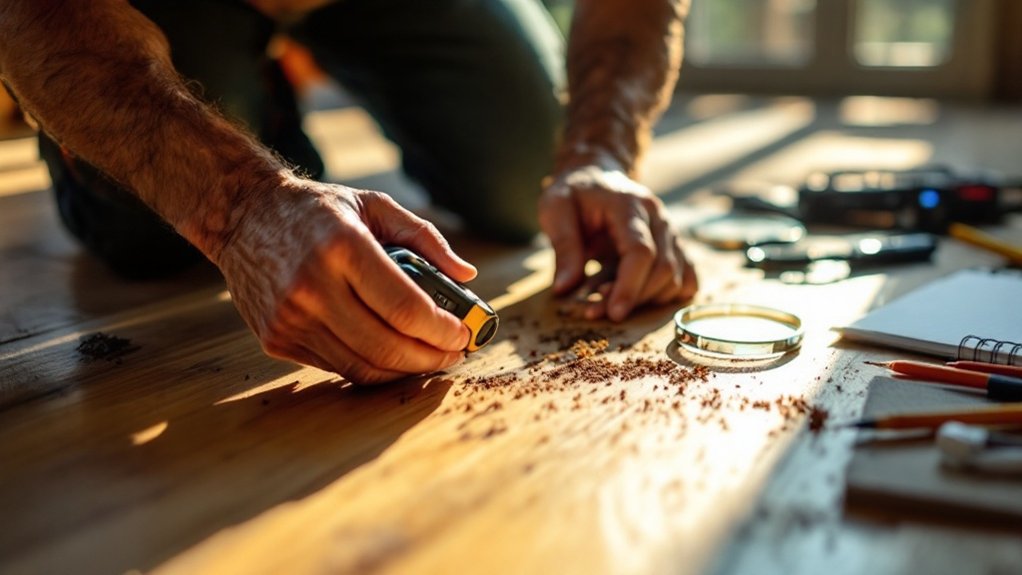
When you schedule a
termite inspection, you're initiating a critical process that can save your property from
extensive damage. Termite inspectors will thoroughly assess both the interior and exterior of your home. We will look for
signs of termite infestation in key areas like the foundation and crawl spaces. Our inspectors will seek to uncover hidden issues that might not be immediately visible. But what specific signs should you be on the lookout for, and how can you
prepare your home for the inspection? Understanding these details can make all the difference.
Key Takeaways
- A termite inspection includes a detailed evaluation of both the interior and exterior of the property for signs of infestation.
- Inspectors look for mud tubes, wood damage, and moisture issues in common areas like basements and crawl spaces.
- Tools like moisture meters, thermal imaging cameras, and borescopes are used to detect termite activity and vulnerabilities.
- After the inspection, a comprehensive report is provided outlining findings, types of termites, and recommended termite treatment options.
- Regular termite inspections and termite protection are advised, especially in termite-prone areas, to ensure early detection and maintain structural integrity.
Importance of Termite Inspections
When it comes to protecting your home from termites, understanding the importance of
termite inspections can't be overstated. Termites can cause
extensive damage, costing hundreds or even thousands of dollars in repairs. Termites are estimated to cause more than $5 billion in damage each year in the United States. Unfortunately, homeowners insurance rarely covers termite damage because it is considered preventable with termite protection.
Regular inspections are essential for
early detection, allowing you to catch infestations before they escalate and threaten your home's
structural integrity. By identifying conducive conditions, inspectors can recommend effective
termite prevention strategies, minimizing the risk of future infestations. In fact, regular inspections are key to maintaining home integrity and preventing severe damage. Proactive
termite protection will help prevent or eliminate termite activity around your home.
Inspection frequency recommendations suggest that homeowners schedule
annual inspections, particularly in regions prone to termite activity.
During these inspections,
pest control professionals visually examine your property's interior and exterior, focusing on areas like basements, crawlspaces, and wooden structures. They utilize
specialized equipment, such as moisture meters and thermal imaging cameras, to uncover signs of termite activity that might go unnoticed by untrained eyes.
Signs of Termite Infestation
Identifying the signs of
termite infestation is essential for protecting your home from
extensive damage. By understanding termite behavior and recognizing these indicators, you can take steps for
effective infestation prevention.
Look for the following signs around your property:
- Swarmers or discarded wings near windowsills and doors
- Mud tubes along foundation walls or concrete slabs
- Wood that sounds hollow when tapped
- Uneven or bubbling paint due to moisture buildup
- Small piles of wood-colored frass or droppings
Additional
structural indicators include discolored drywall, peeling paint, and crumbling wood.
Mud tubes are a critical indicator of subterranean termite activity, and finding them should prompt immediate inspection.
When you notice
stuck windows or doors, or loosening tiles, these could also suggest
termite activity.
Being
proactive is key; termite swarms often occur in spring after the last freeze, so remain vigilant during this time.
Regular inspections can help you detect any early signs of activity before significant damage occurs.
If you find any of these indicators, it's vital to take immediate action to address the infestation and protect your home from further harm.
Areas Typically Inspected
Understanding the signs of
termite infestation sets the stage for a
thorough inspection of your property. During a termite inspection, both exterior and interior inspections are essential to identify
potential problem areas.
For
exterior inspections, the inspector will examine the foundation, garage, and any exposed wood that connects with the soil. They'll check attached porches, patios, and areas near kitchens and bathrooms, as these locations are
common entry points for termites. Additionally, a termite inspection checklist is often utilized to ensure no detail is overlooked during the evaluation.
Windows, door frames and utility connections like air conditioning pipes will also be scrutinized. Additionally, wood eaves and guttering will be inspected for any signs of wood rot or leakage.
Interior inspections focus on
specific areas inside your home. Inspectors look at patios, doors, window facings, baseboards, and hardwood flooring.
They'll also examine joints, cracks, and expansion joints in the foundation. Plumbing or utility pipes that penetrate the foundation are evaluated, and the attic space may be investigated as well.
Special attention is given to subfloors and basements, where wooden structures and areas with
direct soil contact are
prime targets for termite activity.
Tools Used by Inspectors
To effectively detect
termite infestations, inspectors rely on a variety of
specialized tools and equipment designed for precise evaluation.
These tools incorporate
advanced technology and detection methods to guarantee extensive inspections. Here's a glimpse of what inspectors commonly use:
- Moisture meters to identify high moisture levels indicative of termite activity.
- Thermal imaging cameras that scan for heat anomalies associated with infestations.
- Sound equipment, including stethoscopes, to detect sounds made by termites.
- Borescopes are fiber-optic cables that enable visual inspections through drill holes.
Inspectors often use basic inspection tools, including flashlights and screwdrivers, to probe wood and access hard-to-reach areas.
Personal Protective Equipment (PPE) is also essential for safety during the inspection.
Visual Inspection Process
When evaluating a property for
termite infestations, a thorough
visual inspection is fundamental. This process begins with an
exterior inspection, where you check all accessible areas, including fences, wall edges, and landscaping timbers.
You'll look for
mud tubes, termite droppings, and any
damaged wood. Pay special attention to areas in direct contact with the ground, along with the roof, foundation, and walls, guaranteeing there are no gaps around windows and doors.
Next, the
interior inspection involves examining crawl spaces, basements, and attics for signs of termite activity. You'll inspect wooden structures for damage, checking around pipes, chimneys, and other potential entry points.
Specific areas prone to
moisture, like bathrooms and kitchens, require close attention, as do wooden beams and joists in crawl spaces. Regular inspections can help prevent extensive termite damage, ensuring that any issues are caught early.
It's essential to have inspectors with the right qualifications, as their expertise in effective inspection techniques guarantees a thorough evaluation.
After the inspection, you'll receive a
detailed report outlining the findings, recommendations for treatment, and guidance on preventing future infestations. This thorough approach is critical for protecting your property from potential termite damage.
Moisture and Wood Testing
While a thorough
visual inspection lays the groundwork for identifying
termite infestations, moisture and wood testing are pivotal in evaluating conditions that attract these pests.
By identifying moisture sources and gauging wood conditions, you can greatly reduce the risk of infestations.
Here are key aspects to reflect upon during moisture and wood testing:
- Moisture Levels: Target areas with moisture levels of 20% or higher, as these indicate potential termite activity.
- Moisture Meters: Use high-quality moisture meters for accurate readings on various surfaces to pinpoint moisture issues. The use of moisture meters enhances inspection effectiveness and quality.
- Critical Areas: Focus on bathrooms, kitchens, and crawl spaces, which often harbor hidden moisture problems.
- Wood Inspections: Examine wooden structures like beams and joists for signs of damage and elevated moisture content.
- Gutters and Downspouts: Regularly check these areas to ascertain they're clear and free from leaks that can create moisture conditions favorable to termites.
Types of Termite Treatments
Understanding the various types of
termite treatments is essential for effectively addressing infestations and preventing future issues.
One popular option is
baiting systems such as Sentricon installed by My Pest Pros. A termite baiting system involves placing bait stations around your home. These stations contain slow-acting
termiticides that termites carry back to their nests, though they require regular monitoring and can take weeks to show results.
Liquid treatments are another effective method, applying liquid termiticides directly to the soil around your foundation. This creates a
chemical barrier that's highly effective against subterranean termites, often backed by a 10-year warranty. Moisture control strategies are crucial in preventing termite infestations, as these pests thrive in damp conditions.
However, this method can be more expensive and may require trenching.
Lastly,
foam applications target hard-to-reach areas by injecting foams or applying dusts. This method is relatively affordable but may need frequent applications to maintain effectiveness.
Choosing the right treatment depends on the
severity of the infestation and your
specific needs.
What to Expect During Inspection
A
termite inspection is a significant step in
safeguarding your property from potential infestations. During the inspection, you can expect a
thorough evaluation of both the interior and exterior of your home.
Many homeowners hold
common misconceptions about inspections, believing they're unnecessary unless visible damage occurs. In reality,
regular inspections are essential for early detection.
Here's what typically happens during the inspection:
- Exterior Walls and Foundation: Inspectors check for mud tubes and damaged wood.
- Crawl Spaces and Basements: Detailed assessments for moisture issues and termite activity.
- Wooden Structures: Evaluation of outdoor elements like sheds and fences.
- Cracks and Joints: Examination of potential entry points for termites.
- Inspection Tools: Use of flashlights, moisture meters, and probes to uncover hidden signs.
Expect a detailed report summarizing current and past activities, conditions conducive to infestations, and
treatment recommendations.
Regular inspections enhance your knowledge of your property's health, helping to prevent future infestations.
Preparing Your Home
Preparing your home for a
termite inspection is essential for guaranteeing a thorough assessment. Start by engaging in
home organization;
clear clutter from walls and floors to facilitate access. Move furniture away from walls, especially in garages and basements, and organize attics and basements to create clear paths.
Don't forget to remove items from built-in cabinets and cupboards, along with accessories and cleaning products stored under sinks.
For
external maintenance, trim overgrown vegetation around your foundation and mow the lawn to allow easy inspection around the perimeter. Clear dense shrubbery near the home and inspect utility areas such as wires and plumbing. It's also important to repair leaks and moisture issues to deter termites.
Confirm all doors and gates are open, providing access to crawl spaces, basements, and attics.
Identify critical areas with
wood-to-soil contact, like mulch beds and wood piles, and check spots that
supply moisture, including downspouts and leaky water lines.
After the Inspection
Typically, after a
termite inspection, you'll receive a
detailed report outlining the
findings. This report is essential for understanding the extent of any termite issues in your property. It will include:
- Findings: Evidence of termite activity, including location and damage severity.
- Type of termite: Identification of the specific type of termite discovered.
- Severity of infestation: Assessment of how severe the infestation is and potential property damage.
- Recommendations: Suggested treatment options, like bait systems or liquid barriers.
- Photos and diagrams: Visual aids showing active areas of concern.
Following the inspection, it's important to schedule
follow-up inspections to monitor treatment outcomes and detect new infestations. These inspections help guarantee early detection, which is critical for preventing further damage. The frequency of follow-ups will depend on the level of activity and the treatments implemented. Additionally, regular inspections are recommended for early detection, especially in high-risk areas.
Additionally, your inspector will discuss
preventive measures to maintain protection against termites. By adhering to the recommended action plan and maintaining regular inspections, you can greatly reduce the risk of future infestations and guarantee
long-term protection for your property.
What Should I Expect During a Termite Inspection After Receiving a Real Estate Termite Report?
During a termite inspection, expect a thorough evaluation of your property, focusing on potential infestations and structural damage. The inspector will identify signs of termites and offer treatment options. For homeowners and buyers, understanding real estate termite report inquiries is crucial to making informed decisions about property investments.
Professional Termite Inspections
Whether you need a termite inspection for a real estate transaction, refinance, or peace of mind,
My Pest Pros can help. Contact us today at
571-512-5817 to
schedule an inspection or treatment for termites.