
Dealing with fleas can be frustrating. Understanding what is needed in preparation for flea treatment and how professional flea control treatments work can help reduce frustration and provide peace of mind. Understanding the pest and flea control process, and your role, will help will a successful flea treatment.
When you opt for professional flea control, you can expect a thorough home assessment to identify infestation hotspots, particularly in pet areas. Technicians will evaluate your home for pest and flea control and any health concerns. They'll recommend effective treatment options pest and flea control, which may include chemical or natural remedies. Safety measures are vital; you'll need to keep pets and family out of treated areas until they're safe. Follow-up procedures are essential to target various flea life stages. Regular inspections and preventative maintenance will help keep your home flea-free. There's much more to explore about ensuring successful flea control measures in your environment.
Key Takeaways
- Professionals conduct a thorough home inspection to identify flea infestations and assess pet conditions for targeted treatment.
- A variety of treatment options are available, including chemical and natural remedies tailored to your specific situation.
- Safety measures are implemented to protect pets and family, ensuring they stay away from treated areas until dry.
- Follow-up treatments may be recommended within 3 to 6 weeks to effectively disrupt the flea life cycle.
- Regular pest maintenance tips and preventative measures will be provided to help keep your home flea-free long-term.
Initial Home Assessment For Flea Control

Before you can effectively tackle a flea infestation, it's vital to conduct an initial home assessment.
Start with a thorough home inspection, focusing on areas where pets frequently reside, like bedding, carpets, and furniture. Look for infestation signs, such as flea dirt—tiny black specks that resemble pepper. This debris is actually flea feces, indicating the presence of adult fleas.
Check for live fleas as well. You might spot them jumping around or notice bites on your skin after being in these areas.
Don't forget to inspect hidden spots like under furniture, behind appliances, and inside closets, as these can serve as breeding grounds.
Document your findings, noting the severity of the infestation and the specific areas affected. This information is critical for developing a targeted treatment plan. Additionally, it may be beneficial to consult with professionals, as they can help identify the root causes of flea problems for more effective treatment.
If you find multiple infestation signs, it may indicate a more extensive problem.
Evaluating Your Pets
Evaluating your pets is essential in understanding the extent of a flea problem. Start by inspecting your pets' coats, looking for signs of fleas or flea dirt, which appears as tiny black specks. Pay close attention to areas where fleas tend to congregate, such as the neck, behind the ears, and the base of the tail.
Observe your pets' behavior; excessive scratching, biting, or licking can indicate an infestation.
Next, consider the overall pet health. Fleas can lead to allergic reactions, skin infections, and even anemia in severe cases. If your pet shows signs of distress or discomfort, it's vital to consult a veterinarian. They can help assess any health issues related to flea behavior.
Also, monitor your pets' environment. Fleas thrive in warm, humid conditions, so if your home is a conducive environment, the problem could be more extensive than it seems.
Regular evaluations of your pets and their surroundings won't only aid in identifying flea infestations but also contribute to better pet health. By understanding these factors, you'll be better prepared for effective flea control strategies.
Treatment Options Available
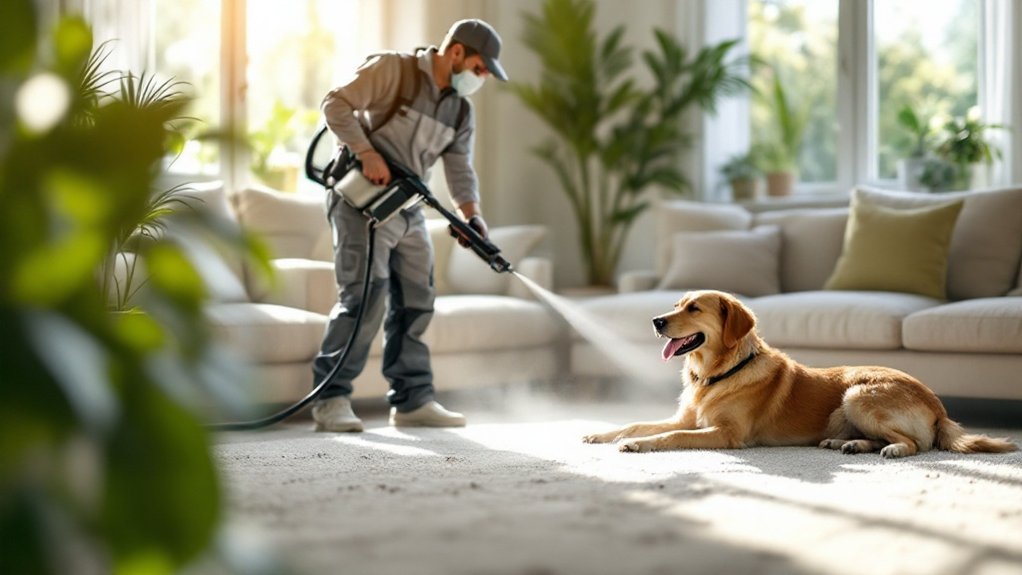
When dealing with a flea infestation, various treatment options are available to effectively eliminate these pests and protect your pets. You'll find that chemical treatments and natural remedies are two primary approaches for pest and flea control
Chemical treatments for pest and flea controloften include topical solutions and spray specifically designed to kill fleas at various life stages. These products can provide rapid results and are generally effective against severe infestations.
It's vital to follow the instructions on the label or of a pest management professional carefully to guarantee efficacy and safety for your family and pets.
On the other hand, natural remedies offer a more holistic approach. Essential oils, diatomaceous earth, and herbal flea collars can help repel fleas without the use of harsh chemicals.
While these methods might take longer to show results, they can be preferable for pet owners concerned about chemical exposure.
Whichever option you choose, it's important to take into account your pets' specific needs and any sensitivities they may have. Always consult a veterinarian for flea control and treatment recommendations for your pet.
Consulting a pest control professional can help determine the most suitable treatment to restore your home to a flea-free environment, safeguarding the well-being of your furry companions and allowing you to feel confident in your choice.
Pest and Flea Control Safety Measures and Precautions
Flea control involves not just effective treatment options, but also crucial safety measures and precautions to guarantee the well-being of both pets and humans.
When pest control professionals apply chemical treatments for pest and flea control, it's important to prioritize chemical safety. Ensure that all pets and family members are kept away from treated areas until the chemicals have fully dried and any recommended waiting period has passed. We usually recommend staying out of treated areas for four hours to allow products to dry.
Before treatment, discuss any specific concerns about your pets' health or sensitivities with the pest control technician. They can recommend products that are safe for your furry friends as well as best practices for safety and treatment.
Additionally, you should remove toys, food, and bedding from the treatment area to prevent contamination.
During the treatment, it's advantageous to have a designated safe space for your pets. This not only protects them but also allows you to monitor their behavior post-treatment.
After the service, thoroughly clean the area by vacuuming, but wait a few days to allow the treatment to work effectively. It's also essential to remember that flea infestations can breed rapidly if not addressed promptly.
Pest and Flea Control Follow-Up Procedures

After guaranteeing the safety of your pets and family during the treatment, follow-up procedures play an essential role in maintaining an effective flea control strategy.
Understanding the flea life cycle is important, as it helps you recognize the significance of these follow-up treatments. Fleas go through several stages: egg, larva, pupa, and adult. Even after the initial treatment, eggs and larvae may remain in your environment.
Typically, professional pest control services may recommend follow-up treatments within 3 to 6 weeks after the initial application. This timeframe targets newly emerged adult fleas that were previously in the larval stage. By addressing these stages, you can effectively break the flea life cycle and considerably reduce the infestation.
During the follow-up period, it's essential to maintain a clean environment. Vacuum your home regularly, focusing on carpets, rugs, and upholstery to remove any remaining eggs or larvae. We recommend vacuuming at least every other day for 2-3 weeks to help the flea treatment process.
Additionally, confirm that your pets are treated with veterinarian-approved flea control products.
Preventative Maintenance Tips
To effectively prevent future infestations, it's crucial to adopt a proactive approach in maintaining your surroundings.
Start with consistent flea prevention measures. Use veterinarian-recommended flea treatments for your pets, as this helps reduce the likelihood of flea populations establishing in your residence.
Conduct routine inspections of your living areas, especially places where your pets spend the most time. Look for signs of fleas, such as flea dirt or live insects.
Regularly vacuum carpets, rugs, and upholstery, ensuring you dispose of the vacuum bag or empty the canister immediately to avoid re-infestation.
Don't forget to wash your pet's bedding and any soft furnishings frequently in hot water. This simple step can eliminate fleas and their eggs, contributing to a flea-free environment.
Keep your yard tidy by regularly mowing the lawn and trimming shrubs, which can serve as hiding spots for fleas.
Finally, consider using flea traps around your home to monitor and catch any lingering pests.
Contact My Pest Pros for Professional Flea Control
In summary, professional flea control offers a thorough approach to eliminating infestations and protecting your home and pets. By evaluating your home, reviewing your pets, and implementing targeted treatments, you can effectively manage flea populations. Safety measures guarantee a secure environment during and after treatment. Following up and maintaining pest and flea control preventative practices will keep your space flea-free. By understanding these key aspects, you're better equipped to tackle flea issues and enhance your home's comfort and safety.
If you're dealing with a flea problem, don't wait any longer! Contact My Pest Pros at 571-512-5817 for expert pest control assistance. Let us help you reclaim your space and ensure the safety of your home and pets!