
To effectively tackle ant issues, start by identifying the species infiltrating your home. Seal entry points with caulk and weatherstripping to prevent access. Maintain strict cleanliness by regularly wiping surfaces and storing food properly. Use natural deterrents, like essential oils and vinegar solutions, or set traps with sweet baits. Diatomaceous earth can also be applied along ant trails for additional control. Consider planting ant-repelling herbs around your house. If the problem persists, consult local exterminators for tailored solutions. Each method serves a unique purpose, so stick around to uncover even more tactics for a pest-free environment. If you've tried various methods without success, it may be time to explore professional ant control solutions that can effectively address the infestation. These experts can identify the species and employ targeted treatments that are safe for your home and family. Remember, a proactive approach combined with professional expertise is key to long-term pest management.
Identify Ant Species

How can you effectively identify the various ant species that might invade your home? Start by observing their physical characteristics and behavior patterns. Fire ants, for example, are reddish-brown and about 1/2 inch long, recognizable by their painful sting. Odorous house ants, often called sugar ants, are smaller at about 1/16 inch and typically dark brown to black. Argentine ants fall within the same size range, presenting a dark brown hue. Understanding their nesting preferences is essential for accurate identification. Pay attention to where you find these ants, as their habitats can vary. Pavement ants, which are around 1/8 inch long, frequently appear in cracks in pavement, while Pharaoh ants, red or orange and about 1/4 inch long, are attracted to meats and sweets. Understanding ant behavior is crucial for species identification. Ants use pheromone trails to communicate food sources, and their nesting preferences can indicate which species you're dealing with. For instance, carpenter ants nest in wood, while thief ants feed on grease and oils. By closely examining these traits and behaviors, you can accurately identify the ant species invading your home and take appropriate action.
Seal Entry Points
Sealing entry points is a crucial step in preventing ant infestations in your home. Start with an entry point inspection to identify common vulnerabilities, such as cracks in walls and foundations, gaps around windows and doors, and utility openings for pipes and electrical lines. Once you've pinpointed these areas, it's time to utilize effective sealing materials. For small gaps, caulk works wonders around windows, doors, and baseboards. For larger openings, expanding foam insulation is ideal, especially around pipes or vents. If you encounter larger cracks or holes, consider using steel wool or mesh materials to block the entry. Additionally, installing weatherstripping helps eliminate air leaks and reduces gaps around doors and windows, while door sweeps can prevent ants from sneaking in under door thresholds. Ants exploit tiny gaps and cracks to infiltrate homes, making it vital to seal any identified vulnerabilities effectively. Before applying any sealants, ensure you clean and dry the gaps thoroughly for maximum effectiveness. Regular inspections are essential to maintain your seals over time, especially after weather changes.
Maintain Cleanliness

Maintaining cleanliness is essential for preventing ant infestations in your home. Focus on kitchen hygiene by regularly wiping down countertops and stovetops with a vinegar-based solution. Ensure that all food, especially sweets, is sealed tightly and stored properly. Daily sweeping and mopping of floors will help eliminate crumbs and spills that attract ants. Effective waste management is crucial. Empty trash bins frequently and ensure they're sealed to prevent food waste buildup. Remove food waste promptly, and clean any spills immediately to eliminate potential food sources for ants. Don't forget to clean around and under appliances, as these areas can harbor food residue. Preventive measures such as sealing entry points can also enhance your efforts in keeping ants at bay. Establish a daily cleaning routine that includes wiping surfaces and taking out the trash. Set aside time weekly for deep cleaning, such as vacuuming and mopping. Pay special attention to pet areas; clean pet bowls daily and promptly remove any leftover food. Additionally, fix any leaks and regularly clean bathroom surfaces to avoid moisture that could attract ants. By prioritizing cleanliness, you create an environment that's less inviting to pests, ensuring your home remains ant-free.
Use Natural Deterrents
Numerous natural deterrents can effectively repel ants and minimize infestations in your home. Essential oils are powerful options; for instance, mixing 10 to 20 drops of peppermint oil with 2 cups of water creates a spray that you can use around baseboards and windows. Tea tree oil works similarly when mixed with water and sprayed in ant-prone areas. Alternatively, saturate cotton balls with undiluted lemon eucalyptus or cinnamon leaf oils and place them where you frequently see ants. You can also utilize common household ingredients. A 50/50 vinegar and water solution disrupts ants' scent trails when sprayed on their paths. Lemon juice serves the same purpose, as does a mixture of dish soap and water, which can dehydrate ants by breaking down their protective coating. Sprinkling ground cinnamon or cayenne pepper near entry points can deter them effectively. Additionally, using natural insecticides like neem oil can help reduce ant feeding and prevent reproduction. Consider creating a bait with borax and sugar or using diatomaceous earth around entry points to kill ants.
Set Traps

When dealing with an ant infestation, setting traps is an effective strategy to target and eliminate the problem at its source. To maximize trap effectiveness, you'll want to choose the right bait types. Food-based baits like honey, peanut butter, and sugar water are popular for attracting foraging ants. Different ants respond to specific baits, so identifying the type of ant in your home is crucial for selecting the most effective trap. If your issue persists, consider chemical-based baits, which contain pesticides that can be attractive to various ant species, but use them cautiously due to potential safety concerns. You can also create homemade traps using simple ingredients. For example, mix sugar and borax to form a syrupy bait or combine baking soda with peanut butter for a targeted approach against carpenter ants. Placement is crucial—set your traps where you've observed ant activity to ensure they effectively reduce the population over time. Using gel baits in cracks and granules around your home's perimeter can help establish a barrier. Remember, certain traps cater to specific ant types, so it may be beneficial to try different brands or homemade options.
Apply Bait Stations
After setting traps to control your ant problem, applying bait stations can further enhance your efforts by targeting the entire colony. Start by identifying and monitoring the trails ants use while foraging for food. Effective bait station placement involves placing them along these trails, near entry points, and in areas of high activity, both indoors and outdoors. To maximize effectiveness, avoid using repellent insecticides nearby, as they can deter ants from consuming the bait. Additionally, professional grade bait stations provide comprehensive control by disrupting the ant life cycle, which prevents future infestations. Regular bait station monitoring is crucial. Check the stations daily to see if they need re-baiting, especially after ants have consumed the bait. It's essential to remove any competing food sources to ensure ants are attracted to your bait stations. Use fresh bait and allow time for the ants to take it back to their colony, which may take up to ten days for larger groups. Lastly, replace bait stations every three months to maintain control and prevent re-infestation.
Utilize Diatomaceous Earth
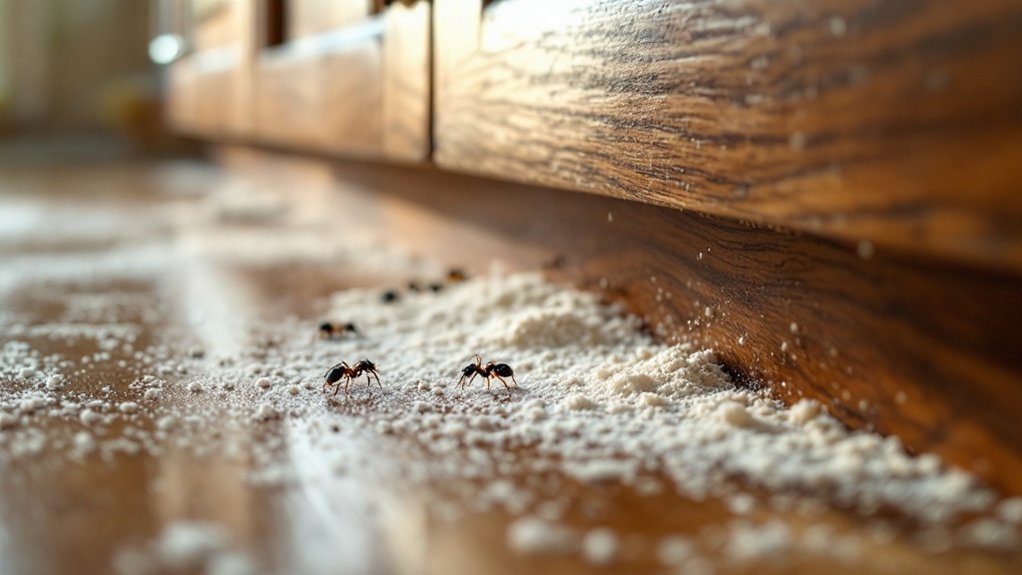
Diatomaceous earth (DE) offers an effective and environmentally friendly solution for tackling ant infestations. This powder, made from fossilized algae, contains sharp-edged particles that cut through an ant's exoskeleton, leading to dehydration and death. For successful diatomaceous earth applications, sprinkle DE directly on ant trails, baseboards, floors, and any areas where you notice ant activity. Using tools like a flour sifter or turkey baster can help you apply it precisely. One of the key diatomaceous earth benefits is its safety for humans, pets, and the environment when using food-grade DE. However, you should wear gloves and a respiratory mask to prevent skin and lung irritation. Additionally, food-grade DE is recommended for home use, ensuring peace of mind during application. Remember to reapply frequently, especially after rain, as DE remains effective only when dry. While DE can effectively kill ants, it may not eliminate the entire colony, especially larger ones, so consider using it alongside other control methods for comprehensive results. It may take 16-24 hours to see results, but with consistent application, you can significantly reduce your ant problem.
Plant Ant-Repelling Herbs
While diatomaceous earth provides a solid option for managing ant populations, incorporating plant ant-repelling herbs can further enhance your pest control efforts. Choosing the right herbs can create an effective barrier against ants while maintaining a healthy garden ecosystem. Consider selecting herbs like common thyme, lemon thyme, rosemary, and mint, all known for their potent fragrances that repel ants. Natural deterrents are safe for pets and children, making them an excellent choice for families looking to maintain a safe outdoor environment. When planting, it's beneficial to position these herbs near ant entry points or along trails to maximize their effectiveness. For example, placing mint in your garden not only repels ants but also attracts beneficial insects. Additionally, using companion planting techniques can boost the repelling effects of multiple herbs when grown together. Regular maintenance is essential; ensure your herbs are healthy and fragrant to deter ants continuously. You can also explore using essential oils derived from these herbs in water sprays for targeted applications. Remember to monitor ant activity and adjust your herb selection and placement accordingly. By following these planting tips and maintaining a clean environment, you'll create a natural and effective defense against unwanted ant invasions.
Create Barriers

Creating effective barriers is crucial in your battle against ant infestations. Start by implementing chemical deterrents around your home's perimeter. Physical barriers are equally important. Seal entry points using silicone sealants, caulk, and foam to close cracks in doors, windows, and foundations. Installing door sweeps and window screens can further prevent access. Additionally, keep your home clear of debris by trimming vegetation and removing potential nesting sites. Gravel or stone barriers around your foundation can also deter ants. Home perimeter treatment can effectively prevent spiders, ants, and other insects from entering your home. For DIY solutions, a mixture of talcum powder and isopropyl alcohol can serve as a long-lasting barrier. Natural deterrents like peppermint oil or lemon juice can mask pheromone trails, making your home less inviting to ants. Regular inspection and maintenance will help ensure your barriers remain effective.
Consult Local Exterminators
When dealing with an ant infestation, consulting local exterminators can be a game-changer. They'll begin with a thorough inspection to identify the specific ant species and the source of the problem. Understanding the species is vital, as different ants require distinct extermination techniques. For instance, Pharaoh ants are most effectively managed with baiting. Once local exterminators assess the colony's size and entry points, they'll focus on sealing those gaps to prevent future invasions. Their approach isn't just about short-term fixes; they aim for long-term solutions through tailored treatments. This might include eco-friendly bait stations, gel applications in cracks, or granules around your property. Moreover, local exterminators are well-versed in pest control regulations, ensuring that all methods used are compliant and the safest for your family and pets. Their expert knowledge guarantees effective, lasting solutions while offering ongoing monitoring to keep your space ant-free. Choosing an experienced local exterminator means you'll benefit from customized plans, quick responses, and, often, guaranteed results, giving you peace of mind as they tackle your ant issues efficiently. Plus, we're part of your community!
What Ant Control Tips Can Help Enhance Local Pest Control Solutions for Homeowners?
Effective ant management strategies for homeowners are essential for maintaining a pest-free environment. Regularly inspecting your property, sealing entry points, and maintaining cleanliness can significantly deter ant infestations. Additionally, utilizing baits and natural repellents will enhance local pest control solutions, ensuring your home remains a safe haven. Furthermore, educating yourself about the specific ant species in your area can aid in customizing your approach. Implementing effective pest control strategies for ants could involve monitoring food sources and eliminating attractants. By staying proactive and informed, you can create a more formidable defense against these persistent pests.
Local Ant Pest Control Solutions from My Pest Pros
My Pest Pros can help with effective ant control solutions. We can help eliminate ant infestations, provide ongoing protection against ants and other pests, and provide you with peace of mind. Give us a call at 703-665-4455. Our team is dedicated to delivering tailored services that suit your specific needs and environment. With our knowledge of the local ecosystem, we ensure the most effective local ant pest control solutions are implemented. Trust us to safeguard your home and restore your comfort, allowing you to enjoy your space without the worry of unwanted pests.