
Mud dauber wasps aren't dangerous; they're typically non-aggressive and rarely sting unless provoked. Measuring about ½ to 1 inch long, mud dauber wasps are slender insects that help control spider populations by paralyzing their prey for larvae. Mud dauber stings may result in mild pain or swelling for people, but severe reactions are uncommon. Keeping your yard organized can help prevent mud daubers from nesting. Discover more about mud dauber nesting habits and benefits to the ecosystem.
What Are Mud Dauber Wasps?

Mud dauber wasps are fascinating solitary insects that belong to the Hymenoptera order, primarily within the Sphecidae family. They are often referred to by several names - "mud daubers," "mud dauber wasps," "dirt daubers" or "mud wasps" among other names. These wasps are known for their distinctive thread-like waists and measure about 1 inch in length, showcasing colors like black, blue, or yellow, sometimes with a metallic sheen. While you might wonder, "Are mud daubers dangerous?"—the answer is mud dauber wasps are generally not considered dangerous. They are not aggressive and rarely sting unless provoked. A mud dauber wasp sting is typically mild, but those with allergies may face serious reactions. These insects play a vital role in controlling spider populations, as they paralyze spiders to feed their larvae. Overall, mud dauber wasps are more beneficial than harmful, making their presence worthwhile in your environment.
Physical Characteristics of Mud Daubers
The physical characteristics of mud dauber wasps make them easily identifiable among other insects. Typically measuring between ½ to 1 inch long, these wasps have a slender, elongated body with a distinctive thread-like waist. Their coloration ranges from black to dark blue, often featuring pale markings or a shiny metallic luster. When you observe adult mud daubers, you'll notice they possess six legs and two pairs of folded wings, which can be clear or dark. While you may wonder, "Can mud dauber sting?" the answer is yes, but stings are rare, usually happening only when they feel threatened. The physical appearance of mud daubers varies, with some showcasing unique traits, enhancing their visual appeal.
Nesting Habits of Mud Dauber Wasps
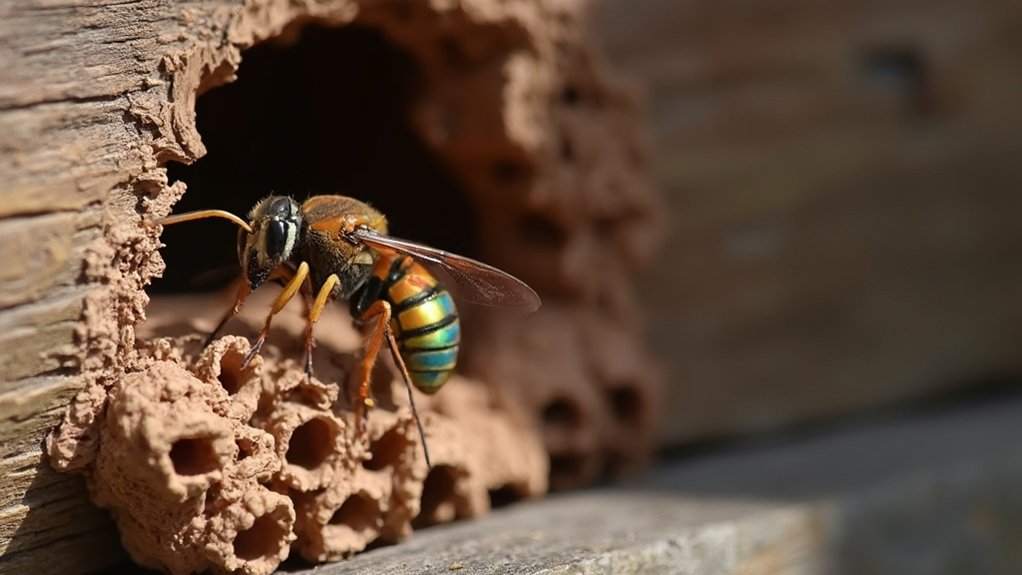
While observing the nesting habits of mud dauber wasps, you’ll find that these insects exhibit remarkable engineering skills. They construct mud dauber nests in sheltered spots like eaves, under roofs, and in garages. Mud dauber wasp nests are typically cylindrical or tubular, resembling small mud pipes, with multiple chambers for their larvae. Female mud daubers expertly provision these nests with paralyzed spiders, ensuring a food source for their developing young. You might notice holes in the nests when young wasps emerge, marking their lifecycle progression. Curiously, some species of mud daubers repair and reuse old nests, enhancing their efficiency. Understanding these nesting habits is essential for effective mud dauber control, and you’ll see that, overall, are mud dauber wasps dangerous? Not really; they’re more beneficial.
Behavior and Temperament of Mud Dauber Wasps
Although you might encounter mud dauber wasps in your backyard, their behavior and temperament reveal that they pose minimal threat to humans. These solitary insects are generally non-aggressive and rarely sting unless provoked. Mud dauber stings can cause mild pain, swelling, and itching, but severe reactions are uncommon. Unlike social wasps, mud daubers don’t defend their nests aggressively, focusing instead on hunting spiders. If you’re concerned about a mud dauber sting, treatment typically involves applying a cold compress and antihistamines for relief. To encourage mud dauber prevention, keep your yard tidy, reducing potential nesting sites.
Benefits of Mud Daubers in the Ecosystem
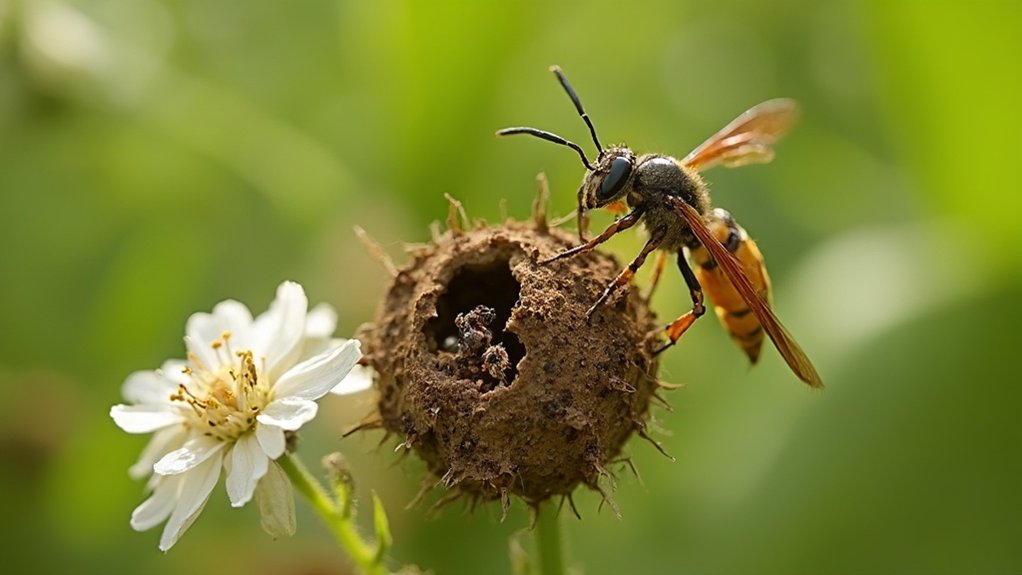
Mud dauber wasps are beneficial to the ecosystem. Mud daubers help control spider populations. These wasps primarily hunt various spider species, including harmful ones like black widows, and provision their nests with them. By paralyzing and storing spiders, mud dauber wasps effectively reduce pest numbers around human habitats, helping maintain ecological balance. Their solitary nature allows for efficient mud dauber wasp control without competition for resources, enhancing their effectiveness. Additionally, the mud nests they create foster habitats for microorganisms, contributing to soil health and nutrient cycling. As adult mud daubers also act as pollinators, they promote plant reproduction and biodiversity. All these factors highlight the significant benefits of mud daubers within our Northern Virginia and Maryland ecosystem.
Risks Associated With Mud Dauber Wasp Stings
Even though mud dauber wasps stings are generally mild, it's important to understand the potential risks they pose. While these wasps aren’t aggressive, being stung by a mud dauber can still lead to discomfort. Here are the key risks associated with a mud dauber sting:
- Mild Pain and Swelling: Most stings cause only minor pain, but swelling and itching can occur.
- Allergic Reactions: Individuals with wasp venom allergies may experience severe reactions, including difficulty breathing.
- Multiple Stings: Though uncommon, several stings can lead to nausea, dizziness, or fainting.
- Handling Risks: Stings often happen when mud daubers feel threatened or are mishandled, so knowing how to get rid of mud daubers safely is essential.
How to Prevent Mud Dauber Infestations
To effectively prevent mud dauber wasp infestations, it is vital to take proactive steps around your property. Begin by sealing cracks and crevices to eliminate potential nesting sites and restrict their entry points. Reducing the spider population is important, as mud daubers primarily prey on spiders for their larvae. Regularly inspect eaves, garages, and outdoor structures for early signs of nests, allowing for prompt removal. Keeping outdoor areas clean and free of debris will discourage these wasps from nesting, as they prefer sheltered locations for their mud structures. Additionally, installing screens on windows and doors can help keep mud daubers and other insects out while ensuring proper ventilation for your home.
When to Seek Professional Help for Mud Dauber Control
When multiple mud dauber nests appear around your home, it’s essential to assess the situation carefully, as this could indicate a growing population that may necessitate professional intervention. Here are some instances when you should seek expert help:
- Allergies: If you have a known wasp sting allergy, professional removal is critical for your safety.
- Aggressive Behavior: Increased stinging or aggressive behavior from mud daubers suggests the need for expert assistance.
- Uncertainty: If you’re unsure about safely removing nests, contacting a professional pest management company guarantees effective handling.
- Preventative Measures: Regular inspections by a local pest control company can help prevent infestations, especially in susceptible areas.
How My Pest Pros Can Help Control Mud Dauber Wasps
Our team at My Pest Pros offers comprehensive mud dauber wasp control solutions tailored to Northern Virginia and Maryland homeowners seeking protection from stinging insects. We thoroughly inspect properties throughout Fairfax, Arlington, Alexandria, Montgomery County, and surrounding areas to identify existing mud dauber nests, potential entry points, and conditions that attract these wasps. Our licensed and certified wasp exterminators will perform targeted mud dauber wasp treatments using EPA-approved and pet-friendly products that effectively eliminate current wasp infestations and other pest issues around your Maryland or Northern Virginia home.
For stinging pests specifically, we safely remove existing mud dauber wasp nests, treat eaves and other common nesting areas, and provide preventative pest treatment measures to discourage future colonies from forming in your Bethesda, Silver Spring, or Vienna residence.
Our ongoing preventative pest maintenance plans include regular inspections and mud dauber wasp treatments throughout the seasons when stinging pests are most active in the DMV area, giving you peace of mind and ensuring your family can enjoy outdoor spaces without worry. Our expertise as local exterminators allows us to address the specific stinging pest challenges common to the Northern Virginia and Maryland region with environmentally responsible mud dauber control methods.
If you're dealing with mud dauber wasps, contact My Pest Pros for assistance by calling 703-665-4455 or schedule a pest or mud dauber treatment online.