
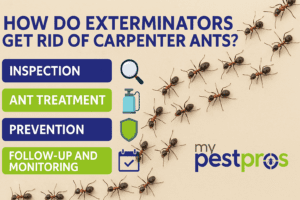
Ant exterminators get rid of carpenter ants through thorough inspections to identify nests, frass, and wood damage. They apply non-repellent insecticides for widespread impact and use specialized ant baits that target the queen and larvae. Direct dusting into nests provides immediate control, while ongoing monitoring guarantees complete eradication. Preventive measures, like sealing entry points and addressing moisture issues, are also vital to effectively eliminate carpenter ants and prevent future ant infestations.
Key Takeaways
- Ant exterminators conduct thorough inspections to identify signs of infestation, such as frass and wood damage.
- They apply non-repellent insecticides and baits to effectively eliminate carpenter ant colonies.
- Direct treatments involve dusting insecticides into identified nests for immediate control.
- Follow-up inspections and ongoing monitoring ensure complete eradication and prevention of future infestations.
Inspection and Assessment of Carpenter Ants

When you suspect carpenter ants in your home, the first essential step is a thorough ant inspection and assessment.
An ant exterminator will begin by identifying signs of carpenter ant activity, such as frass, wood damage, and visible ants. They'll assess moisture levels in wood and nearby areas, as these pests prefer damp environments for nesting.
Additionally, they'll look for small openings where ants may be entering and check cluttered areas that could hide nests. Tracking the foraging patterns of carpenter ants will help locate the main colony and any satellite ones. This detailed inspection informs the choice of appropriate carpenter ant treatment methods for effective ant control, ensuring a complete approach to eliminate the infestation. Furthermore, identifying entry points is crucial for implementing effective prevention strategies against future infestations.
Treatment Techniques for Carpenter Ants
Exterminators utilize a variety of targeted treatment techniques to effectively combat carpenter ants and their hidden colonies.
To begin, they conduct a thorough inspection to assess the infestation's extent and locate nests. For ant extermination, professionals often apply non-repellent insecticides, allowing ants to transport the poison back to the nest, impacting the entire colony.
Additionally, bait stations filled with sugar-based toxic baits attract foraging ants, targeting the queen and larvae. Direct dusting of insecticides into identified nests provides immediate control over both adult ants and developing brood.
Ongoing monitoring and follow-up treatments are vital to guarantee complete eradication and to prevent future infestations. You’ll learn how to control ants effectively to keep your home ant-free.
Prevention Strategies to Deter Carpenter Ants
To effectively deter carpenter ants, it's crucial to implement a series of targeted prevention strategies that address their nesting habits and entry points.
Start with ant prevention by maintaining a clean environment—promptly clean food spills, seal containers, and declutter areas that could become nesting sites.
Regularly inspect and repair moisture issues, as carpenter ants thrive in damp wood. Seal entry points around doors, windows, and foundations with caulk to prevent ants from accessing your home.
Additionally, trim tree branches and shrubs that overhang your house to minimize pathways for ants.
Finally, store firewood and wooden materials at least 20 feet away from your foundation, elevated off the ground, to effectively prevent ants from establishing nests near your home.
Nest Removal Methods
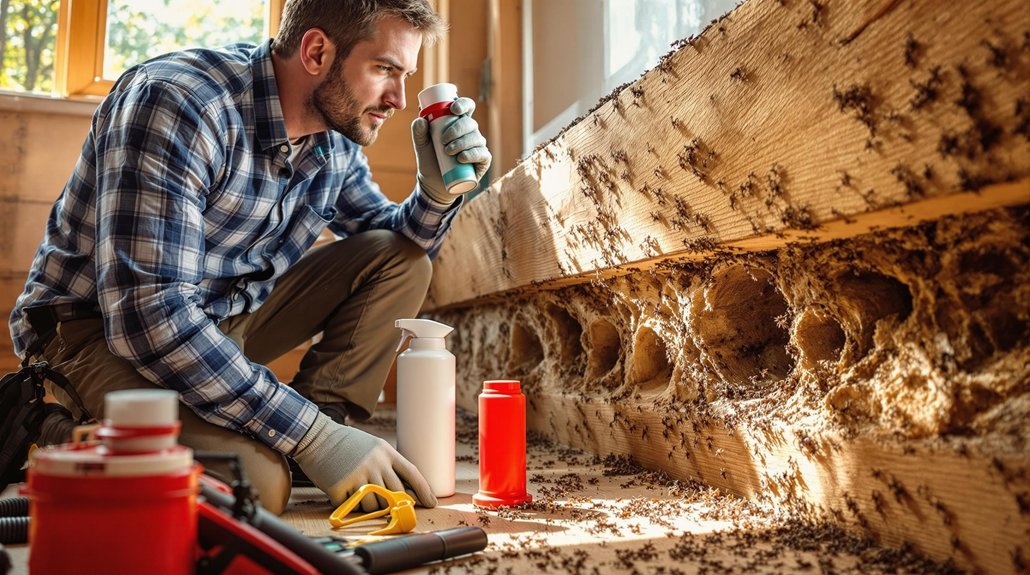
Identifying and removing carpenter ant nests is vital for effectively managing an infestation.
As an ant control specialist would advise, the first step involves locating the nests by inspecting for wood damage, frass, and ant trails.
Once identified, you might use insecticide dust or aerosol treatments to target the colony directly.
In severe cases, drilling into walls or wood structures allows you to apply treatments deep within their galleries.
It’s important to address moisture-damaged wood and repair structural issues to eliminate environments conducive to carpenter ants.
Follow-up inspections are necessary to guarantee all nests have been dealt with and to monitor for any new ant activity.
This methodical approach is key to effectively get rid of ants.
Follow-Up and Monitoring for Carpenter Ants
Effective follow-up and monitoring are essential components in managing carpenter ant infestations.
You'll want to schedule inspections focusing on high-risk areas like attics, kitchens, and bathrooms, where infestations often linger.
Reassess ant activity about two weeks after treatment to evaluate the effectiveness of extermination efforts and identify any remaining colonies.
Keep an eye on trails and foraging behavior, as these can reveal new nests or reproductive ants that may indicate emerging indoor colonies.
Adjust your treatment strategies based on findings from follow-up inspections, especially if you still see ants moving in different areas.
Regularly check for moisture issues and seal entry points to help prevent future infestations and maintain a pest-free environment in your home.
When to Call Pest Control Experts for Ant Control
When should you consider calling pest control experts for carpenter ants? If you notice any of the following signs, it's essential to seek professional help:
- Visible Carpenter Ants: Spotting these ants indoors, especially moving between areas, indicates a potential infestation.
- Frass and Structural Damage: Finding sawdust-like frass or noticing damaged wood signals the need for a thorough inspection and treatment.
- Winged Ants: Seeing reproductive, winged carpenter ants suggests a mature colony that requires immediate intervention to prevent further spread.
Additionally, persistent moisture issues in your home can create an inviting environment for carpenter ants.
Addressing these problems with professional assistance is critical for long-term control and protection of your property. Because carpenter ants can damage damp or decaying wood, schedule ant control when activity continues or a nest may be inside the structure. Use the ant guide for identification and warning signs.
How My Pest Pros Can Help Eliminate Carpenter Ants
Carpenter ant extermination effectively requires an extensive approach that combines inspection, treatment, and prevention. You might think handling this issue on your own is sufficient, but professional ant exterminators such as My Pest Pros bring expertise, specialized tools, and effective ant control products that guarantee thorough elimination and long-term protection. By understanding ant control methods and contributing to preventative measures, you can greatly reduce the risk of future carpenter ant infestations.
Call My Pest Pros today at 703-665-4455 to schedule a pest treatment to get rid of carpenter ants.