
Carpet beetles are small, oval-shaped pests that can cause significant damage to fabrics and other organic materials in your home. They have a four-stage life cycle, starting from eggs laid in hidden spots to larvae that feed on keratin-rich items like wool and leather. Signs of infestation include holes in fabrics, shed skins, and small fecal pellets. Regular vacuuming and laundering can help prevent them, while chemical treatments may be necessary for severe infestations. If the damage worsens or allergy symptoms arise, seeking professional help is advisable. There's much more to understand about these pests and their management.
What Are Carpet Beetles?
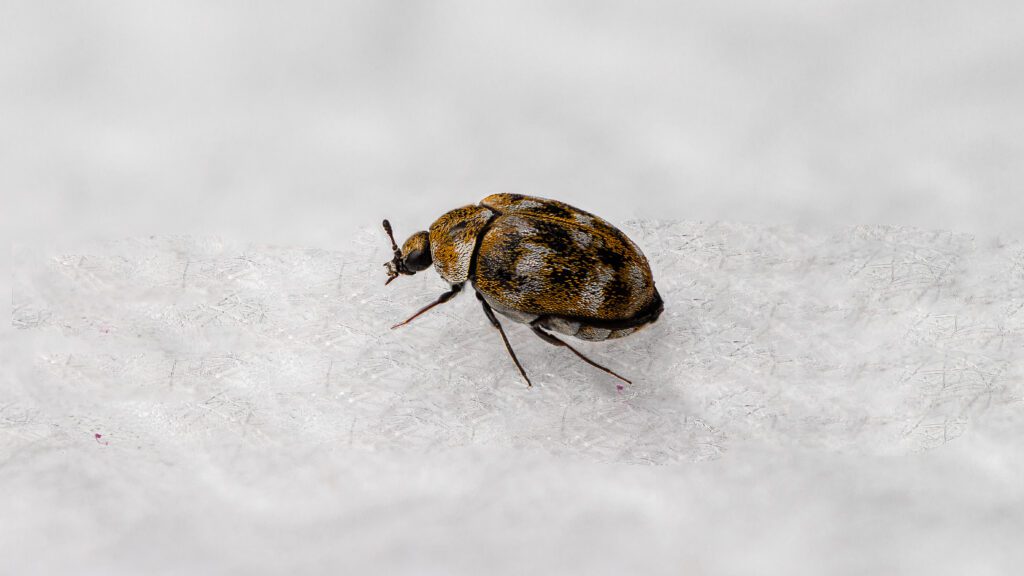
Carpet beetles, which belong to the family Dermestidae, are small oval-shaped insects that can range from 1/16 to 1/8 inch in length. Their colors vary by species, including black, mottled white, brown, yellow, and orange. Adult carpet beetles have six legs and a pair of antennae.
You'll find that adult beetles primarily feed on flower pollen and often gravitate towards sunlight, making windowsills a common sighting location. Adult carpet beetles are typically found outdoors on flowering plants, where they are attracted to light and color.
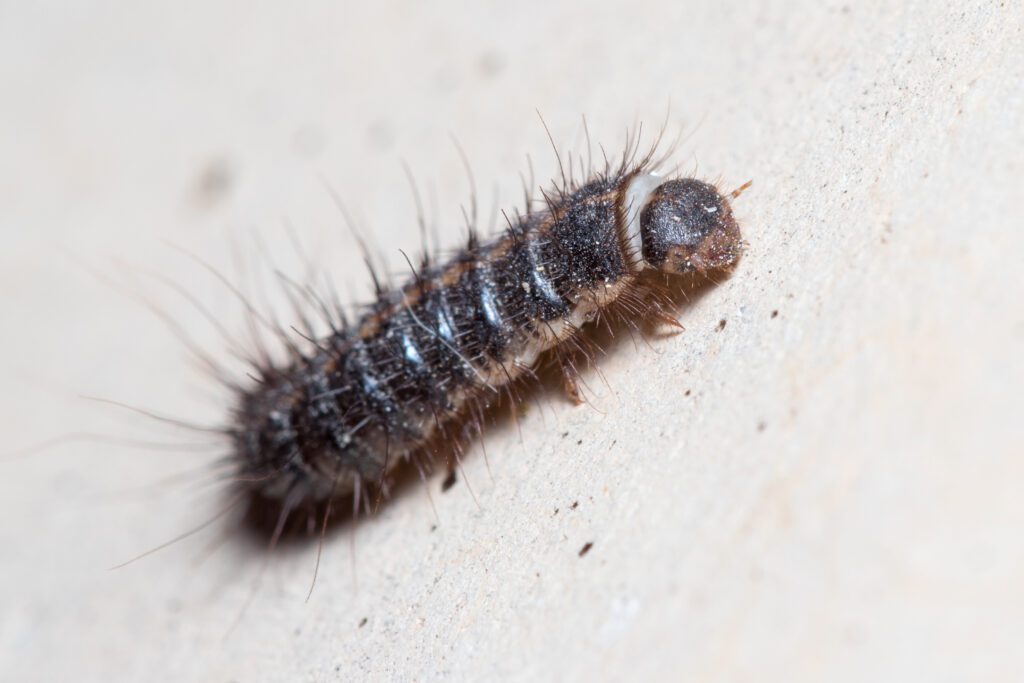
The larvae, however, are the real concern when it comes to damage. They measure 1/8 to 1/4 inch long, are tan to brownish, and covered with hairs or bristles. Larvae prefer dark, undisturbed areas and feed on keratin-containing materials such as wool, silk, and leather.
You may notice shed skins and irregular holes in your rugs or carpeting as evidence of their feeding.
Understanding carpet beetle habits is essential for effective prevention. They often infest homes, warehouses, and museums, thriving in attics and basements.
Life Cycle of Carpet Beetles
The life cycle of carpet beetles consists of four distinct stages: egg, larval, pupal, and adult.
Females lay 20 to 100 eggs, typically in dark, undisturbed areas near food sources like textiles and animal nests. These eggs hatch within 5 to 20 days, depending on environmental factors such as temperature and humidity. The eggs are small, oval-shaped, and white or cream in color.
Once hatched, the larvae emerge and begin feeding on natural fibers found in carpets, upholstery, and other textiles. The larval stage can last several months to years, depending on the availability of food and environmental conditions. Their feeding leads to significant damage, often creating noticeable holes in fabrics. Larvae can survive weeks without food, prolonging infestations and complicating control efforts.
After feeding, larvae shift to the pupal stage, which lasts 1 to 3 weeks in secluded areas.
Adults emerge during the spring and summer, with a short lifespan of a few weeks to two years. During this time, they focus on mating and laying eggs, continuing their breeding habits.
Understanding this life cycle is essential for effective prevention and control measures against carpet beetles.
Signs of Infestation
In your home, signs of a carpet beetle infestation can manifest through various indicators, often leading to significant damage if not addressed promptly.
One of the most noticeable damage signs includes holes in fibrous materials such as carpets, rugs, clothing, and upholstery, especially in natural fibers like wool, silk, and fur. You might also find shed skins of carpet beetle larvae in dark, undisturbed areas like closets and attics.
Additionally, look for small, brown fecal pellets near the infestation sites, which serve as another important infestation indicator. If you or anyone in your household experiences skin irritation or allergic reactions, it could point to the presence of carpet beetles. Regular inspection of stored clothing can help prevent damage and identify infestations early.
Commonly, these pests hide in areas with accumulations of lint, hair, or dead insects, often near windows and doors where they can enter.
Monitoring for adult beetles on windowsills and using sticky traps can help detect activity. Regularly inspecting clothing seams and the edges of carpets is essential to catch any irregular holes early.
Taking immediate action upon finding these signs is vital to prevent further damage and infestation.
Types of Carpet Beetles
When it comes to carpet beetles, there are several common species you should be aware of, including the varied carpet beetle and the black carpet beetle. Understanding their life cycle stages can help you identify infestations early, as each stage presents unique characteristics. The larvae of these beetles tend to prefer dark, secluded areas for feeding and pupation.
Common Species Overview
Numerous species of carpet beetles can invade homes, each with distinct characteristics and feeding behaviors. The black carpet beetle, measuring 1/8 to 3/16 inch long, prefers dark habitats and feeds on various organic materials, including fabrics and stored grains.
The varied carpet beetle, slightly smaller at 2-3 mm, thrives in areas with accumulated lint, pet hair, and food crumbs, showcasing scavenger feeding habits. Carpet beetle larvae are known to cause damage to fabrics as they feed, making early detection crucial.
Furniture carpet beetles, which range from 1/16 to 1/8 inch, are often found in proximity to wool, fur, and synthetic fabrics, particularly those stained with bodily fluids. Their feeding habits can lead to significant damage to household items.
Common carpet beetles, similar in size to varied carpet beetles, feed on a range of organic materials but are less prevalent.
Each species has unique habitat preferences, with some favoring hidden spots like carpets and upholstery, while others can be found in kitchens or pantries. Understanding these distinctions helps you identify and address a carpet beetle infestation effectively.
Life Cycle Stages
The life cycle of carpet beetles consists of four distinct stages: egg, larva, pupa, and adult.
Female carpet beetles lay between 25 to 100 eggs in hidden areas, often near food sources like textiles or animal nests. Under typical indoor conditions, egg development occurs within 7 to 35 days, with some hatching as quickly as 2 weeks at ideal temperatures.
Once hatched, larvae emerge as the most destructive phase, feeding on natural fibers, pet hair, and lint. Their larval behavior includes seeking dark, secluded spots to burrow into food sources or wander to find new ones. This phase can last from several months to several years, heavily influenced by available food and environmental conditions. They molt multiple times before evolving to the pupal stage, sometimes pupating within their last larval skin if shelter is scarce. During this time, the larvae can cause significant damage to fabrics and stored items due to their voracious eating habits.
During the pupal stage, which lasts about 1 to 3 weeks, the pupa develops into an adult beetle.
Identification and Signs
After understanding the life cycle stages of carpet beetles, identifying the specific types of carpet beetles and recognizing signs of their presence becomes vital for effective control.
Carpet beetles generally fall into three categories: varied, black, and larvae. Varied carpet beetles are small, oval-shaped, and marked with distinctive white scales, measuring 1/8 to 3/16 inches long. Black carpet beetles are shiny and measure up to 1/8 inch, featuring long hairs on their bodies. Their larvae are elongated, covered in short hairs, and can range in color from light brown to almost black, often appearing in a cigar shape.
Signs of infestation include holes in fabrics and carpets, shed skins from molting larvae, and adult beetles crawling in your home. You might also notice damage to clothes and blankets, hairs falling from furs, and fecal pellets resembling tiny specks. Regular cleaning and maintenance can significantly reduce the risk of carpet beetle infestations.
Environmental factors can influence carpet beetle habits, making regular inspections important. Use a flashlight to check dark areas like under baseboards, furniture, and clothing piles. Finding fecal pellets or shed skins in these locations indicates a potential infestation that requires immediate attention.
Damage Caused by Carpet Beetles

Carpet beetles can cause significant damage to various fabrics and materials in your home, particularly those containing keratin, like wool and silk. This damage can affect the overall decor of your space, leading to costly repairs or replacements. Understanding effective prevention and control methods is essential to safeguard your belongings from these pests. Regular inspections in dark, unused areas can help catch potential infestations early and prevent extensive damage.
Fabric and Material Damage
While you may not immediately notice the damage caused by carpet beetles, their larvae can wreak havoc on your fabrics and textiles. These pests primarily target natural fibers like wool, silk, leather, and fur, causing concentrated damage rather than scattered holes. You'll often find bald patches in carpets or clothing, especially in hidden areas like under furniture or within closets.
Carpet beetle larvae, small and densely covered with tiny hairs, prefer to feed in dark environments. Their feeding habits can lead to significant damage, including holes in garments and deterioration of upholstery. Immediate action is required upon identification, as ignoring an infestation can lead to long-term consequences that can be costly, requiring replacements of affected items.
To protect your materials, prioritize fabric care by regularly cleaning and inspecting your belongings. Frequent vacuuming will help eliminate food sources and any hidden larvae. Promptly washing or dry cleaning fabrics in hot water can effectively kill all life stages of these pests.
Impact on Home Decor
The impact of carpet beetles on home decor can be devastating, as these pests target high-value items made from natural fibers. You may notice damage primarily in carpets and rugs, where larvae feed voraciously, creating bald patches or fraying.
Clothing and upholstered furniture are also at risk, often developing clusters of holes or thinning spots over time. This damage undermines your decor enhancement efforts and poses a vital threat to aesthetic preservation. Furthermore, the larvae prefer keratin-containing materials, leading to significant damage to your carpets and clothing.
Unchecked infestations can lead to long-term consequences, resulting in costly cleaning or even the replacement of damaged items. What's more, these pests can spread beyond their initial areas, affecting various household textiles and surfaces.
Their presence can also introduce allergens into your home, causing skin irritation and respiratory issues.
To protect your decor and maintain a healthy living environment, it's essential to act promptly upon noticing signs of infestation. Regular cleaning, thorough vacuuming, and proper storage of natural fiber items can considerably mitigate the risk of damage.
Staying proactive can help you preserve both the beauty and integrity of your home decor.
Prevention and Control Methods
To effectively prevent and control carpet beetle infestations, it's crucial to implement a combination of proactive measures and targeted treatments.
Start with regular vacuuming techniques. Vacuum carpets, upholstered furniture, and pantry shelves to remove food sources and carpet beetle eggs, larvae, and adults. Don't forget to clean under beds and furniture, where beetles often lay eggs, and promptly dispose of vacuum bags to prevent further infestations. Regular inspections can help catch infestations early before they become severe.
Next, maintain cleanliness by laundering washable items in hot water or opting for dry cleaning. Thoroughly clean any secondhand furniture before bringing it into your home, and inspect cut flowers and plants to avoid introducing pests.
When infestations occur, consider using insecticides specifically labeled for carpet beetles. Confirm you follow chemical safety guidelines by applying these products only in infested areas and adhering to label instructions.
Spot treat edges of floor coverings and in cracks where beetles might hide.
Prevention Tips
Carpet beetle prevention revolves around diligent cleaning and maintenance practices. To effectively reduce the risk of infestations, establish consistent cleaning routines.
Regularly vacuum carpets, upholstered furniture, and pantry shelves, focusing on corners and baseboards where beetles might hide. Use a vacuum with strong suction to guarantee you remove adult beetles and larvae. After vacuuming, empty the bag outside immediately to prevent re-infestation.
Additionally, inspect your home's exterior for any holes or gaps that could allow beetles to enter. Seal these entry points using caulking or other repair materials, and confirm window screens are intact.
Proper storage solutions are essential for preventing carpet beetles. Store clothing and fabrics in airtight containers, and keep items clean and dry. Remember that carpet beetles are attracted to natural animal fibers, so ensure that you regularly check and clean any items made from wool, silk, or leather.
Consider using mothballs or cedar for additional protection of wool and silk products. Remember to air out stored items annually and brush them thoroughly to remove any potential larvae.
Carpet Beetle Treatment Methods
After implementing effective prevention tips, it's important to know how to tackle an active carpet beetle infestation. You have several treatment methods at your disposal, each with its own chemical efficacy and application strategy.
For chemical treatments, focus on insecticides specifically labeled for carpet beetles, targeting areas like carpets, rugs, and woolens. Use products containing active ingredients such as deltamethrin or permethrin. Insect growth regulators (IGRs) can also be effective, inhibiting egg hatching.
Dust formulations, like diatomaceous earth, work well in hard-to-reach areas, while spot treatments should be concentrated on edges of floor coverings and lint-accumulating zones. Regular vacuuming is essential to reduce beetle populations and help eliminate any larvae present.
On the non-chemical front, consider heat treatment through washing fabrics at high temperatures, or dry cleaning non-washables. Freezing items in plastic bags for two weeks effectively kills beetles as well.
Regular vacuuming helps eliminate larvae and debris, while steam cleaning can sanitize carpets and furniture.
Natural remedies, such as peppermint oil and vinegar solutions, can deter carpet beetles. Combine these methods and monitor results to determine the most effective strategy for your situation, ensuring a thorough treatment comparison to achieve successful eradication.
When to Call Professionals
Identifying when to call in professionals for a carpet beetle infestation is vital for effective management. If you notice a rapid spread of the infestation across various materials, it's time to seek expert help. Larger infestations often lead to extensive damage to carpets, rugs, and upholstered furniture, which DIY methods may not adequately address.
Persistent problems, despite your treatment attempts, signal a need for professional intervention. When you observe multiple signs of infestation, such as larvae, droppings, and shed skin, it's essential to evaluate professional assistance. Unfamiliarity with proper treatment methods can exacerbate the situation, so don't hesitate to reach out. Additionally, carpet beetles' larvae are particularly damaging as they feed on natural fibers, making it crucial to address infestations promptly.
Furthermore, serious health concerns related to allergens or pollutants from carpet beetles warrant immediate professional attention. Assess your situation carefully; if you lack the resources or knowledge for effective DIY treatments, professionals can provide customized solutions.
They'll also implement ongoing infestation monitoring to guarantee long-term protection. By choosing experts with proven track records and advanced equipment, you'll effectively address the carpet beetle issue and safeguard your valuable items.
Contact My Pest Pros
In conclusion, understanding carpet beetles is essential for effective management. By recognizing their life cycle, signs of infestation, and the types of damage they cause, you can take proactive measures to prevent and treat these pests. Implementing prevention tips and using appropriate treatment methods can safeguard your home. If an infestation persists, don't hesitate to call My Pest Pros at 571-512-5817 for targeted pest control solutions. Stay vigilant to protect your belongings and maintain a pest-free environment!