
Carpet beetles and bed bugs differ markedly in appearance, behavior, and impact. Carpet beetles are small, oval-shaped, and often found in dark areas like closets, where they damage textiles. In contrast, bed bugs are apple seed-shaped and thrive near sleeping spots, feeding exclusively on blood. You'll notice carpet beetles by their irregular holes in fabrics, while bed bugs leave itchy bites and bloodstains. Their life cycles also differ, with carpet beetles undergoing complete metamorphosis and bed bugs following a simpler life cycle. Understanding these differences helps develop effective control strategies to manage both pests. Exploring further reveals additional insights.
Physical Characteristics
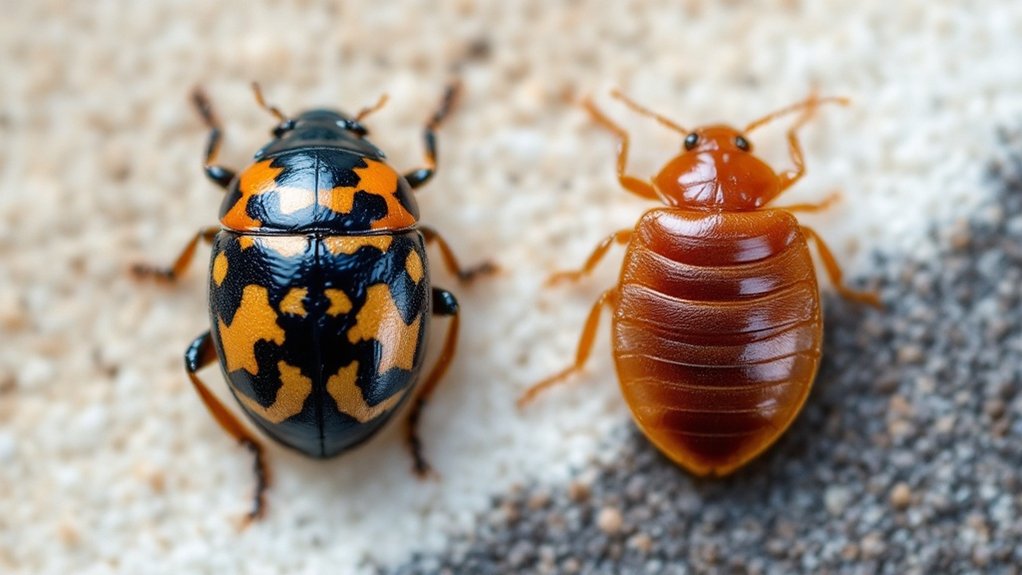
When examining the physical characteristics of carpet beetles and bed bugs, how do these pests differ in size, shape, and color? You'll find significant distinctions in their body shapes and color variations.
Adult carpet beetles range from 1/10 to 3/16 inch long and exhibit nearly round or oval shapes. In contrast, adult bed bugs measure approximately 4-5 mm, resembling apple seeds, and are broadly flattened and oval.
Regarding color, carpet beetles display a range of hues. Common varieties are gray to black with orange-red scales, while varied carpet beetles feature a mix of white, brown, yellow, and black scales. Black carpet beetles are shiny-black, and furniture carpet beetles present a whitish body adorned with black spots.
In stark contrast, adult bed bugs are generally reddish-brown, becoming more pronounced after feeding. Their size and visibility allow them to be detected more easily than carpet beetles, despite their ability to hide well.
Additionally, carpet beetle larvae are elongated with bristles, while bed bug nymphs are smaller and often translucent.
These differences in body shapes and color variations aid in the identification and understanding of these pests, essential for effective control and management strategies.
Common Habitats
Identifying the common habitats of carpet beetles and bed bugs reveals their distinct preferences and behaviors.
Carpet beetles thrive in dark, undisturbed areas such as closets, attics, and air ducts, often found in stored lint, bird nests, or dry pet food. These pests prefer habitats rich in organic materials, including wool and leather, making their presence known through infestation signs like damaged textiles and accumulated larvae. Their larvae prefer dark, secluded environments, which often include hidden spaces where they can feed and grow undisturbed.
In contrast, bed bugs favor locations near human activity, particularly under mattresses and behind headboards. They seek out dark, quiet places, coming out at night to feed on human blood. Infestation signs include reddish spots on bedding and small dark fecal stains.
While there may be some habitat overlap—such as both pests being found indoors—their specific preferences set them apart. Carpet beetles can invade areas with stored materials, while bed bugs are closely linked to human sleeping spaces.
Understanding these habitat distinctions is essential for effective pest management and prevention strategies, as both pests can lead to significant discomfort and damage if not addressed promptly.
Feeding Habits
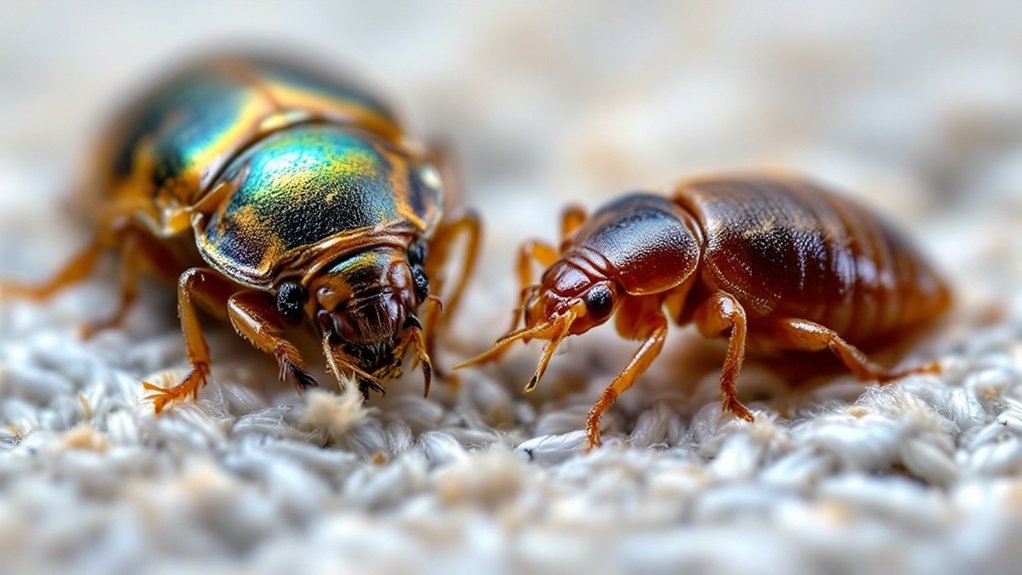
In the domain of pest management, understanding the distinct feeding habits of carpet beetles and bed bugs is essential for effective control strategies.
Carpet beetles primarily feed on natural fibers, such as wool, silk, and leather, with their larvae demonstrating voracious behavior. These larvae thrive on organic debris, including pet hair and lint, which explains their propensity for household damage. Their food preferences extend to pollen and nectar, but they're particularly drawn to dark, undisturbed environments where natural fibers abound. Carpet beetles can also survive weeks without food, allowing them to prolong infestations in homes where their preferred organic materials are present.
Conversely, bed bugs are strict hematophages, deriving their nutrition solely from animal and human blood. They lack any interest in natural fibers or organic debris, making their feeding behavior distinctly different. Bed bugs typically feed during the night and are often found near human resting areas, contrasting sharply with the larval behavior of carpet beetles.
While carpet beetles' feeding habits can lead to significant damage to textiles and stored items, bed bugs pose a different challenge due to their reliance on blood for survival.
Understanding these feeding habits is essential for implementing effective pest control measures tailored to each pest's specific behavior and dietary needs.
Life Cycle Stages
Understanding the life cycle stages of carpet beetles and bed bugs is essential for effective management.
Carpet beetles undergo complete metamorphosis with four distinct stages, while bed bugs follow a simpler three-stage development. Bed bugs require blood at every stage for growth, which significantly impacts their population dynamics. Recognizing these differences can help you identify which pest you're dealing with and tailor your control strategies accordingly.
Carpet Beetle Life Cycle
The carpet beetle's life cycle consists of four distinct stages: egg, larval, pupal, and adult, each playing an important role in the beetle's development and potential for infestation.
The lifecycle begins with the egg stage, where females lay 20 to 100 white or cream-colored eggs in hidden areas near food sources. These eggs are oval-shaped, measuring about 1/4 to 1/2 mm in length.
Once the eggs hatch, the larvae emerge, entering the larval stage, which is the most destructive phase. During this time, their larval behavior involves feeding on natural fibers, pet hair, and lint, allowing them to survive for several weeks without food. Larvae feed on natural materials, making this stage vital for infestation potential.
The next stage is pupation, where larvae undergo pupal transformation in secluded areas. This stage lasts about 1 to 3 weeks and is essential for moving to adulthood.
Bed Bug Development Stages
Bed bugs undergo a simple metamorphosis consisting of three primary stages: egg, nymph, and adult.
Initially, a female bed bug lays approximately 3-500 eggs in tight cracks or crevices, making egg detection quite challenging. These eggs are about 1mm long and milky-white in color, hatching in roughly two weeks under favorable conditions. Female bed bugs can lay up to 500 eggs in their lifetime, contributing to the difficulty in controlling infestations.
Once hatched, bed bugs enter the nymph stage, which comprises five distinct phases. Each nymph requires a blood meal to grow and molt, with nymph behavior indicating a strong feeding drive.
Nymphs grow about half a millimeter in size after each feeding and molting, taking about one week per stage to progress. Under ideal conditions, over 80% of nymphs survive to adulthood, completing their transformation in roughly four weeks.
Signs of Infestation
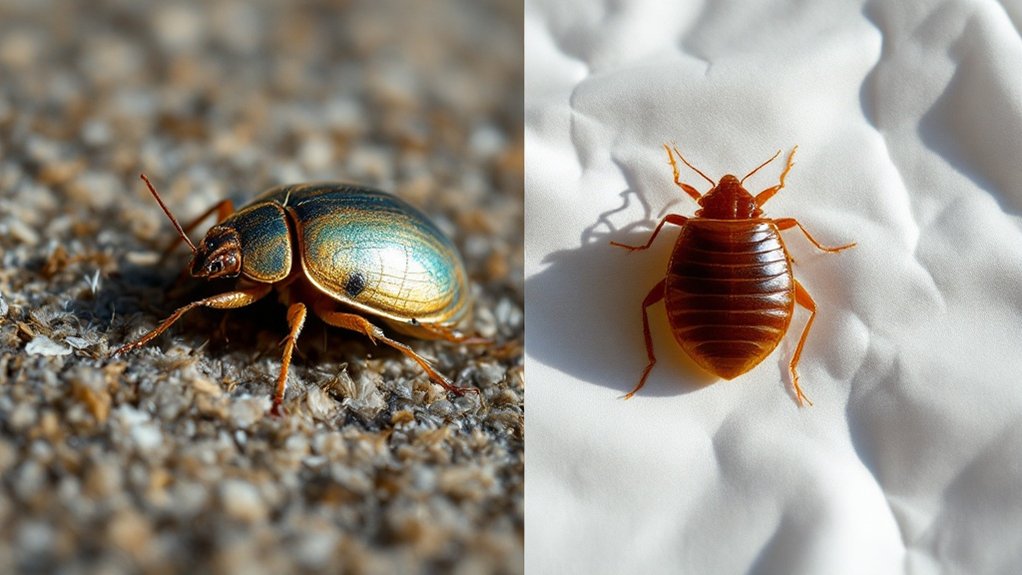
In the event of an infestation, recognizing the signs of bed bugs and carpet beetles is essential for effective management.
Bed bug infestation symptoms typically include small, red, itchy bites clustered on exposed skin, often resembling hives. You might also notice bloodstains on your bedding, fecal spots, and shed skins around sleeping areas. Additionally, bed bugs emit a musty odor and can hide in crevices, making them challenging to detect. Bed bugs are primarily nocturnal, which means they are most active at night when they feed on human blood. Effective treatments like heat treatment can successfully eliminate these pests.
In contrast, carpet beetles exhibit different behavioral differences. You'll likely find damaged fabrics with small holes, dead beetles near light sources, and larvae hidden in cracks or under furniture.
Carpet beetle hairs can also cause skin irritation, leading to red, itchy bumps similar to those caused by bed bugs.
Visible indicators for carpet beetles include adult beetles near windows and irregular holes in clothing. Both pests can leave behind shed skins, but their preferred environments differ—bed bugs thrive around sleeping areas, while carpet beetles are attracted to natural fibers. Understanding these signs can help you identify the pest causing your issues and take appropriate action.
Prevention and Control Methods
To effectively prevent and control carpet beetles and bed bugs, you must implement strong cleaning practices and seal potential entry points. Incorporating natural repellents and traps can further enhance your defense strategy against these pests. Regular cleaning of fabrics and storage areas is vital to prevent infestations of carpet beetles. Additionally, it is important to repair leaks to eliminate moisture sources, which can attract various pests including silverfish.
Effective Cleaning Practices
Effective cleaning practices play an essential role in preventing and controlling carpet beetle infestations. To effectively manage these pests, you should prioritize a high cleaning frequency.
Regular, thorough vacuuming is paramount; it removes not just adult beetles but also their eggs and larvae. Make sure to utilize effective tools, such as a vacuum with strong suction, focusing on edges of carpets and under heavy furniture where beetles often hide. Additionally, using an insecticide can ensure thorough extermination of carpet beetles in conjunction with regular vacuuming.
Dispose of vacuum bags promptly to prevent any remnants from escaping back into your dwelling area. Additionally, clean rugs, draperies, and upholstered furniture regularly to eliminate potential habitats.
Steam cleaning is a particularly effective method, as it penetrates deep into carpets and kills beetles at all life stages. Don't forget to inspect cut flowers before bringing them indoors, as they can introduce adult beetles. Remove old nests and webs, as these can harbor infestations.
Seal Entry Points
Sealing entry points is essential in preventing carpet beetles from infiltrating your home. Begin with a thorough entry point inspection to identify any holes, cracks, or gaps in your exterior. Use caulk and sealants to effectively seal these vulnerabilities, ensuring a tight barrier against potential intruders.
Pay close attention to windows and doors; repairing screens and ensuring they fit securely is critical. Any gaps can become easy access points for beetles.
Also, inspect your ventilation systems, including ducts and vents, for damage that could allow beetles entry. Don't overlook gaps around pipes and utility openings; sealing these areas is an important part of your sealing strategies.
Outside your home, maintaining a clean yard by removing clutter and managing plants can greatly reduce attractants for carpet beetles. Additionally, bed bugs can also enter through similar entry points, so it's vital to implement these sealing measures against both pests.
Consider installing door sweeps and weatherstripping to further fortify your defenses. Regular inspections of your home's interior, particularly in dark corners, help catch any early signs of infestation.
Natural Repellents and Traps
When it comes to managing carpet beetles, utilizing natural repellents and traps can greatly enhance your prevention and control efforts. Essential oils like lavender, peppermint, clove, and sage serve as effective natural remedies. You can create a simple spray by mixing water with a few drops of these oils to deter carpet beetles in prone areas. Additionally, consider using cedar blocks or chips, which also act as natural repellents.
For trapping techniques, vacuuming thoroughly and disposing of the bag helps eliminate beetles and their eggs. Glue traps can capture adult beetles, while steam cleaning effectively kills them on contact. Furthermore, regular inspections can help catch infestations early, allowing for timely intervention.
Another potent method is diatomaceous earth (DE); sprinkling it in affected areas dehydrates and kills carpet beetles. Boric acid can be used similarly; just apply it lightly on carpets and rugs.
To further deter carpet beetles, growing peppermint plants in containers can be beneficial. Remember, vinegar diluted with water can also serve as a cleaning agent and natural repellent.
Contact My Pest Pros
In conclusion, distinguishing between carpet beetles and bed bugs is essential for effective pest management. While both pests can invade your home, their physical characteristics, habitats, and feeding habits differ markedly. Recognizing the signs of infestation and understanding their life cycles can help you implement targeted prevention and control methods. If you suspect an infestation or need help managing these unwanted intruders, don't hesitate to reach out to My Pest Pros at 571-512-5817. By staying informed and vigilant, you can protect your space and ensure a healthier living environment.