
To stop spider infestations at home, focus on cleanliness, prevention, and natural repellents. Start by regularly vacuuming corners and furniture to eliminate webs and egg sacs. Seal cracks and entry points with caulk to block their access. Reduce clutter, especially in basements and attics, to limit hiding spots. Use essential oils like peppermint and tea tree as natural repellents. Keep your environment dry by minimizing moisture in bathrooms and basements. Additionally, consider regular inspections to stay ahead of potential infestations. Discover more effective strategies to create a spider-free home and maintain peace of mind. In addition to these measures, educating yourself about the best spider pest control methods can enhance your efforts. This knowledge will empower you to identify spider species and tailor your approach accordingly. By integrating these techniques into your routine, you'll be well-equipped to keep your home spider-free.
Understand Common Spider Species
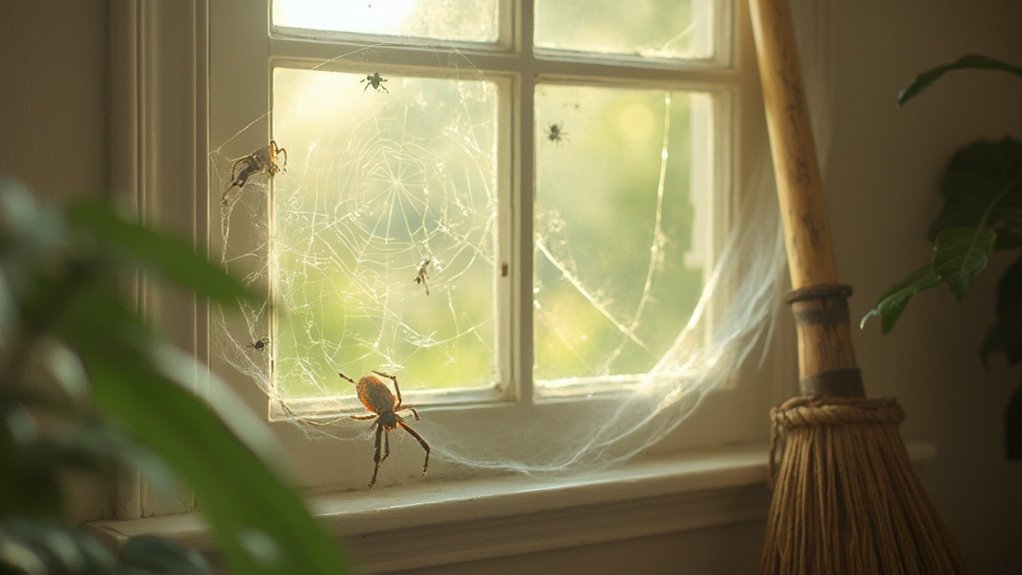
When it comes to tackling spider infestations, understanding common spider species is essential. You'll encounter various types, each with unique spider behavior and web types.
The Common House Spider, for instance, is small and builds irregular webs in hidden spots, often catching flies and mosquitoes. Their webs can appear messy, but they serve their purpose well. This species is known for its ability to thrive in various environments such as attics and sheds.
The Grass Spider, or Funnel-Web Spider, prefers grassy areas and constructs dense silk-lined burrows. They're shy but swift, catching unsuspecting insects in their intricate webs.
Conversely, the Wolf Spider doesn't rely on webs at all; instead, they actively hunt down their prey, making them effective predators.
Lastly, the Brown Recluse Spider is identifiable by its distinctive violin-shaped mark. It spins irregular webs in secluded, warm areas of your home. Although generally non-aggressive, it can be dangerous if threatened.
Keep Your Home Clean
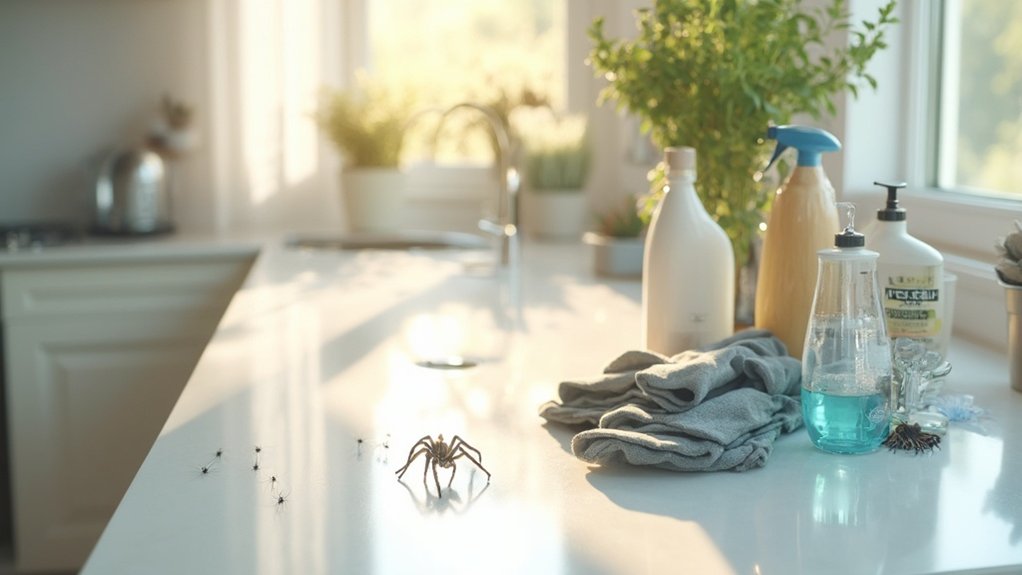
To effectively keep spider infestations at bay, maintaining a clean home is essential. Establishing a regular cleaning schedule is key to managing spider behavior.
Start by vacuuming key areas like beds, sofas, and tight corners—these are prime hiding spots for spiders. Don't forget to check behind curtains and in cabinets, using your vacuum to eliminate webs and egg sacs, which can prevent population growth.
Clutter is another major attractor for spiders. By organizing and reducing clutter, particularly in basements and attics, you limit their potential hiding spots. Regularly clearing these areas helps deter spiders from settling in. Additionally, a clean environment reduces hiding spots for spiders, further aiding in their deterrence.
Surface cleaning is equally important. Daily attention to floors, counters, and sinks keeps your space less inviting to spiders.
Clean up food and drink spills promptly to avoid attracting pests that spiders might feed on.
Seal Entry Points
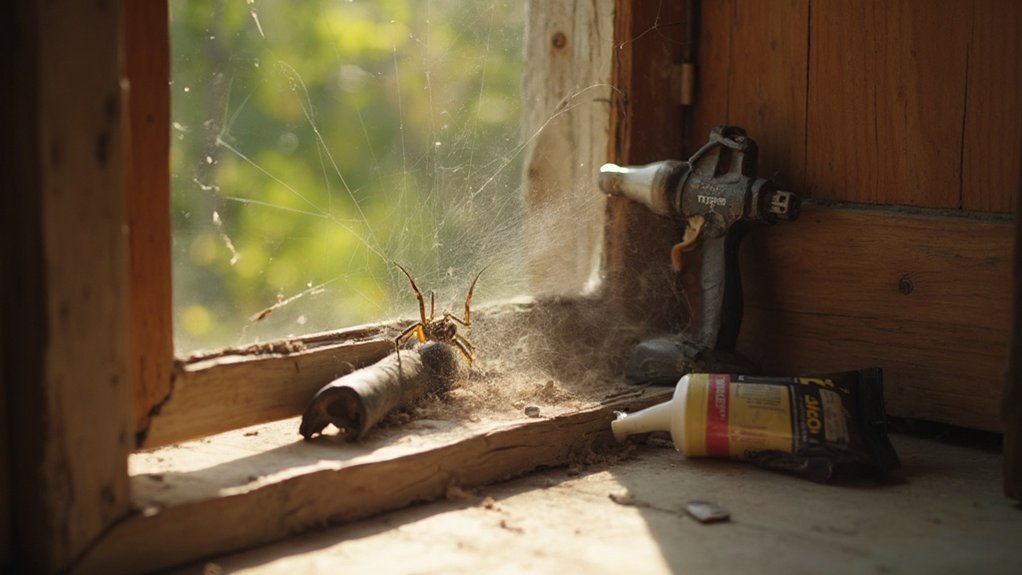
Sealing entry points is essential for keeping spiders out of your home. Start by identifying common access points like windows, doors, and structural cracks. Gaps around utility lines, torn screens, and uncapped vents also provide easy access for these pests.
When you seal these openings, you create a physical barrier that greatly reduces the chances of spiders entering your dwelling. It's important to note that spiders can enter through tiny gaps and cracks, so thorough inspections are crucial.
Use sealing materials like caulk or weatherstripping to fill in cracks and gaps around windows and doors. Make sure to fix or replace any damaged screens and attach door sweeps to block gaps at the bottom of exterior doors.
For vents and chimneys, install mesh screens or caps to keep spiders from getting inside. Regularly inspect your home for cracks in the foundation and other exterior openings that may have developed.
Reduce Clutter

Reducing clutter in your home is a crucial step in preventing spider infestations. Start by implementing effective declutter strategies that involve sorting items into categories: Keep, Donate, Recycle, and Dispose. This guarantees that only necessary items remain, eliminating unused papers, magazines, and storage boxes that attract spiders. Additionally, maintaining a regular cleaning schedule can further enhance your efforts, as a clean home is less inviting to these pests. Incorporating effective spider prevention methods, such as sealing cracks and gaps in windows and doors, can also deter spiders from finding their way indoors. By combining decluttering with these preventive measures, you create an environment that is far less hospitable to unwanted arachnids.
Organizing closets and shelving units will help keep these areas from becoming spider havens. Additionally, reducing clutter in your home minimizes spider habitats, making it less likely for them to take residence.
Don't forget about outdoor spaces. Keep your yard clean by trimming back vegetation and removing woodpiles, debris, and other clutter that provide hiding spots for spiders. Also, maintain a tidy environment by moving piles of trash and lumber away from your home.
Regular cleaning routines are imperative. Dust and vacuum thoroughly, focusing on carpets, corners, and behind furniture to disrupt spider webs and nests.
Use proper storage methods, such as transparent plastic bins that are well-sealed, to keep items off the floor and away from walls. Following these organization tips will create an unfavorable habitat for spiders while making your home more inviting and clutter-free.
Use Natural Repellents

Natural repellents offer an effective and eco-friendly way to keep spiders at bay in your home. Essential oils are a powerful option; peppermint oil, for instance, has a strong menthol aroma that spiders find unbearable. Eucalyptus and tea tree oils also deter these pests with their potent scents. Lavender and cinnamon oils not only smell great but also help discourage spider activity. Additionally, it's worth noting that many spider species pose no threat to humans, which can help alleviate some fears.
You can create natural sprays using these essential oils. A mixture of vinegar and cinnamon can repel and eliminate spiders, while combining peppermint oil with dish soap can deter them around doors and windows. For another effective spray, mix citronella or spearmint with water and a bit of dish soap.
Besides using essential oils, consider houseplants like basil, lavender, mint, and thyme, which naturally repel spiders. You can also use baking soda or salt to create barriers against them.
Implement Regular Inspections

To effectively combat spider infestations, implementing regular inspections around your home is essential. You should inspect frequently, checking for cobwebs and spider activity both inside and outside. Pay close attention to eaves, cracks, crevices, and corners where spiders like to hide. By doing this, you can identify hotspots that require immediate action.
Make sure to also check window screens for tears and repair or replace them to keep spiders out. Inspect your foundation and walls for any cracks or holes that could serve as entry points for these pests. Sealing these gaps with caulk can greatly reduce spider access to your home. Additionally, managing your outdoor areas by clearing leaf piles and debris near your foundation can attract spiders. It's important to remember that outdoor attractants can increase spider activity around your home, so adjusting outdoor lighting to minimize insect attraction is also effective, as fewer insects mean fewer spiders.
Regularly vacuum corners, baseboards, and under furniture to remove any spider webs and prevent infestations.
Consult Professional Pest Control

When dealing with persistent spider infestations, consulting professional pest control can be a game-changer. These experts conduct detailed professional inspections to identify signs of spider activity, potential entry points, and conditions that attract spiders.
By evaluating the severity of the infestation, they can determine the most effective treatment method tailored to your home's unique needs. One of the key pest control benefits is their ability to identify dangerous spider species, such as black widows or brown recluses, ensuring that the right precautions are taken. They develop extensive treatment plans that utilize specialized tools and pesticides, including liquid or powder-based options for targeted areas and industrial-strength repellents around your home's perimeter.
Additionally, they can provide insights on how to create a dry environment, which is essential for discouraging spider presence. Beyond just removal, professionals employ techniques like wall injections for severe infestations and sticky traps to monitor spider populations. Regular vacuuming and perimeter treatments are also recommended to keep spiders at bay.
With their expertise, you'll experience a safer and more effective solution than DIY methods, ultimately restoring your peace of mind and preventing future infestations.
Don't hesitate to consult professionals when spiders invade your space.
Professional Spider Control
Whether you need help eliminating spider infestations or just want help keeping spiders and other pests ut of your home, the local pest control experts at My Pest Pros can help. Reach out to us for a pest management program to protect your family and home. Call us at 571-512-5817!