
We often receive calls from clients asking, "What's eating my carpet?' If you're noticing damage to your carpets, it's likely due to common fabric pests like carpet beetles, clothes moths, or silverfish. Carpet beetles, particularly in their larval stage, feed on natural fibers and can create significant harm. Moth larvae can also devastate wool and other organic materials, leaving irregular holes. Look for signs like shed skins, droppings, or musty odors, which indicate an infestation. Regular vacuuming and maintaining low humidity levels can help prevent these pests. Understanding the specifics of these insects can aid in effective management. A closer look at their behaviors can illuminate how best to address this issue.
What's Eating My Carpet: Key Takeaways
- Common carpet pests include carpet beetles, clothes moths, silverfish, and termites, each of which can cause significant damage.
- Look for signs of infestation, such as holes, frayed edges, shed skins, fecal pellets, or musty odors in your carpets.
- Carpet beetle larvae, which are the most damaging stage, are often responsible for eating natural fibers in carpets.
- Regular vacuuming, immediate cleaning of spills, and maintaining low humidity can help prevent infestations.
- If you suspect a serious infestation, consult a professional pest control service for tailored treatment and prevention strategies.
Common Carpet-Destroying Insects

When it comes to the integrity of your carpets, vigilance is key. Common carpet-destroying insects, such as carpet beetles, moths, and silverfish, can wreak havoc on your fibers if left unchecked. Engaging in regular carpet maintenance is essential for protecting your investment.
Start by vacuuming frequently, focusing on corners and edges where these pests tend to hide. Insect identification plays an important role in your defense strategy. Carpet beetles, for instance, are small, round, and can vary in color, while moths typically have wings that appear tattered. Silverfish, with their elongated bodies and silvery scales, are often found in damp areas. Knowing these characteristics helps you recognize a potential infestation early on.
Moreover, you should inspect your carpets periodically for signs of damage, such as small holes or frayed edges. If you notice unusual shedding or a musty odor, it could indicate an insect presence.
Identifying Carpet Beetles
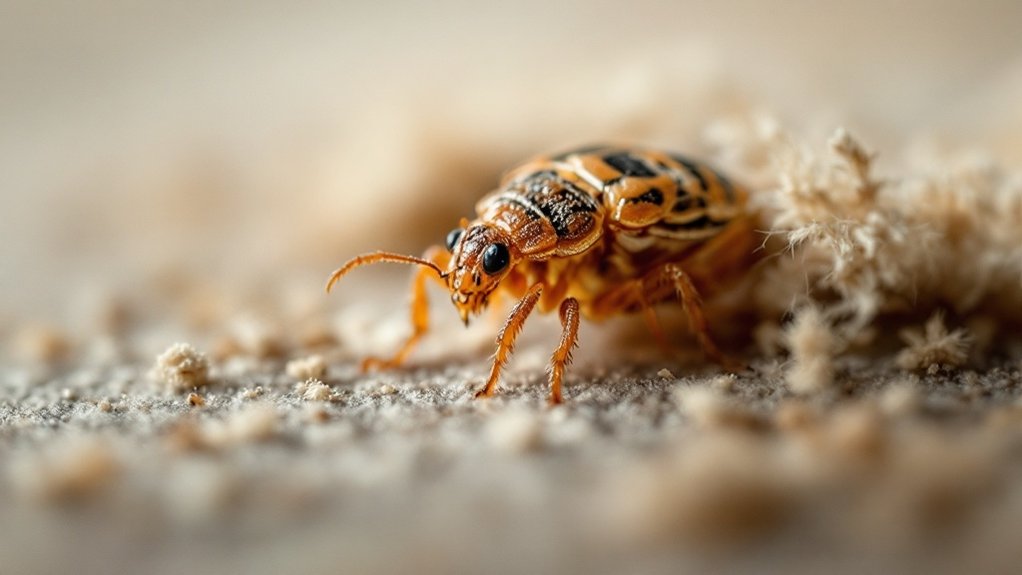
Carpet beetles, small but destructive, can be a homeowner's nightmare if not identified promptly. To effectively combat these pests, you need to focus on identifying species, as different types may require varied approaches. The most common species include the black carpet beetle, varied carpet beetle, and furniture carpet beetle. Each species displays distinct color patterns and sizes, which can aid in your identification efforts.
Understanding their lifecycle stages is essential for successful management. Carpet beetles undergo four stages: egg, larva, pupa, and adult. The larval stage is particularly damaging; these caterpillar-like creatures feed on natural fibers, such as wool and silk. They often hide in dark, undisturbed areas, making them hard to spot.
Pay attention to the signs—look for shed skins, fecal pellets, or the damage itself. To confirm your findings, use a magnifying glass to examine any suspicious insects closely.
Recognizing Moth Larvae

Numerous homeowners overlook the significance of recognizing moth larvae, which can wreak havoc on carpets and other textiles. Identifying these pests early in their life cycle is vital for effective control.
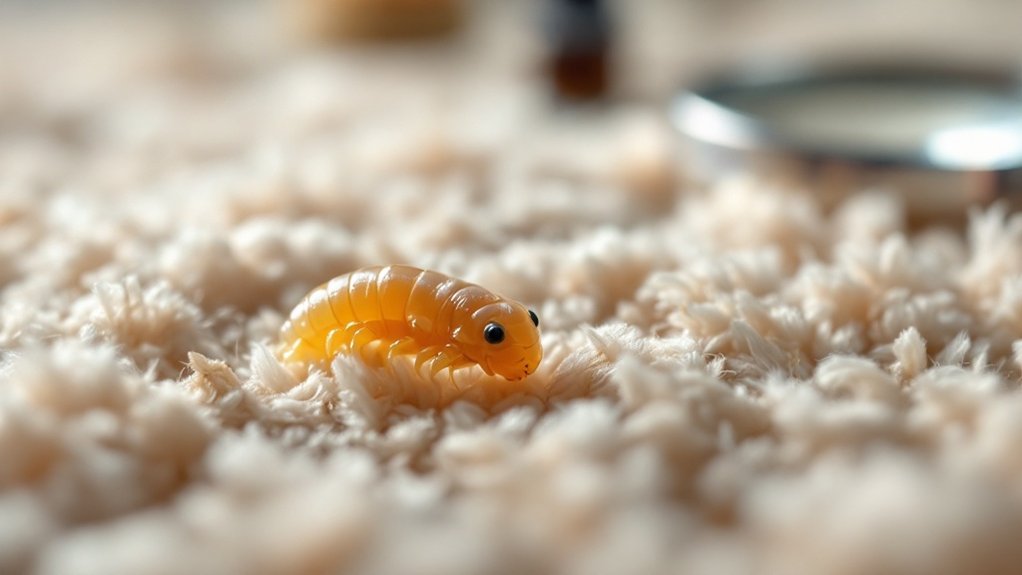
Moth larvae typically exhibit distinct characteristics: they're small, usually measuring about half an inch in length, and possess a creamy-white or pale yellow coloration. You might notice their bodies are covered in fine, silky hairs, which can make them appear fuzzy.
As you examine your carpets, keep an eye out for their feeding patterns. Moth larvae tend to create irregular holes in fabric, and they often leave behind silken webs or frass, which are small pellets of excrement.
Understanding the life cycle of these pests is essential for prevention. Moths lay eggs on or near food sources, and once the eggs hatch, the larvae begin to feed voraciously on natural fibers, including wool, silk, and cotton.
Signs of Infestation
Identifying signs of infestation is essential for maintaining the integrity of your carpets. When you notice small, irregular holes in your carpet, that's a clear indication of potential carpet damage caused by pests like moth larvae. These larvae feed on natural fibers, making wool and silk particularly vulnerable.
You might also observe frass, a fine powdery substance that resembles sawdust, which is actually the excrement of these destructive insects.
Another infestation symptom to watch for is the presence of adult moths, often fluttering near your carpets or dark corners of your home. If you spot these creatures, it's vital to act swiftly.
You may also notice an increase in static electricity or a distinct musty odor, which can indicate an ongoing problem.
Additionally, inspect the edges of your carpets, as pests tend to congregate in these areas. If you find webbing or silk threads, that's another sign of infestation.
Moreover, the presence of silverfish damage can also suggest that there are multiple pest issues at hand, and addressing them promptly is crucial to protecting your carpets and home.
Remaining vigilant and proactive about these indicators can prevent further carpet damage and protect your home's aesthetic appeal.
Prevention Strategies
To effectively safeguard your carpets from infestations, implementing proactive prevention strategies is vital.
Begin by incorporating regular vacuuming into your cleaning routine. This not only removes food particles and debris that attract pests, but it also helps disrupt their breeding cycles. Aim to vacuum at least once a week, paying special attention to corners and under furniture where pests often hide.
Next, consider using natural repellents, which can deter insects without introducing harmful chemicals into your home. Essential oils like lavender, eucalyptus, and tea tree oil are particularly effective. Mix a few drops with water and spray it lightly on your carpets. This not only creates an unpleasant environment for pests, but it also leaves a pleasant scent.
Additionally, maintain low humidity levels in your residence. Many carpet pests thrive in moist environments. Using a dehumidifier can help keep the air dry, making it less inviting for any unwanted guests. Furthermore, implementing Integrated Pest Management (IPM) strategies can enhance your overall pest control efforts and provide long-term solutions.
Finally, verify that any spills or stains are cleaned promptly, as lingering odors can attract pests. By taking these detailed and strategic steps, you'll greatly reduce the risk of carpet infestations and enjoy a pest-free area.
Effective Treatment Options
When carpet pests invade your home, understanding effective treatment options is essential for restoring your surroundings. You have two primary paths to evaluate: natural remedies and chemical treatments.
Natural remedies, often favored by environmentally conscious homeowners, include diatomaceous earth and essential oils like lavender or peppermint. Diatomaceous earth works by dehydrating pests upon contact, making it a non-toxic solution. Sprinkling it in affected areas can help eliminate infestations without harmful effects on your family or pets.
Essential oils can repel insects and provide a pleasant aroma, enhancing your area while combating pests.
On the other hand, chemical treatments offer a more aggressive approach. Insecticides specifically designed for carpet pests can effectively eradicate infestations. Look for products containing pyrethroids, which disrupt the nervous system of insects, ensuring swift results.
However, always follow the manufacturer's instructions carefully to minimize risks and side effects.
Combining both methods may yield the best results. Start with natural remedies to control minor infestations, then resort to chemical treatments for more severe cases. This balanced approach allows you to reclaim your carpets and create a healthy, pest-free environment for your family.
When to Call Professionals
If you're asking, 'what's eating my carpet,' recognizing the right moment to call in professionals can save you time, frustration, and money in dealing with carpet pests. If you notice persistent signs of damage—such as irregular holes, frayed edges, or unusual shedding—it's essential to assess the severity of the infestation.
When these signs appear, it's often an indication that the problem has escalated beyond simple DIY solutions. You should consult a professional if you've tried various treatments without success or if damage continues to spread.
An experienced exterminator can accurately identify the pest species and provide targeted treatment tailored to your specific situation. Additionally, if you've noticed a strong, musty odor or have found live insects, these are clear signals that the infestation warrants professional intervention.
Contact My Pest Pros For Carpet Beetle Control
Stop worrying about what's eating my carpet. To effectively combat carpet-destroying insects, understanding their identification and behavior is essential. Whether you're dealing with carpet beetles or moth larvae, recognizing signs of infestation early allows for timely intervention. Implementing preventive measures can greatly reduce the risk of future infestations. If DIY treatments fail to yield results, don't hesitate to call in professionals like My Pest Pros at 703-665-4455 for carpet beetle control. They can assess the situation and provide targeted solutions. Your carpets deserve protection from these destructive pests, ensuring lasting beauty and integrity. Reach out today!