
To stop sprickets from jumping in your basement, focus on reducing moisture and sealing entry points. Use dehumidifiers to maintain humidity levels below 50%. Inspect for leaks and fix any water damage. Promote ventilation by using exhaust fans or opening windows when possible. You can also apply natural deterrents, like peppermint or tea tree oil sprays, and create traps with jars of water and dish soap. If infestations persist, consider targeted insecticides designed for sprickets, ensuring you follow safety instructions. By combining these methods, you'll create an environment that's less hospitable for these pests. More solutions await you beyond this.
Key Takeaways About Sprickets Control
- Reduce humidity levels in the basement below 50% using dehumidifiers to create an unfavorable environment for sprickets.
- Seal cracks and gaps in walls and floors to prevent sprickets from entering and jumping around.
- Use essential oils like peppermint or eucalyptus as a natural repellent to deter sprickets from jumping in the area.
- Place homemade traps with water and dish soap to capture sprickets and limit their movement.
- Apply targeted insecticides designed for sprickets in dark corners and moisture-prone areas to control their population.
Understanding Sprickets and Their Behavior

Although they might look like a mix between spiders and crickets, sprickets—more formally known as camel crickets—are distinct creatures that thrive in damp, dark environments like basements.
Understanding their anatomy can help you recognize their unique features. Sprickets possess long, spindly legs that allow them to jump surprisingly high, and their bodies are characterized by a humpbacked shape. They lack wings, which differentiates them from other cricket species.
Their preferred habitat is typically moist areas, where humidity levels are high, making basements ideal environments for them. Sprickets are often found lurking in corners or under furniture, seeking shelter from light and predators.
They feed on organic matter, including mold and decaying plant material, which can further exacerbate moisture problems in your basement.
Sprickets are nocturnal, meaning they're most active at night. This behavior can make them difficult to spot during the day.
Identifying Spricket Infestations
To effectively manage spricket infestations in your basement, it's vital to recognize the signs of their presence early on. Sprickets, a blend of spiders and crickets, can become a nuisance if not addressed promptly.
Start with spricket identification tips: look for their elongated bodies, typically measuring 1 to 2 inches, and their distinctive long antennae.
Common spricket signs include the presence of shed exoskeletons, indicating that they're breeding in your space. You may also notice small black droppings scattered around, which signifies an established population.
Pay attention to the sounds as well; their characteristic chirping can be a clue that they're nearby.
Another key sign is the presence of webs, as sprickets often build them in dark, damp areas of your basement. Regular inspections will help you catch these signs early, allowing for more effective management.
Keep an eye out for these indicators, as your awareness is vital in maintaining a spricket-free environment. By understanding these common spricket signs, you'll foster a sense of belonging within your home, ensuring it remains a comfortable space for you and your family.
Preventive Measures for Your Basement

Taking proactive steps can greatly reduce the chances of sprickets invading your basement. Start by confirming your basement insulation is up to standard. Proper insulation not only helps maintain temperature but also minimizes the entry points for these pests. Inspect walls, floors, and ceilings for any gaps or cracks, and seal them with appropriate materials to prevent sprickets from getting inside.
Next, focus on moisture control. Sprickets thrive in damp environments, so it's vital to keep your basement dry. Invest in a dehumidifier to regulate humidity levels, ideally keeping them below 50%. Regularly check for leaks in pipes or walls, and repair them promptly to eliminate potential water sources.
Additionally, consider installing a sump pump if your basement is prone to flooding. This can effectively remove excess water and prevent sprickets from being drawn to the moisture.
Finally, confirm proper ventilation by using exhaust fans or windows to promote air circulation, further deterring these pests.
Natural Remedies to Deter Sprickets
Natural deterrents can effectively keep sprickets at bay in your basement. One of the most effective options is using essential oils, such as peppermint, tea tree, or eucalyptus. These oils have strong scents that repel sprickets.
Simply mix a few drops of your chosen essential oil with water in a spray bottle and apply it around entry points, corners, and any areas where you've noticed spricket activity. Refresh the spray every few days for best results.
Another approach involves creating homemade traps. You can easily make a simple trap using a jar filled with a mixture of water and a few drops of dish soap.
Place the jar in areas where sprickets frequent. They'll be attracted to the water but will get trapped due to the soap disrupting their ability to escape.
Combining these methods not only helps deter sprickets but also creates a more welcoming environment in your basement. By using natural remedies, you're taking a proactive approach to pest control that aligns with a community-focused lifestyle, promoting a healthier space for you and your family.
Chemical Solutions and Treatments
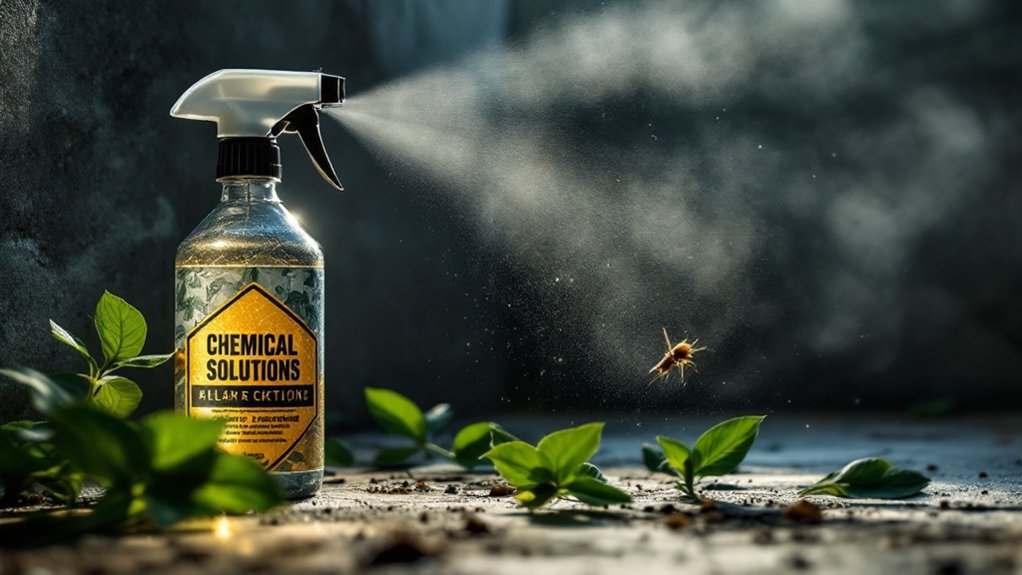
Chemical solutions and treatments can provide effective control over spricket populations in your basement. When choosing insecticides, it's essential to select products specifically designed for these pests.
Look for formulations that contain active ingredients known for their insecticidal effectiveness against sprickets, such as pyrethroids. These chemicals work by disrupting the nervous system of the insects, resulting in quick elimination.
Before applying any chemical treatments, make sure you read the labels carefully. Follow the manufacturer's instructions closely to maximize the insecticides' effectiveness and minimize any risks to your household.
Applying treatments in targeted areas, such as dark corners or near moisture sources, increases their impact.
Also, consider using a combination of chemical solutions and other control methods for thorough management. This integrated approach not only enhances your chances of eliminating sprickets but also fosters a sense of belonging within your community as you share effective strategies with fellow homeowners.
Remember to monitor the treated areas regularly. If you notice a resurgence of sprickets, it might be necessary to reapply the treatments or consult a pest control professional for further assistance.
Your proactive measures will make sure your basement remains a comfortable, pest-free space.
Maintaining a Pest-Free Environment
Maintaining a pest-free environment in your basement requires consistent vigilance and proactive measures. Start by implementing a robust pest control strategy that focuses on prevention. Regularly inspect your basement for signs of moisture, as damp conditions attract pests like sprickets.
Guarantee proper ventilation and consider using a dehumidifier to keep humidity levels in check.
Basement cleanliness is essential. Keep the area free from clutter, which can provide hiding spots for pests. Store items in airtight containers and regularly clean surfaces to eliminate crumbs and organic debris.
Sweep and vacuum frequently, targeting corners and hidden nooks.
Seal any cracks or gaps in walls, floors, and around pipes to prevent pests from entering. Installing door sweeps on basement doors can further block entry points.
Additionally, consider using natural deterrents, such as essential oils, to create an unwelcoming environment for pests without resorting to harsh chemicals. It's also important to stay aware of common pests in your area, as this knowledge can help you tailor your prevention strategies effectively.
Lastly, stay informed about seasonal pest trends and adjust your maintenance routine accordingly. By prioritizing pest control and basement cleanliness, you'll foster a healthy, pest-free space that contributes to your overall home environment.
Sprickets Pest Control
Are sprickets jumping out in your basement and scaring the you know what out of you? Sprickets can be really creepy!! My Pest Pros can help. Give us a call at 703-665-4455 or contact us online to schedule a preventative treatment or sprickets pest control.