
Key Takeaways
- Ants may appear suddenly due to the presence of food sources like sugar residues or pet food attracting them indoors.
- Seasonal changes, particularly in spring and summer, can trigger increased ant activity and swarming behavior.
- Cracks in walls, gaps around windows or doors, and utility openings serve as common entry points for ants.
- Warmth, moisture, and shelter inside homes become appealing as temperatures rise, encouraging ants to invade.
- An unclean environment with crumbs, spills, and clutter can create inviting conditions for ants to thrive.
Common Food Sources Attracting Ants

Seasonal Changes and Ant Activity
As the seasons shift, so does ant activity within your home. Understanding these patterns can help you maintain a comfortable living space. Here are four key influences on ant behavior:- Temperature: Ants become more active as temperatures rise, often seeking warmth indoors.
- Moisture: Rainy seasons drive ants to search for dry shelter, increasing their presence in homes.
- Food Sources: Seasonal food availability affects their foraging behaviors, making them more likely to invade kitchens.
- Colony Lifecycle: Reproductive cycles lead to swarms, particularly in spring and summer.
Entry Points: How Ants Get Inside
Nesting Habits of Ants
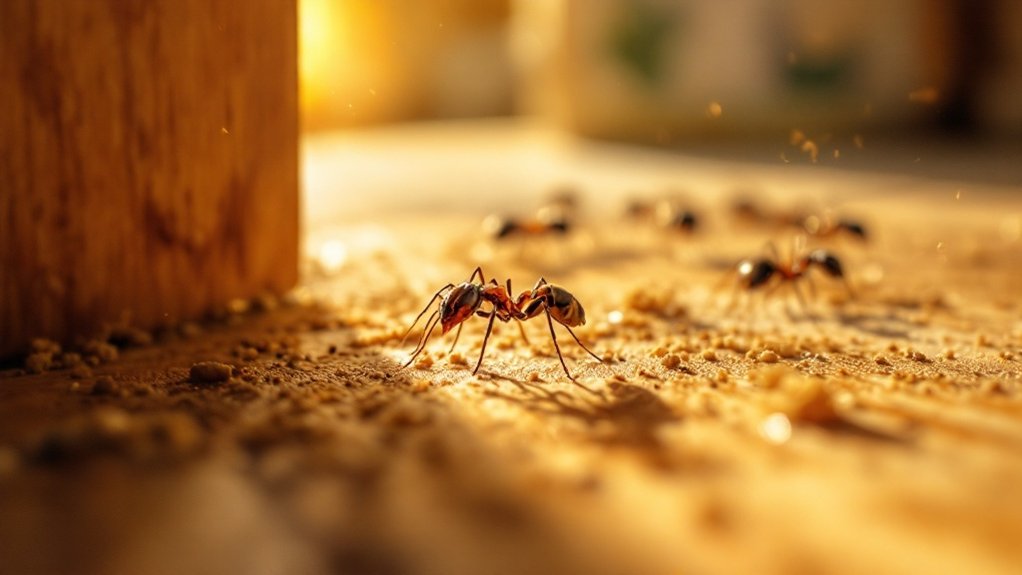
When investigating the nesting habits of ants, you'll find that they often choose locations like soil, wood, or even inside walls. Their preferred materials for nest construction include plant fibers, soil, and organic debris, which provide insulation and structural integrity. Additionally, understanding nesting season trends can help you predict when these pests are most likely to invade your space, as they typically seek shelter during warmer months.Common Nesting Locations
Ants typically establish their nests in a variety of locations that cater to their specific needs for moisture, warmth, and protection. Here are four common nesting locations you might encounter:- Garden beds – Rich in organic material, these areas provide ample food and moisture.
- Tree stumps – Decaying wood offers a sheltered environment with plenty of nutrients.
- Wall voids – Cracks and gaps in your home's walls create hidden spaces for nesting.
- Underfloor insulation – This cozy area provides warmth and protection, making it an attractive option.
Preferred Nesting Materials
Nesting habits of ants reflect their adaptability and resourcefulness, particularly in the materials they use to construct their homes. Commonly, ants utilize wood shavings, which provide insulation and structure. These shavings often come from decaying wood, aiding in moisture retention essential for the colony's survival. Additionally, ants favor various soil types, which can vary from sandy to clay-rich compositions. This choice depends on the specific species and environmental conditions. The soil allows for easy tunneling and offers a stable foundation for their nests. Understanding these materials helps you recognize where ants might settle in your home. By identifying their nesting preferences, you can take proactive measures to discourage their presence and protect your space.Nesting Season Trends
Understanding the seasonal trends in ant nesting can greatly enhance your ability to manage and prevent infestations. Recognizing ant behavior and nesting patterns is essential, especially during peak seasons. Here are four key trends to take into account:- Spring Awakening: As temperatures rise, ants emerge from hibernation to establish new colonies.
- Summer Surge: Queens lay eggs, leading to increased foraging activity as colonies expand.
- Autumn Preparations: Ants gather food and prepare nests for winter, often invading homes for sustenance.
- Winter Dormancy: Ant activity slows considerably as many species retreat underground.
The Role of Scent Trails in Ant Behavior
When foraging for food, ants rely heavily on scent trails to communicate with one another and navigate their environment. They produce trail pheromones, which are chemical signals that guide fellow ants to food sources. When you see ants marching in a line, they're following these pheromone trails, created by scouts who've successfully located nourishment. As they travel, they reinforce the scent trail, making it more potent for others to detect. This scent communication is crucial for colony efficiency, allowing many ants to exploit food resources quickly. The intensity of the pheromones diminishes over time, prompting ants to frequently reevaluate their paths. If you observe sudden ant activity in your home, it's likely they've discovered a food source and are establishing a scent trail to guarantee their colony can capitalize on it. Understanding this behavior can help you manage ant invasions more effectively.Maintaining a Clean Home to Deter Ants

- Food Storage: Seal all food items in airtight containers to eliminate potential food sources.
- Surface Cleaning: Regularly wipe down counters, tables, and floors to remove crumbs and spills that attract ants.
- Garbage Management: Dispose of trash promptly and use bins with tight-fitting lids to deter access.
- Clutter Control: Minimize clutter around your home, as it provides hiding spots and nesting areas for ants.
Natural Ant Remedies and Prevention Tips
Even with a clean home, ants can still find their way inside, making it important to explore natural ant remedies and preventive measures. You can utilize several effective natural ant deterrents to keep ants at bay. For instance, a mixture of vinegar and water can disrupt their scent trails, while essential oils like peppermint and tea tree oil serve as powerful repellents. Sealing cracks and gaps in windows and doors further enhances your defense, preventing ants from entering. By combining these natural remedies with diligent preventive measures, you create a welcoming environment for you and your family, while keeping unwanted ants outside where they belong. Additionally, consider consulting with a local pest control company for professional guidance on effective long-term solutions.Why Do Ants Appear in My House After It Rains?
After rain, many homeowners wonder why ants invade homes after rain. The moist conditions draw ants out of their colonies in search of food and shelter. As floods disrupt their natural habitats, these resourceful insects seek refuge in the closest dry environment, often leading them right into our homes.