
Sleeping with the light on won't effectively keep roaches away. These resilient insects are primarily drawn to warmth and food sources rather than light itself. Although cockroaches prefer darkness for foraging, they can adapt to various light conditions. Keeping lights on may lead to changes in their behavior, but it won't deter them completely. To truly manage roach presence, understanding their habits and implementing effective strategies is vital, which you can explore further for better results.
Key Takeaways About How To Keep Roaches Away
- Cockroaches prefer dark environments and are more active at night, so sleeping with the light on may deter them temporarily.
- Increased brightness can reduce cockroach movement, but they are adaptable and may still explore lit areas for food.
- Light alone is not a reliable method for keeping roaches away; they are attracted to warmth and food sources instead.
- Effective pest control requires cleanliness, food storage, and sealing entry points rather than just relying on light exposure.
- Misconceptions about roaches' aversion to light can lead to ineffective pest management strategies in homes.
Understanding Cockroach Behavior
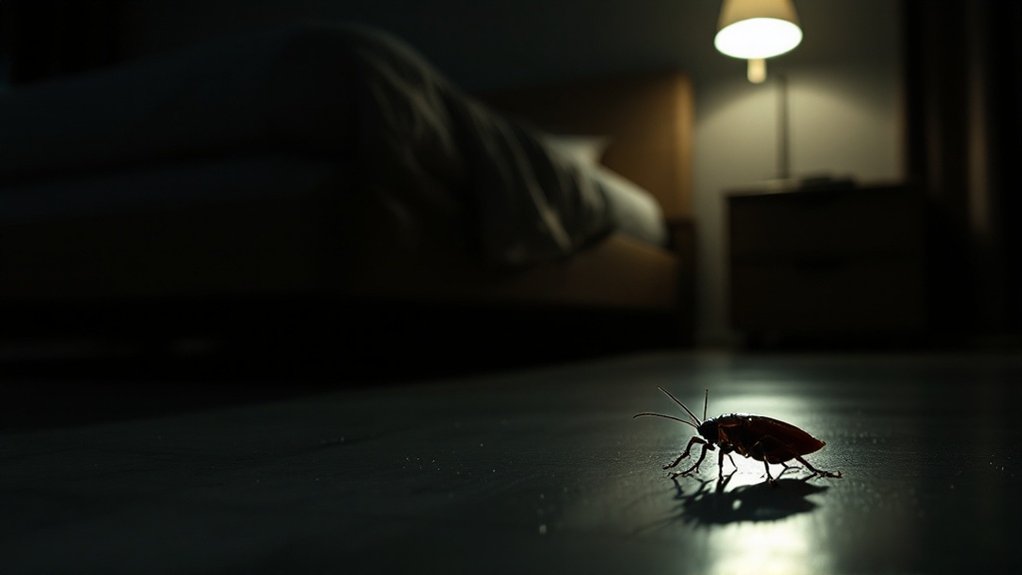
While you might find cockroaches unsettling, understanding their behavior can shed light on their resilience and adaptability. These insects thrive in diverse cockroach habitats, from urban kitchens to rural basements. Their preference for dark, warm areas allows them to avoid detection and predators. You'll notice that cockroaches exhibit nocturnal behavior, making them most active at night. This trait is essential for their survival, as it helps them forage for food while minimizing the risk of exposure to threats. They rely on their keen senses to navigate their environment in search of sustenance, often scavenging in places that humans might overlook. By comprehending these behaviors, you can appreciate the complexity of cockroaches and the ecological roles they play. Rather than simply fearing them, recognizing their adaptability might foster a more informed perspective on their presence in your living spaces.
The Role of Light in Cockroach Activity
Light greatly influences cockroach behavior patterns, affecting their activity levels and movement. You'll find that varying light intensities can alter their foraging habits and resting periods. Additionally, environmental factors, such as surrounding darkness, play an essential role in determining their responses to light exposure.
Cockroach Behavior Patterns
Although you might think cockroaches are primarily nocturnal creatures, their behavior reveals a complex relationship with light that influences their activity patterns. Roaches exhibit a strong preference for darkness, but they're not strictly nocturnal. When exposed to light, they may alter their movement and feeding habits. During the day, you might find them hiding in crevices, conserving energy, while at night, their nocturnal activity peaks as they emerge to search for food. Curiously, some species display variations in light tolerance, suggesting adaptability in their behavior. Understanding these nuances in roaches behavior can help you manage infestations effectively. By recognizing their patterns, you can create an environment that disrupts their routines, potentially reducing their presence in your home.
Light Intensity Effects
Cockroaches respond distinctly to varying light intensities, which greatly affects their activity levels and behavior. Research shows that these insects exhibit increased activity in lower brightness levels, preferring dim environments within the light spectrum. As brightness increases, their movement typically decreases, suggesting they are naturally adapted to darker habitats. Curiously, certain wavelengths of light can elicit different responses; for instance, blue light may deter them more effectively than other colors. This implies that if you want to reduce roach activity, manipulating light intensity and color might be a practical approach. Understanding these patterns can help you create an environment less conducive to their presence, making it easier for you to feel comfortable and secure in your space.
Environmental Factors Influence
Environmental factors, including light conditions, play an essential role in determining cockroach activity levels and behavior. Cockroaches thrive in environments with specific temperature fluctuations and humidity levels. High humidity, typically above 50%, encourages their survival and reproduction, while temperature extremes can drive them to seek shelter. In your home, bright lights may disrupt their nocturnal habits, but they might still navigate around illuminated areas if the surrounding environment remains favorable. Understanding these dynamics can help you create an unwelcoming atmosphere for cockroaches. By managing humidity and maintaining stable temperatures, you can influence their behavior considerably, making your living space less attractive to these pests. Therefore, it's vital to take into account all environmental factors if you want to keep cockroaches at bay.
Myths and Misconceptions About Roaches and Light
While many people believe that roaches are strictly nocturnal and avoid light at all costs, this notion is more myth than reality. These misleading beliefs stem from urban legends that suggest turning on lights will deter these pests. In truth, cockroaches are highly adaptable creatures. They can thrive in both light and dark environments, often seeking food and moisture rather than simply avoiding illumination.
Consider that roaches are primarily attracted to warmth, food sources, and hiding spots, rather than being repelled by light. While it's true they may be less active in well-lit areas, they won't necessarily flee from them. This misconception can lead to ineffective pest control strategies. Understanding the actual behavior of roaches is essential for effective management, allowing you to address infestations more scientifically rather than relying on these pervasive myths.
Scientific Studies on Light and Pest Deterrence

Research has shown that light's effectiveness as a deterrent for pests, including cockroaches, is not as straightforward as many might assume. Studies indicate that while cockroaches exhibit varying degrees of light sensitivity, their behavior isn't solely dictated by light exposure. For instance, certain species thrive in low-light conditions, suggesting that they may not be markedly deterred by artificial light.
Insect behavior is complex; factors such as temperature, humidity, and available food sources often play a more important role in their activity patterns. Some research even suggests that, under specific circumstances, exposure to light may attract certain pests instead of repelling them.
Understanding these nuances helps you make informed choices about pest management. Recognizing that light alone may not be a reliable deterrent fosters a sense of community among those seeking effective solutions, reinforcing that you're not alone in your quest for a roach-free environment.
Alternative Methods to Keep Roaches Away
To effectively keep roaches away, you can implement several alternative methods. Utilizing natural repellents, maintaining cleanliness, and sealing cracks and gaps are scientifically supported strategies that reduce roach infestations. Each approach targets environmental factors that attract roaches, creating an unwelcoming habitat for them.
Natural Repellents for Roaches
If you're looking for effective ways to keep roaches at bay without resorting to harsh chemicals, natural repellents can offer a viable solution. Using natural oils such as peppermint, tea tree, and eucalyptus can deter roaches due to their strong scents. Research shows that these oils disrupt the roaches' sensory receptors, making your home less inviting. Additionally, herbal remedies like bay leaves and catnip have been known to repel these pests. Placing dried bay leaves in cabinets and using catnip sachets can create an unwelcoming environment for roaches. By incorporating these natural methods, you not only safeguard your space but also foster a healthier living environment for you and your family. Embracing these solutions can enhance your sense of belonging in your home.
Cleanliness and Food Storage
While many natural repellents can deter roaches, maintaining cleanliness and proper food storage is essential in preventing these pests from invading your home. Roaches thrive in messy environments where food particles and spills are prevalent. By adopting effective cleanliness habits, you create a hostile environment for them. Regularly sweeping and mopping floors, wiping down surfaces, and promptly disposing of garbage reduces food sources.
Moreover, proper food storage is vital. Store food in airtight containers and refrigerate perishables promptly. This minimizes access to potential food sources for roaches. Additionally, keeping countertops clutter-free and sealing any food items will deter these pests. Ultimately, combining cleanliness with strategic food storage can greatly reduce the likelihood of a roach infestation, promoting a healthier living space.
Seal Cracks and Gaps
Even with cleanliness and proper food storage in place, roaches can still find their way into your home through cracks and gaps. To effectively combat this issue, focus on crack sealing and gap filling. Inspect your home for entry points, such as gaps around windows, doors, and utility lines. Use caulk or expanding foam to seal these vulnerabilities, as even the tiniest openings can invite infestations. Additionally, consider weather stripping doors and windows to further prevent access. By ensuring your living space is tightly sealed, you create a less hospitable environment for roaches. This proactive approach not only enhances your comfort but fosters a sense of community by contributing to a pest-free neighborhood. Protect your home and loved ones by taking these essential steps.
The Importance of Cleanliness in Pest Control
Maintaining a clean environment is vital for effective pest control. You might not realize it, but your cleaning routines directly influence pest presence, particularly roaches. These insects thrive in unkempt spaces where food particles and moisture accumulate. By implementing consistent sanitation practices, you can greatly reduce their attraction to your home.
Make it a habit to regularly clean countertops, floors, and hidden corners where crumbs may gather. Pay special attention to areas behind appliances and furniture, as they often become breeding grounds for pests. Additionally, proper waste management, such as sealing trash cans and disposing of waste promptly, can deter roaches from infiltrating your space.
Creating a clean living environment isn't just about aesthetics; it's a vital step in pest prevention. By prioritizing cleanliness, you foster a sense of belonging in a safe and healthy home, keeping unwanted pests at bay while enhancing your overall well-being. Regular pest control services help maintain a pest-free environment, ensuring that your efforts are supported and effective.
The Impact of Nighttime Light on Other Pests
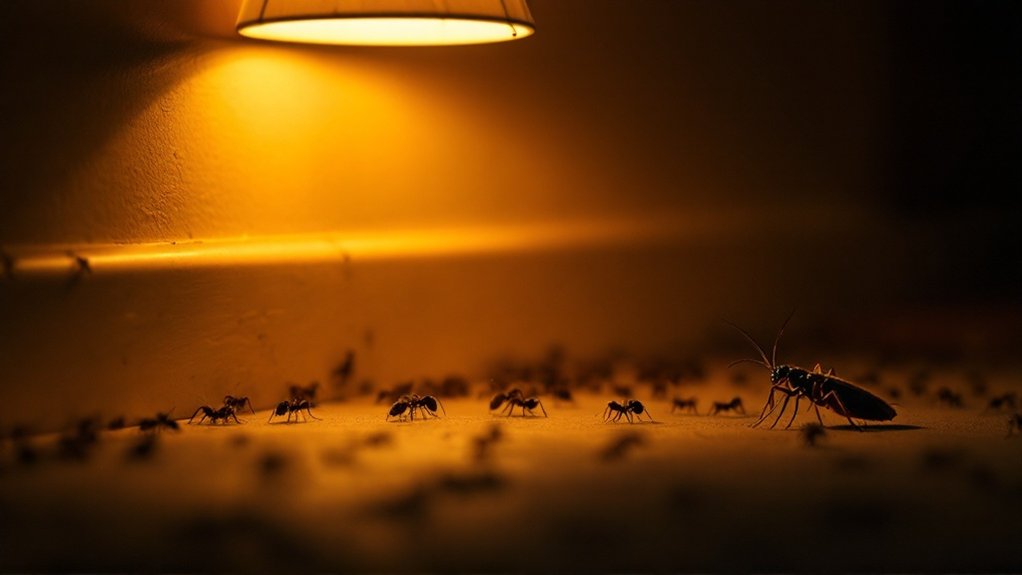
Light at night can greatly influence the behavior of various pests, altering their activity patterns and habitat preferences. Nighttime insects, like moths and beetles, exhibit strong light attraction, often leading them to your home. Understanding this can help you mitigate unwanted infestations. Here are four key effects of nighttime light on pests:
- Increased Activity: Many insects become more active in illuminated areas.
- Altered Feeding Patterns: Light can disrupt natural foraging behaviors, drawing pests toward artificial sources.
- Habitat Shifts: Some pests may change their preferred environments based on light availability.
- Disruption of Mating: Illuminated areas can interfere with mating behaviors in nocturnal species.
Practical Tips for Managing Roach Infestations
Understanding the behaviors of pests influenced by light can provide valuable insights into managing roach infestations. Since roaches are mainly nocturnal, they're most active during the night, making effective control essential. Start by eliminating food sources—store food in sealed containers and clean up spills promptly.
Utilize roach traps strategically; place them in dark, hidden areas where roaches are likely to travel. These traps not only catch roaches but also help you monitor the infestation level.
Seal any cracks or crevices in walls, doors, and windows to limit their entry points. You might also consider using insecticidal baits in conjunction with traps for a more thorough approach.
Finally, maintaining a clean environment sends a strong signal to roaches that your space isn't hospitable. By combining these techniques, you can greatly reduce roach populations and reclaim your space. Additionally, seeking assistance from a top-rated, local pest control company can provide you with tailored solutions to effectively combat infestations.
Contact My Pest Pros To Keep Roaches Away
In the battle against cockroaches, light serves as a flickering beacon rather than a foolproof barrier. While it may deter these nocturnal pests momentarily, it won't eliminate the underlying issues that invite them in. Think of cleanliness as the sturdy wall that truly protects your home, while light is merely a transient guard. To keep roaches at bay, embrace a holistic approach—combine vigilance with sanitation and proactive measures, ensuring your space remains a sanctuary, free from unwelcome invaders.
For a more effective cockroach control solution, consider contacting My Pest Pros to schedule a pest treatment.
Our pest technicians are experts at cockroach control. Our licensed and certified exterminators know how to identify the causes of roach infestations, use the most effective products, and will apply targeted treatments to get rid of your pest issue and keep roaches away for good!