Bees, Wasps & Hornets Control Services in Virginia, Maryland and Washington D.C.
Bees, wasps, and hornets are some of the most feared pests in Northern Virginia, Washington D.C., and Maryland areas. Their tendency to sting and their inclination to build large nests can make your home feel unsafe. When bees or wasps become a hazard to you and your family, My Pest Pros will safely remove the dangerous stinging insects from your property.
How to Identify a Bee, Wasp, or Hornet Infestation
Several types of bees and wasps can build nests in or on your home. This includes bumble bees, carpenter bees, honey bees, wasps, hornets, and yellow jackets.
Identified by their fuzzy, black-and-yellow-striped bodies and thick, rounded abdomen, there are over 250 known species of bumble bees worldwide. They often fly with a loud buzzing sound and relentlessly defend their underground nests—which can contain over 50,000 bees! Though they are more peaceful than aggressive, they attack people when threatened.
Carpenter Bees
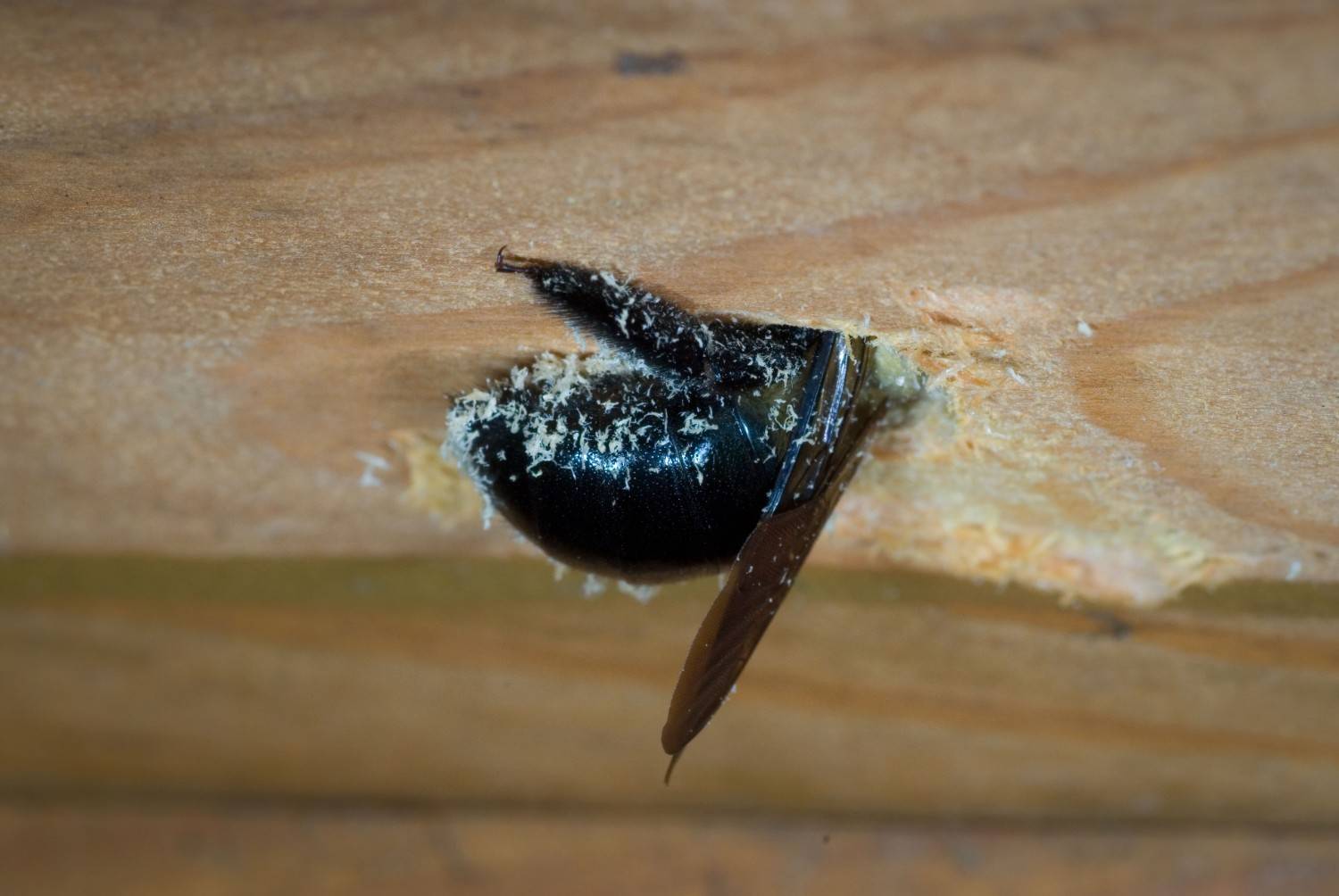
Carpenter bees resemble bumble bees— without the yellow stripes. These bees typically do not sting but are wood-destroying insects that can damage your decks, siding, and other areas of your home. Unlike bumble bees, carpenter bees do not live in a swarm but are also incredibly territorial.
Honey Bees
These small bees are characterized by their traditional yellow and black stripes. However, they are much smaller than bumble bees and only sting when threatened. Because they are social insects, their colonies can become quite large—and when one bee from the hive is threatened, you’ll be sure the rest of the hive will know about it within 15 minutes or less.
Wasps
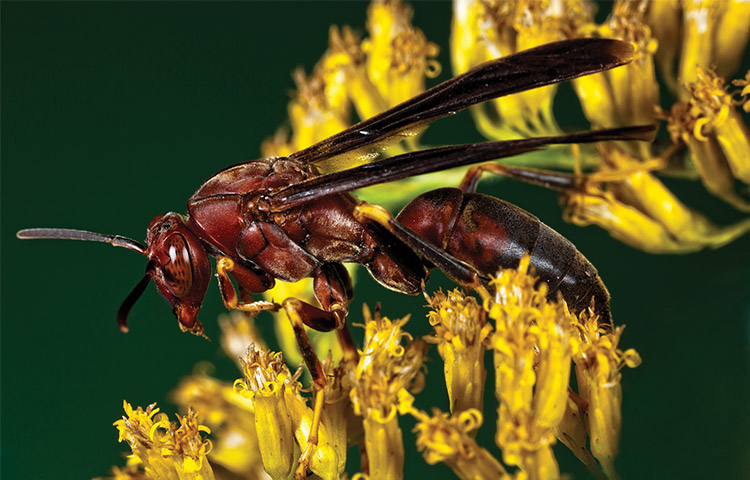
A wide variety of wasps can call your sacred space their home. One of the most common intruders is the paper wasp. These pests are dusty yellow and brown with long legs that hang while flying. This species is docile unless threatened, defending their small umbrella-shaped, comb-style hives living in tight spaces—such as attics, under awnings, umbrellas, near doors, and tree branches.
Hornets
There are two common types of hornets in Virginia, Washington, D.C., and Maryland areas: Bald-Faced and European. Bald-Faced hornets are identified by their primarily black bodies and white face and become aggressive when their nest is disturbed. European hornets have dark bodies with yellow accents and are fierce and sometimes active at night.
Yellow Jackets
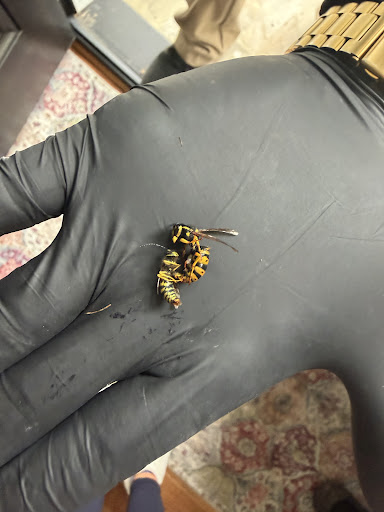
Yellow Jackets are identified by their yellow and black heads and thin abdomen. They are the most aggressive type of bees, building their nests in the ground or cavernous eaves and attics. Because of their aggression, they are the top perpetrator of bee stings in the U.S.
Our Bee & Wasp Removal Process
Inspect
We begin with a thorough inspection to identify the type of pest, locate entry points or nesting sites, and determine the extent of the infestation.
Eliminate
We apply targeted treatments inside and outside your property to efficiently eliminate pests at the source and prevent new ones from getting in.
Bees, wasps, and hornets are pests that can pose a severe health hazard to you and your family, especially if a family member is allergic to their painful stings. At My Pest Pros, we understand the significant danger you face—that’s why we are hyper-focused on bee and wasp nest removal for Maryland, Washington, D.C., and Virginia homeowners. With quick and effective treatment, you can be bee and wasp-free today!
If you’re looking for pest control for bees and wasps, My Pest Pros is here to help. We provide effective treatment options that suit your schedule and budget. We cleanse your home or business by exterminating all insects from the nest using proven techniques— then discard the nest from your property.
Spray a homemade repellent (essential oils such as peppermint are a natural deterrent, as well as a dish soap and water mixture).
Frequently Asked Questions About Stinging Pests
Stinging pests like bees, wasps, and hornets are most active during the warmer months, typically from spring through early fall.
Working with a professional exterminator is advised when dealing with stinging pests. Some species are more aggressive than others and removing them on your own may agitate them and result in someone getting stung. Additionally, some colonies may re-infest an area if not treated properly. A professional exterminator can safely remove them from your property and even relocate them to an area where they can help local wildlife.
Yellow jackets can be highly dangerous, making it essential to call a professional wasp exterminator to remove their hive from your property. Yellow jackets are highly aggressive and prone to stinging. They can quickly kill someone who is allergic to them, while a large swarm can even kill a nonallergic adult. Their stingers may also carry germs from garbage, causing infection.
Yes, some stinging pests can cause damage to your home if left untreated.
Wasps and hornets can scrape wood from siding, decks, and fences to build their nests, leading to surface damage. More concerning, species like yellowjackets may build nests inside walls, attics, or soffits, which can grow over time and impact insulation or drywall.
Honeybees are less destructive structurally, but if they nest inside walls, their hives can produce honey that leaks, causing staining, odors, and attracting other pests.
In Northern Virginia, these issues tend to worsen in late summer as colonies reach peak size, making early removal important.
An exterminator will typically remove a carpenter bee infestation in several ways. They may use dust or foam insecticides to poison bees in their tunnels. They may seal tunnel openings with caulk or wood putty if the borehole is on a structure. Pest removers can also use passive traps to reduce the number of bees.
Antoyne was friendly, explained every step and was incredibly efficient. Couldn’t recommend him enough!
read moreread less
Aaron Trejo
Antoynne has done excellent work in his inspection being thorough and giving insight to help us as well. As well he was very friendly and overall amazing to have.
read moreread less
Alexa Rehmat
John is the best!!! He was very thorough.
read moreread less
Kenneth Alcain
Corad Williams did our service and provided insight and showed attention to detail for prepping our new house to move into.
read moreread less
Allison Shanley
John was awesome. Listened to all of our concerns and corrected other pest control companies oversights. Reassured us that we were taking control of our home. He’s the 🐐
read moreread less
Violet Dancheck
Corad was wonderful - thorough, friendly, and professional. He explored each level of the house in detail looking for pests. He was able to treat areas inside with pet friendly solutions right away. On the outside he implemented some other treatments that are less pet friendly but he checked with me to make sure where my cat goes and doesn’t first. He took lots of photos for his report and even showed me how the treatment outside was already helping to attract the ants. In addition, he explained how the treatment worked and how I might see an increase in activity at first but after 7-10 days it should be in full effect and I shouldn’t see them anymore. Though he was not able to get onto the roof, he made recommendations for getting g that checked and things like cutting back beaches close to the house to limit squirrels from direct access to the roof. Overall, excellent customer service!
If you have a pest-control question, we respond around the clock. We don’t rush treatments; we get them right! We treat our customers like family; because, to us, you are. So whenever you have a pest problem, you can rely on the team at My Pest Pros to take care of it.
Our Satisfaction Guarantee
Our promise to you is simple: You will be 100% satisfied with our pest control programs. Guaranteed.*
To provide the best experiences, we use technologies like cookies to store and/or access device information. Consenting to these technologies will allow us to process data such as browsing behavior or unique IDs on this site. Not consenting or withdrawing consent, may adversely affect certain features and functions.
Functional
Always active
The technical storage or access is strictly necessary for the legitimate purpose of enabling the use of a specific service explicitly requested by the subscriber or user, or for the sole purpose of carrying out the transmission of a communication over an electronic communications network.
Preferences
The technical storage or access is necessary for the legitimate purpose of storing preferences that are not requested by the subscriber or user.
Statistics
The technical storage or access that is used exclusively for statistical purposes.The technical storage or access that is used exclusively for anonymous statistical purposes. Without a subpoena, voluntary compliance on the part of your Internet Service Provider, or additional records from a third party, information stored or retrieved for this purpose alone cannot usually be used to identify you.
Marketing
The technical storage or access is required to create user profiles to send advertising, or to track the user on a website or across several websites for similar marketing purposes.