When you're faced with a
termite infestation, understanding
termite treatment costs can feel overwhelming. You need to start by understanding the size and severity of the problem, as these factors play an essential role in determining the overall price. Then, consider the type of termite and the treatment method you'll choose, since different methods come with varying costs. But that's just the beginning—there are also
additional expenses to keep in mind that could impact your budget considerably. Preventative termite treatments can save you thousands of dollars in repair costs. Curious about how to guarantee you get the most
accurate estimates? Let's break it down step by step.
Key Takeaways
- Determine the type of termites present, as treatment methods and costs vary significantly between subterranean and drywood termites.
- Assess the severity of the infestation by inspecting for visible damage and considering professional evaluations for accurate estimates.
- Calculate property size, as larger properties may incur higher treatment costs due to increased labor and materials needed.
- Compare treatment options, including chemical treatments, bait systems, and fumigation, to find the most suitable and cost-effective solution.
- Obtain multiple quotes from pest control companies to identify the best value for services and consider any warranties or preventive measures offered.
Understanding Termite Treatment Costs
Understanding the costs associated with
termite treatment is essential for homeowners facing infestations. Various treatment options exist, each with its cost implications.
Chemical treatments can range from $5 to $16 per linear foot, while
bait systems typically cost between $1,000 and $3,500 for installation and monitoring.
Fumigation, which is effective for
severe infestations of drywood or formosan termites, can set you back $1,200 to $2,500, depending on your property's size. Treatment costs can vary significantly based on the severity of the infestation and the size of the affected area.
If you're considering
DIY treatments, remember that while they may save money initially, their effectiveness often varies. For
effective termite prevention tips, it's vital to maintain a dry environment, seal entry points, and regularly inspect your property.
Whole-home treatments can run up to $2,500 and more, especially for larger properties or more complex structures. Smaller infestations might cost less than $1,00, but
severe cases may require multiple treatments, pushing costs higher.
Being informed about these costs helps you make better decisions and manage your budget effectively.
Factors Affecting Treatment Prices
When it comes to
termite treatment, several factors can influence the overall costs you might encounter. One significant factor is the
type of termites involved. For example,
subterranean termites often require liquid soil treatments or baiting systems, while
drywood termites might necessitate localized spot treatments or fumigation.
Each species demands different
treatment methods, which directly affects costs and treatment effectiveness.
The type of treatment you choose also plays a vital role. Traditional
chemical treatments are generally more budget-friendly but may fall short in effectiveness for certain infestations.
Bait systems, while pricier, offer long-term benefits and are more environmentally friendly. In addition, the severity of the infestation can lead to differing treatment costs, with minor infestations being more affordable to treat than widespread ones.
If you opt for heat or fumigation treatments, be prepared for higher price ranges, often exceeding $1,200.
Your property's size and layout can further impact costs. Larger properties require more extensive coverage, and complex layouts can complicate treatment, increasing prices.
Additionally,
geographic location affects labor rates and material costs, while extra services like inspections and
ongoing monitoring add to your total.
In considering these factors, you'll be better equipped to make informed decisions about termite prevention and treatment effectiveness.
Size of the Infestation
Evaluating the size of a
termite infestation is essential for determining the appropriate treatment and its associated costs.
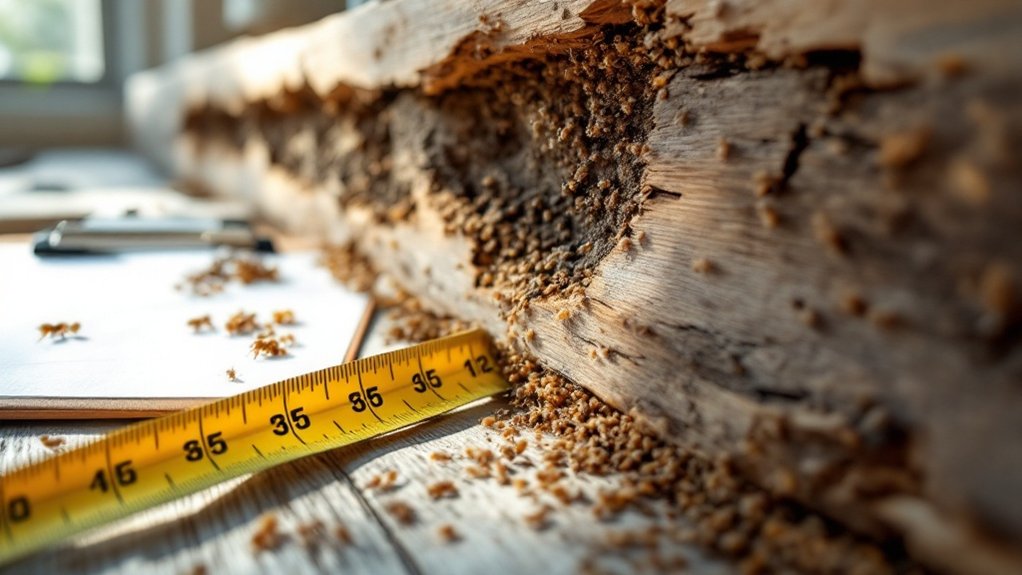
You'll want to identify key infestation indicators, such as
visible damage or
structural changes in your home, which can point to the severity of the problem. A
mature colony can contain anywhere from 200,000 to 2,000,000 workers, and they can quickly multiply and spread across your property, foraging over 200 feet from their nest. Understanding
colony behavior is imperative; a large colony typically forms multiple nesting sites instead of just one underground nest. This means that the infestation may be more extensive than initially perceived. Additionally,
subterranean termites found in Virginia and Maryland can squeeze through cracks as small as a couple of sheets of paper, making their presence even more difficult to detect. Conducting a
thorough inspection by a qualified pest control professional is critical for accurately measuring infestation extent.
This assessment will help you grasp whether
localized treatments will suffice or if
extensive treatments, potentially costing up to four times more, will be necessary. Treatment costs can vary appreciably based on the infestation's size and severity, so knowing these factors will aid in preparing your budget effectively.
Type of Treatment Method
After evaluating the size of the
infestation, the next step is to choose an appropriate
treatment method tailored to your specific situation. You have several options available, each with its own advantages and suitability.
Liquid treatments are can be effective against subterranean termites, creating a
barrier by applying
termiticides like Termidor around your foundation. This method often comes with a renewable warranty. Downsides to liquid termite treatments include putting highly toxic chemicals in the ground around your home. Liquid termite treatments also degrade over time. This means you need to do costly booster treatments to maintain termite protection.
Termite baitingsuch as Sentricon termite systems we install at My Pest Pros involves strategically placing bait stations around your home. The stations take advantage of termites' natural foraging behavior. Termites take the bait back to the colony for complete termite colony elimination. This method is more
environmentally friendly and offers long-term preventative control.
For hard-to-reach areas,
foam applications are ideal. They expand to fill cracks and crevices effectively, while dust treatments penetrate tiny openings. Both options are relatively affordable but may require more frequent applications.
If you're dealing with a severe infestation of drywood termites such as in the western United States, the
fumigation process might be necessary. This method involves tenting the area and exposing termites to toxic gas, proving highly effective for drywood termites. Thankfully, we do not normally see these kinds of termites in the Washington, D.C. region.
However, it does require
thorough preparation and doesn't guarantee future protection. Choose the method that best aligns with your situation for best results.
Property Size and Structure
Understanding the impact of
property size and structure on
termite treatment costs is essential for homeowners facing infestations.
Larger homes typically incur higher costs due to increased material and labor needs. Treatment costs are often calculated by linear footage for perimeter treatments, while
whole-house treatments, such as heat or fumigation, are priced by square footage. If your property has a
complex structure, expect even higher costs, as these homes require more extensive treatment and labor. Obstructions around your property can further complicate treatment, adding to the overall expense. Multi-story homes may also demand additional treatment due to their structural complexity, while crawl spaces and attics pose unique challenges that can raise costs. Additionally, the type of treatment selected can significantly influence the overall costs associated with termite management. The type of foundation your home has can greatly impact treatment complexity and cost. Ultimately, maintaining your property's
structural integrity is vital. Regular inspections and
preventive measures can help mitigate infestation risks and reduce long-term costs.
Geographic Location Impact
Property size and structure aren't the only factors influencing
termite treatment costs;
geographic location plays a vital role too.
Regional differences can lead to considerable variations in treatment prices, driven by
local regulations and
labor costs.
For instance, areas with warm climates like Florida and Louisiana often face higher treatment costs due to increased termite prevalence, while urban centers like Chicago may offer lower prices.
Here are some key geographic considerations:
- Labor costs can vary greatly between regions.
- Termite species present in your area impact treatment complexity and cost.
- Urban areas typically have different pricing structures compared to rural locations.
- Local regulations may dictate required treatment methods, affecting overall costs.
- The need for multiple treatments can differ based on regional termite populations.
Understanding these factors is essential for estimating your termite treatment costs accurately.
Be sure to consult local
pest control professionals who can provide
tailored advice based on your specific geographic location and its associated challenges. This local insight will help you navigate costs more effectively and make sure you're prepared for any necessary treatments.
Additional Costs to Consider
When calculating
termite treatment costs, it's vital to take into account various
additional expenses that can greatly influence your budget. The type of treatment you choose will considerably affect the cost. For example,
chemical treatments can range from $4 to $14.50 per linear foot, while
fumigation can cost between $10 to $20 per linear foot.
Additionally, the
size and complexity of your property can increase expenses, as larger homes often require more bait stations or extensive treatments, potentially totaling up to $2,500. The damage repairs from termite infestations can average around $2,600, which is an important factor to consider when planning your budget.
The
severity and type of infestation also play an important role. Minor infestations are generally cheaper to treat than severe ones, which may necessitate multiple treatments. As you assess your options, consider the treatment duration—longer treatments may lead to higher costs.
Don't forget to factor in
professional services and additional fees. A pest control professional may charge for follow-up visits or provide warranties that can lower future treatment costs.
Investing in
pest control warranties could be beneficial in the long run, ensuring you're protected against future infestations while managing your budget effectively.
Getting Accurate Estimates
Getting
accurate estimates for termite treatment is essential for
effective budgeting. To achieve this, you need to take into account several factors that directly influence the overall cost.
First, assess the
size of the infestation and look for infestation signs, as larger infestations typically require more extensive treatment. Next, determine the
type of termite involved, as different species may necessitate various treatment methods, impacting costs.
Here are key elements to focus on when getting estimates:
- Evaluate the property size and layout for labor and material implications.
- Research the types of treatments available and their associated costs.
- Ask for quotes from multiple pest control companies to compare prices.
- Inquire about treatment frequency to understand long-term costs.
- Factor in regional differences in labor rates and termite prevalence.
Budgeting for Termite Treatment
Budgeting for termite treatment requires a thorough understanding of the various factors influencing costs. The
size of your property, the
type of termite infesting it, and the
severity of the infestation all play critical roles in determining your expenses.
For instance, larger properties may incur higher treatment costs due to the need for extensive coverage. Additionally, different types of termites necessitate varied treatment methods, which can range from $225 to $8,000 depending on the approach chosen. Understanding the type of termites present in your home is crucial for accurate budgeting, as costs can vary significantly between subterranean and drywood termites.
Using
preventive measures, like annual treatment plans or termite home inspection maintenance, can also mitigate future costs. These options generally range from $75 to $1,600 annually and can save you from more significant expenses.
Finally, while termite treatments can be expensive, it's important to remember that the cost of not treating for termites can be far more expensive. Repairs from termite damage can cost thousands of dollars.
What Factors Can Affect the Cost of Termite Treatment Based on the Findings from a Termite Inspection?
The cost of termite treatment can vary significantly based on several factors. Key influences include the extent of the infestation, the type of treatment required, and the size of the property. Understanding the termite inspection process can also help identify potential issues that may escalate treatment costs in the future.
Northern Virginia Termite Protection
Whether you have found termite damage, are seeing
termite swarmers in your home, or simply want to
protect against termites, My Pest Pros can help.
Contact us today to schedule a
termite inspection or termite protection. Call 571-512-5817.