
When it comes to tackling a rat problem in your home, knowing the most effective removal techniques is essential. You'll want to start by identifying the signs of an infestation and sealing any entry points to prevent future issues. Using traps and natural deterrents can also play a significant role in your strategy. But, understanding how to combine these methods efficiently can make all the difference. What might be the best approach to guarantee long-term success? These seven techniques can help you regain control over your space.
Quick Answer: Effective rat removal combines inspection, exclusion, trapping, sanitation, and ongoing monitoring. Start by confirming rat activity and sealing entry points, then place traps where rats travel and remove accessible food, water, and nesting sources. For persistent or widespread infestations, professional rodent control can identify hidden access points and create a longer-term prevention plan.
Key Takeaways
- Identify signs of infestation by analyzing droppings, listening for nocturnal noises, and checking for physical evidence like gnawed holes and damaged packaging.
- Maintain your yard by clearing debris, eliminating standing water, and stacking firewood properly to deter rodent attraction.
- Seal entry points with durable materials, weather stripping, and mesh screens to prevent rodents from accessing your home.
- Utilize traps effectively by placing them in high-activity areas with attractive bait, and check them daily for better capture rates.
- Employ natural deterrents such as essential oils, specific plants, and crushed pepper mixtures around your property to repel rats.
Identify the Infestation
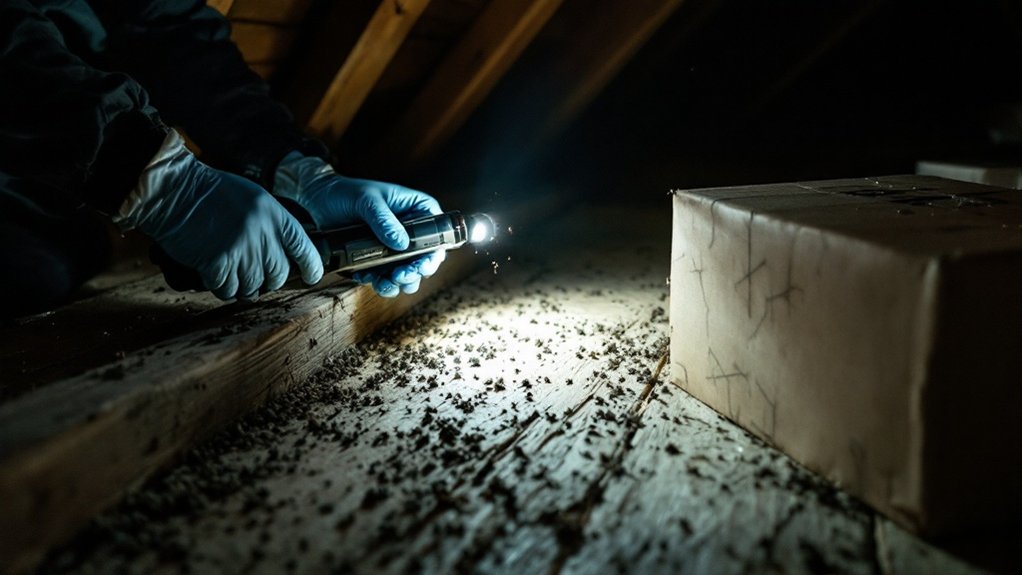
To effectively tackle a rat infestation, you first need to identify the signs of their presence. Start with dropping analysis; rat droppings are a clear indicator of their activity. Fresh droppings appear shiny and putty-like, while old ones become hard and crumbly.
Pay attention to the location of these droppings, as they reveal active areas where you should place your bait or traps.
Next, listen for auditory identification. Rats are nocturnal, so you might hear scratching, scurrying, or high-pitched squeaks coming from walls, ceilings, or floors at night. This behavior is often accompanied by strong musky odor from urine, indicating large infestations.
Gnawing noises also indicate their presence, as they continuously chew to maintain their teeth.
Look for additional physical evidence like gnawed holes, which are roughly the size of a quarter, and greasy smudges left on walls.
You might also notice damaged food packaging and burrows in your yard.
All these signs will help you confirm an infestation and gauge its size, allowing you to devise an effective removal strategy.
Seal Entry Points
Once you've identified the signs of a rat infestation, the next step involves sealing entry points to prevent further access. Implementing effective preventative measures is vital in protecting your home from these pests.
Start by filling cracks and gaps with durable sealing materials like caulk or expanding foam. Confirm you seal gaps around doors and windows with weather stripping, and install door sweeps at the base of exterior doors. For vents and openings, use mesh screens or grates to block potential entry.
Don't forget about utility and pipe openings. Seal gaps around utility pipes and cables using steel wool and caulk. For larger openings, consider using metal sheets or hardware cloth. It's important to verify that all sealing materials are dry and secure. Additionally, sealing entry points is crucial as it reduces the risk of infestations and protects your home.
Additionally, maintain your yard to prevent burrows and infestations. Keep grass and shrubs trimmed, and remove clutter to eliminate potential nesting sites.
Use Traps Effectively

Using traps effectively is crucial for controlling a rat infestation in your home. Begin with strategic trap placement; position traps near walls where rats typically travel and set snap traps at a right angle with the trigger almost touching the wall.
Placing traps in pairs along the wall can help intercept rats from both directions. Focus on areas with high activity, such as near droppings or worn paths, and consider using less frequented spaces like attics or basements. Additionally, it's important to place traps in high-activity areas to maximize their effectiveness.
For successful baiting, use attractive options like peanut butter, nuts, or raw meat. Initially, bait traps without setting them to help rats acclimate. Secure the bait to the trip pedal to guarantee the trap triggers when the rat attempts to eat.
If a trap hasn't captured anything in a few days, try varying the bait.
Don't forget trap maintenance—check traps daily and remove any captured rats to minimize odors and discourage other animals. Use multiple traps to increase your chances of success, and rotate locations if necessary.
Following these guidelines will enhance your effectiveness in using traps to eliminate rats.
Employ Natural Deterrents
Employing natural deterrents can be an effective strategy for repelling rats from your home and garden. You can use essential oils to create potent repellent mixtures. For instance, combine equal parts peppermint oil and water in a spray bottle and apply it in areas where you suspect rat activity. Eucalyptus oil can also be effective; mix it with water and spray in rat-prone zones to disrupt their scent trails. Additionally, citronella oil is useful when applied with soaked cotton balls or as a repellent spray.
Herbal repellents can further enhance your efforts. Consider planting mint around your property, as its strong aroma is known to deter rats. Daffodils and marigolds are toxic to rats and can act as natural barriers. Regular garden inspection can help identify rodent activity early and inform your deterrent strategy.
You can also use crushed pepper mixed with vinegar around your garden's perimeter or create sprays with cloves and chili flakes for added potency.
Consider Bait Stations

Bait stations offer a strategic approach to effectively managing rat populations in and around your property. These enclosed devices contain poisoned bait that mimics natural food sources, luring rats inside. Their design allows only small rodents to enter, ensuring greater bait station effectiveness while protecting larger animals.
Once inside, rats consume the toxic bait without the ability to transport it back to their nests, minimizing the risk of cross-contamination.
To optimize placement, position bait stations around your property's perimeter, focusing on high traffic areas near burrows and along established travel routes. Keep stations about 25 feet apart for rats to maximize effectiveness. Additionally, placing bait stations in comfort zones for rodents increases the likelihood of their usage.
It's essential to monitor these stations regularly, checking for signs of activity such as droppings, and refilling them to maintain their appeal.
Understanding rodent behavior is important; placing bait stations in environments that blend with surroundings helps reduce their natural neophobia.
While bait stations may take 1-2 weeks to show results, their safety and targeted approach make them a valuable tool in your rat removal strategy. By combining them with traditional traps, you can enhance your control over rodent populations effectively.
Implement Professional Services
When faced with a rat infestation, seeking professional services can provide a swift and effective solution.
These experts utilize humane methods and advanced techniques to guarantee your home is free of rodents while prioritizing safety and the environment.
- Thorough inspection of your property to identify entry points and infestation areas.
- Use of humane traps to safely capture and remove rats.
- Sealing of all potential entry holes to prevent future infestations.
- Cleanup and repair of damage caused by rats, such as chewed wires and feces.
Choosing the right professional service is essential.
Look for companies specializing in rodent control that offer expert advice and tailored treatment plans.
Verify that the company is properly licensed and insured, and ask about any guarantees or follow-up policies included with the service. Look for companies specializing in professional rodent control that offer expert advice and tailored treatment plans.
Maintain a Clean Environment

Maintaining a clean environment is vital for preventing rat infestations and guaranteeing your property remains rodent-free. Effective yard maintenance plays an important role in deterring these pests.
Start by regularly cleaning up your outdoor areas; remove food scraps and eliminate standing water that attracts thirsty rodents. Clear trash and debris from the home perimeter to minimize potential nesting sites. Additionally, store firewood away from structures to deter nesting.
Seal your garbage cans with tightly fitting lids to prevent access to food. Avoid leaving pet food and water outdoors, which can encourage rodent behavior. Furthermore, make sure you dispose of any fallen fruit and vegetables promptly to eliminate food sources.
To further reduce nesting opportunities, stack woodpiles and other items at least 18 inches off the ground and maintain a distance of 12 inches from fences or walls. Trim vegetation to keep it at least four feet away from your roof, and thin heavy plants to minimize hiding spots.
Professional Rat Removal in Fairfax
My Pest Pros's rat experts can help with rat removal for your home or business in Fairfax and throughout Northern Virginia, Maryland, and Washington, D.C.. Our team of trained pest management professionals can create a plan to get rid of rats and protect your property. Call us today for rat control and local pest control services at 571-512-5817.