
You might think your home is safe, but if you're noticing certain signs, it's time to reconsider your situation and contact a mouse exterminator. Droppings, strange noises at night, or even chewed wires can all indicate a mouse problem that needs immediate attention. Ignoring these clues could lead to bigger issues down the road, not just with regard to damage but also health risks. What else should you be on the lookout for? Understanding these signs can make all the difference in protecting your home.
Quick Answer: The five clearest signs you may need a mouse exterminator are mouse droppings, scratching or scurrying at night, chewed wires or furniture, nesting materials, and persistent ammonia-like or musky odors. Multiple signs or continued activity can indicate an established mouse problem, especially when you’re finding fresh droppings or property damage.
Key Takeaways
- Discovering rodent droppings near food sources indicates a significant risk of disease, necessitating immediate extermination.
- Hearing unusual scratching or scuttling noises at night suggests active mouse presence, requiring prompt action.
- Finding chewed wires or furniture signifies a mouse infestation, posing potential electrical hazards that must be addressed quickly.
- Observing nesting materials like ripped fabric or insulation in secluded areas indicates established nests that need urgent removal.
- Noticing unexplained odors, especially ammonia or musky smells, points to mouse activity and the need for immediate mouse extermination services.
Visible Droppings in Your Home
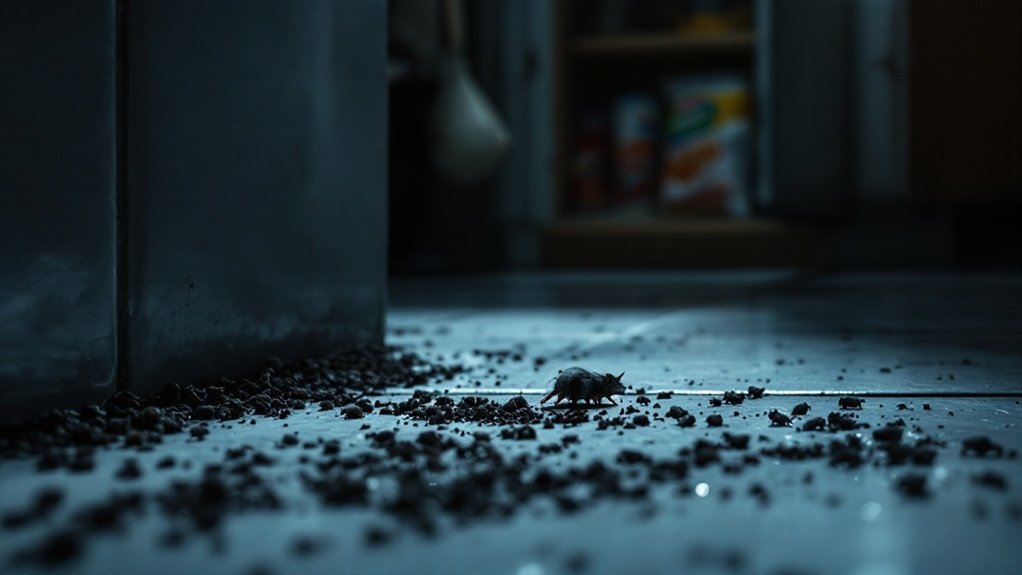
If you've noticed visible droppings in your home, it's a strong indicator that you might've a mouse infestation. Proper dropping identification is vital to understanding the severity of the issue. Mouse droppings measure about 3 to 6 mm long, are rod-shaped with pointed ends, and often resemble grains of rice. You'll typically find them near food sources, in closets, cabinets, and along baseboards.
The health risks associated with mouse droppings are significant. They can harbor bacteria and viruses, posing a threat to your well-being. Viruses can remain infectious for 2 to 3 days, while bacteria like Salmonella can survive for weeks. High concentrations of mouse droppings increase the likelihood of disease transmission, making it imperative to address the issue promptly.
Handling droppings without protection can lead to serious diseases like Hantavirus. As a result, disease prevention is essential.
If you find droppings, especially in poorly ventilated areas like attics or basements, contact a professional mouse exterminator immediately. High concentrations of droppings indicate a larger infestation, heightening the risk of disease transmission.
If you find mouse droppings, clean them carefully to reduce exposure. Wear rubber or plastic gloves, thoroughly wet the droppings with a household disinfectant, and wipe them up rather than sweeping or vacuuming them while dry. Heavy rodent infestations may require additional protective equipment and professional cleanup precautions.
Unusual Noises at Night
Visible droppings aren't the only sign of a mouse infestation; unusual noises at night can also signal their presence. During nighttime activity, you may hear scratching and scuttling sounds coming from behind baseboards, drywall, or floorboards. These noises occur as mice use their nails to grip surfaces while moving around.
High-pitched squeaks and screeches often indicate mice communicating, especially during their active hours, which typically start about 30 minutes after sunset and last until 30 minutes before sunrise. In fact, mice can produce up to 80 droppings in one night, which often increases the chances of hearing their movements. A single mouse will defecate 100+ times per day.
The frequency of these sounds increases at night, particularly when mice search for food and water. Common areas where you can hear these noises include kitchens, basements, and lofts, especially near grains, sweets, and proteins.
Pay attention to your pets, too; they often react to mouse noises before you notice them. If your cat or dog is focused on a specific cupboard or corner, it may be worth investigating that area for droppings or other signs of mice.
Sound identification can help confirm a mouse infestation, so don't ignore these nocturnal disturbances.
Chewed Wires or Furniture
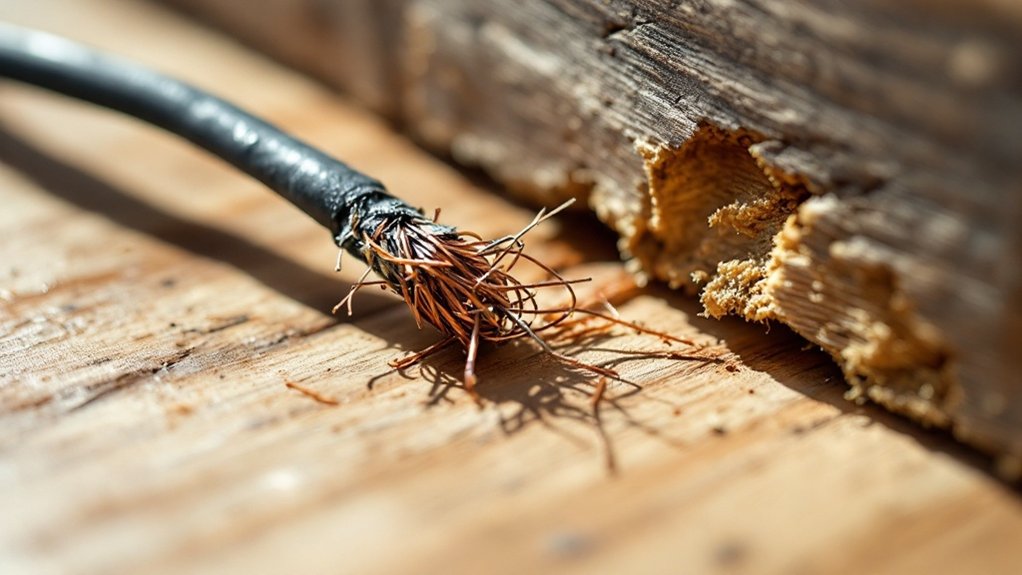
Chewed wires or furniture are clear indicators of a mouse infestation that shouldn't be overlooked. If you notice visible chew marks or frayed wires, it's time to act. Mice are drawn to the warmth of electrical systems, often targeting wires hidden in walls or ceilings. This gnawing can lead to flickering lights, power outages, or even electrical hazards like circuit tripping or appliance failure.
The texture of wire insulation, typically made of plastic or rubber, mimics materials that rodents chew on in the wild. Additionally, some automotive wiring uses soybean-based materials that can be especially appealing to mice. If you smell burning or decaying odors, it might indicate overheated wires or electrocuted rodents. Regular checks for signs of gnawing can help catch problems early, while ongoing residential pest control services can help reduce the risk of recurring rodent activity.
To prevent damage, inspect and seal entry points around your home, and consider using rodent-resistant materials like metal sheaths. Regular checks for signs of gnawing can help catch issues early.
If you find significant damage, it's essential to call a professional mouse exterminator immediately. They can eliminate the infestation and help address any electrical hazards from chewed wires, ensuring your home remains safe and secure.
Nesting Materials Found
Spotting nesting materials around your home is a strong sign of a mouse infestation that demands immediate attention. Mice exhibit nesting behavior to create safe, warm spaces for breeding. You'll often find nests composed of ripped clothing pieces, soft fabric, string, twine, and even insulation.
Material identification is essential in recognizing these nests. Look for loose piles of materials that form rough, ball-like structures, typically four to six inches in diameter. Common locations include attics, basements, kitchen cabinets, and cluttered areas indoors and outdoors. Mice typically prefer to build their nests in secluded locations, unlike rats which nest externally.
If you notice small piles of insulation or shredded paper, it's another indicator that mice are active in your space.
Be aware of the signs: food wrappers, gnaw marks on nearby surfaces, and urine stains can also point to nesting activity. If you find these materials, it's time to act. Delaying action can lead to further infestations and property damage.
Consult with a mouse exterminator to assess the situation and eliminate the threat effectively. Remember, swift action is key to protecting your home from these unwanted pests.
Unexplained Odors in Areas
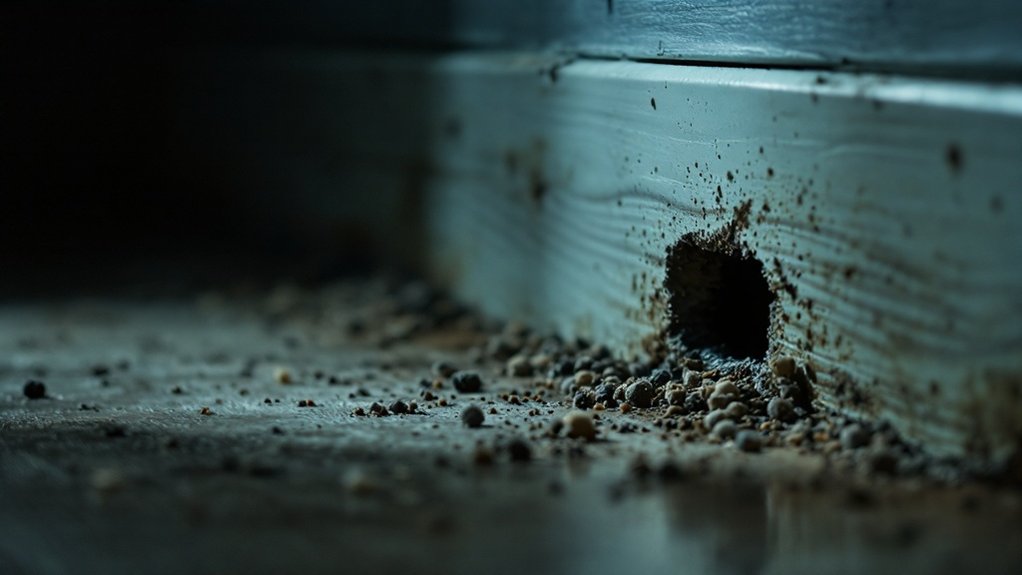
If you notice unexplained odors wafting through your home, it could signal a mouse infestation that needs urgent attention. Proper odor identification is essential in determining the presence of mice.
An ammonia odor, often strong in enclosed spaces like cabinets or attics, comes from mouse urine. As the urine dries, it decomposes into ammonia, a clear indicator of mouse activity. Mouse urine can often be found scattered throughout living spaces, further confirming their presence.
Musky or fishy odors, typically related to mouse nests made from soiled materials like paper or fabric, also suggest a nesting area. The intensity of these smells usually correlates with the size of the infestation. If the odors are particularly pungent, it's likely that a larger group of mice is present.
Lastly, decomposition odors result from deceased mice hidden in hard-to-reach spots. These smells aren't only offensive but can pose health risks, necessitating immediate action to locate and safely dispose of the carcasses.
Recognizing these odor sources early is important to preventing further complications. If you encounter any of these odors, it's time to contact a professional mouse exterminator to address the infestation and eliminate the underlying odor.
Professional Mouse Exterminator Near You
If you suspect a mouse infestation and need professional mouse control, we're here to help. My Pest Pros' mouse exterminators can help identify and eliminate a mouse problem in your home. Contact us today at 703-665-4455 to schedule an inspection and let us help protect your family and home.