
To guarantee your home's structural safety this winter, focus on proactive winter pest control measures. Begin by inspecting for common winter pests like rodents, cockroaches, and termites, which thrive despite low temperatures. Seal cracks and gaps around utilities and entry points to block access. Store firewood away, maintain a tidy environment, and fix leaky pipes to eliminate food and moisture sources. Regularly inspect your home for vulnerabilities such as damaged weather stripping or drainage issues. If you spot significant infestations or damage, consider consulting professionals for advanced solutions. Discover effective strategies to safeguard your home further against winter intrusions.
Key Takeaways
- Inspect and seal cracks and gaps around your home to block pest entry and maintain structural integrity during winter.
- Use pest-resistant materials and maintain proper drainage systems to deter infestations and prevent water accumulation.
- Regularly clean and declutter your home to minimize hiding spots and food sources for winter pests.
- Store firewood away from the house and keep landscaping trimmed to reduce access points for pests seeking warmth.
- Schedule seasonal inspections and consult professionals for significant infestations or structural damage to ensure long-term safety.
Understanding Winter Pest Risks

Understanding winter pest risks is vital for protecting your home during the colder months. Many pests exhibit unique winter adaptations that enable them to survive low temperatures. For instance, some produce natural antifreeze proteins, allowing them to endure freezing conditions.
However, the lack of food sources drives significant changes in pest behavior, making them more aggressive and persistent in their search for sustenance. This increased urgency can lead rodents to gnaw on electrical wiring, posing serious fire risks. Additionally, certain pests, like mosquitoes, lay eggs before winter, which hatch when temperatures rise, while termites can remain active within heated structures, continuing their destructive behavior. This highlights the importance of vigilance; winter pest activity can lead to structural damage and health risks, including disease transmission and respiratory issues from contamination.
To effectively mitigate these risks, you need to regularly inspect your home for signs of pest activity, ensuring entry points are sealed and food sources are secured. Implementing winter pest control measures not only disrupts the lifecycle of pests but also enhances your home's protection against these invaders.
Understanding these winter pest behaviors and adaptations is essential for maintaining your home's integrity and health during the colder months.
Common Winter Pests
As winter sets in, various pests seek refuge inside homes, turning your residence into a potential haven for unwanted guests. Rodents, such as mice and rats, exhibit behavior that drives them indoors for warmth and food. They not only spread diseases but also damage your property, making pest identification essential to mitigating their impact. Common types of rodents include squirrels, mice, and rats, all of which can invade homes seeking shelter from the cold.
Insects also adapt to colder conditions with specific habits. Cockroaches remain active year-round, breeding even in winter, while termites, particularly subterranean species, continue their feeding, posing a threat to structural integrity. Silverfish thrive in damp areas, and spiders, including venomous types, often seek shelter indoors. Ants, too, may invade homes in search of warmth and sustenance.
Other overwintering pests like ladybugs, stinkbugs, and crickets can also infiltrate your space. These pests often hide in furniture or firewood stored near your home.
Understanding their overwintering strategies helps in effective prevention. By sealing cracks, screening chimneys, and maintaining cleanliness, you can thwart these winter invaders. Staying vigilant and informed about common winter pests will help you safeguard your home against potential infestations.
Signs of Pest Infestations

Recognizing the signs of pest infestations is essential for maintaining a healthy home environment. Effective pest detection techniques help you identify pest activity indicators early, preventing more significant issues.
Start with unusual odors; musty smells might signal cockroaches, while urine-like scents often indicate rodents. Visible droppings are another clear sign—tiny roach feces or larger rodent pellets suggest an active infestation.
You should also check your indoor plants; nibbled leaves or uprooted saplings could point to pests like aphids. Additionally, early detection is crucial in minimizing the financial implications of pest infestations.
Pantry havoc is a major red flag. Look for hollowed-out grains or pierced food packaging, as these indicate pests are contaminating your food supply.
Pay attention to sounds in the walls; scratching or scuttling noises, especially at night, can mean rodents are nesting inside.
In hidden spaces, evidence of nesting, such as shredded paper or fabric, signals rodents. Grease marks along baseboards show frequent rodent pathways.
If you notice mysterious puddles, they might indicate leaks attracting pests like roaches. By recognizing these signs, you can act swiftly to address infestations before they escalate.
Assessing Structural Vulnerabilities
Many homeowners overlook the importance of evaluating structural vulnerabilities that can lead to pest infestations. Conducting a thorough vulnerability assessment is vital to maintaining your home's structural integrity.
Here are key areas to focus on:
- Material Selection: Use pest-resistant materials, like treated wood or metal screens, to deter infestations.
- Landscaping: Maintain distance between plants and your home to reduce pest access.
- Foundation Maintenance: Employ treatments that deter pests and guarantee proper drainage to prevent water buildup.
- Structural Design: Consider elevated foundations and strategic building orientation to minimize pest habitats. Additionally, implementing Integrated Pest Management (IPM) can enhance your prevention strategies.
- Ventilation and Insulation: Confirm proper airflow and seal insulation materials to keep pests out.
Regular inspections by trained professionals can identify existing vulnerabilities, such as water damage or gaps in your structure.
Addressing these issues promptly through repairs and maintenance will help prevent infestations.
Remember, keeping a detailed record of findings from your vulnerability assessments is vital for effective follow-up actions.
Prevention Strategies
Employing effective prevention strategies is essential for safeguarding your home against winter pests. Start with exterior sealing by inspecting and sealing cracks and holes around utilities, pipes, and other entry points.
Replace loose mortar and weather stripping around windows and doors to minimize access. Store firewood at least 20 feet away from the house and off the ground to deter rodent nesting. Additionally, trim back trees and shrubs to prevent easy access to your home, and cover vents and chimneys with mesh screens.
Interior organization is equally important. Keep storage areas tidy and elevate boxes off the floor to reduce hiding spots. Regularly declutter your home to eliminate potential food sources for pests. Fix leaky pipes and address moisture issues, especially in kitchens and bathrooms. Store food in airtight containers and avoid leaving pet food out overnight.
Install door sweeps and repair damaged window screens to block pest entry. Many pests, including rodents and cockroaches, seek shelter indoors during the winter months, making these prevention strategies crucial for maintaining a pest-free environment.
Effective Pest Control Methods
Effective pest control methods are essential for maintaining a pest-free environment during the winter months. Implementing a combination of natural deterrents and pest traps can greatly reduce the chances of infestations.
Here are some effective strategies you can apply:
- Use Essential Oils: Peppermint oil and cedar can repel rodents and insects.
- Seal Entry Points: Caulk cracks and gaps around windows and doors to block pests. This is crucial as rodents can squeeze through tiny cracks to enter your home.
- Maintain Cleanliness: Regularly vacuum and dust to eliminate spider webs and food crumbs.
- Firewood Storage: Keep firewood at least 20 feet from the house and elevate it to deter pests.
- Pest Traps: Utilize snap traps for rodents and glue traps for cockroaches to monitor and control populations.
Importance of Regular Inspections
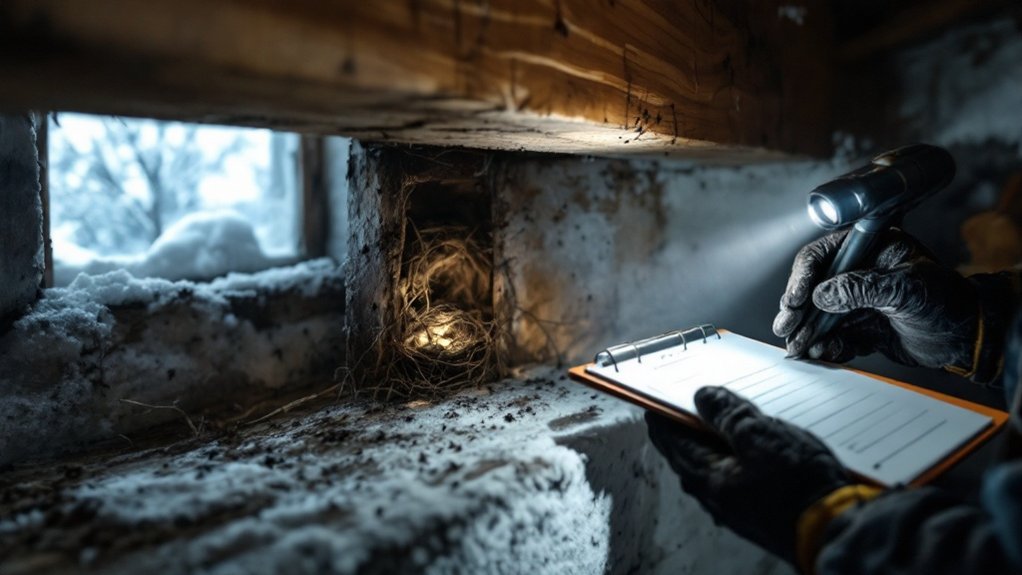
Regular inspections play a pivotal role in maintaining a pest-free home during winter months. By establishing a consistent inspection frequency, you can proactively identify and address potential entry points before they become problematic.
Start with an inspection checklist that includes examining exterior walls for cracks, gaps, and holes. Pay special attention to doors and windows, ensuring that weather stripping and screens are intact.
Inside, look for similar imperfections on interior walls and promptly seal any issues. Inspect vents and chimneys, covering them with mesh screens to prevent pest ingress. Regularly check for leaks or damage around pipes, as these can also attract pests. Additionally, regular treatments are essential to target breeding areas and disrupt the life cycles of pests.
Additionally, seasonal inspections of attics, basements, and crawl spaces are essential for early detection of pest activity. Use monitoring devices like sticky traps to track any signs of infestation.
DIY Pest Control Tips
Implementing DIY pest control tips can greatly enhance your efforts to maintain a pest-free environment during the winter months. By addressing entry points, moisture sources, and attractants, you can effectively deter pests without relying solely on commercial products.
- Seal cracks and holes: Use caulk to fill any gaps around windows and doors.
- Fix leaky pipes: Promptly repair leaks to eliminate moisture sites that attract pests.
- Use homemade traps: Set up snap traps and glue traps in areas where rodents are active.
- Natural deterrents: Utilize peppermint oil or vinegar and water mixtures to repel unwanted guests.
- Store food properly: Keep food in airtight containers to reduce attractants. Adding to your efforts, ensure that you inspect walls for entry points to block potential access for rodents and insects.
These DIY methods empower you to take control of your pest management strategy.
Regularly check your traps and remove any debris or clutter that might provide a hiding spot for pests.
By combining these practical tips with homemade traps and natural deterrents, you'll create an inhospitable environment for pests and protect your home throughout the winter season.
Stay vigilant, and you'll enjoy a pest-free habitat.
When to Call Professionals

While DIY pest control methods can be effective for minor issues, certain situations call for professional intervention. If you notice widespread infestations, such as droppings, nests, or structural damage, it's time to consult an expert.
DIY efforts may prove ineffective, especially if you encounter complex problems involving multiple entry points or various pests exhibiting unusual pest behavior. Understanding the limitations of DIY approaches is essential when assessing the severity of an infestation.
Health risks are another critical factor; if you suspect the presence of disease-carrying pests or allergens, don't hesitate to call professionals. Significant damage to your property can lead to further structural harm, making timely intervention essential.
Professionals possess the expertise to accurately assess infestations and determine the best course of action. They utilize advanced methods and specialized equipment that aren't available to the general public.
Additionally, they develop thorough plans tailored to your specific needs, considering seasonal patterns that influence pest activity.
When choosing pest control technicians, prioritize reputation, experience, and safety for pets and children. Verify their licenses and certifications to guarantee quality service.
Long-term Structural Safety Measures
Long-term structural safety measures are essential for maintaining a pest-free environment in your home. By implementing effective pest-proofing strategies and selecting the right building materials, you greatly reduce the risk of infestations.
Here are some key practices to reflect upon:
- Select Pest-Resistant Materials: Use treated wood and metal screens to deter pests.
- Seal Entry Points: Regularly inspect and seal cracks and gaps around your home.
- Ensure Proper Drainage: Maintain good drainage systems to prevent water accumulation.
- Employ Physical Barriers: Install stainless steel mesh and sand barriers around foundations to deter pests.
- Maintain Cleanliness: Keep the interior and exterior tidy to minimize pest attraction.
Integrating these measures during construction and throughout your home maintenance routine creates a robust defense against pests.
Additionally, being aware of winter pest threats can help you proactively address potential issues before they escalate.
Regular inspections and the use of eco-friendly pest control strategies can further enhance your home's resilience.
Prioritize these long-term solutions, and you'll foster a safer, healthier living environment.
Contact My Pest Pros
In summary, winter pest control is vital for maintaining the structural safety of your home. By understanding the risks and implementing effective prevention strategies, you can minimize infestations and protect your property. Regular inspections and prompt action against signs of pests are essential. While DIY methods can be effective, don't hesitate to call professionals when needed. For expert assistance, contact My Pest Pros at 703-665-4455. Prioritizing long-term measures will guarantee your home remains safe and pest-free throughout the winter months and beyond.