
To guarantee effective pest control in your restaurant, start by understanding common pests and their behaviors. Schedule regular inspections, ideally monthly or more frequently, to catch and prevent infestations early. Implement preventive measures like sealing openings and maintaining a clean environment. Train your staff on pest awareness and establish an open communication culture around sightings. Commercial pest control should be part of your preventative maintenance program. Choose professional exterminators with expertise in commercial settings, making sure they use updated methods. Finally, monitor and evaluate results to adjust your strategies as necessary. By following these essential tips, you can create a pest-free dining experience, and there's more valuable information to explore.
Understand Common Restaurant Pests

Understanding common restaurant pests is fundamental for maintaining a safe and hygienic environment. Flies, particularly filth flies, exhibit behavior that draws them to uncovered garbage, where they lay eggs that hatch into larvae. Their presence can lead to serious diseases like typhoid fever and cholera. To mitigate fly infestations, consider using air currents at entry points, especially when doors are frequently opened.
Rodent habits present another challenge; they chew through walls and wires, causing significant damage to your restaurant's infrastructure. Mice prefer undisturbed areas and can easily infiltrate through openings larger than a pencil's diameter, posing health risks like salmonella. Regular inspections can help identify potential entry points and prevent rodent access.
When it comes to cockroaches, understanding the various cockroach types is imperative. These nocturnal pests thrive in moist environments and can contaminate food. German cockroaches are particularly problematic, often found in kitchens. Prevent their entry by sealing pipe and wall junctures and maintaining strict sanitation practices.
Silverfish damage paper products and can inflict harm on cardboard boxes, while ant trails signal food sources that require immediate attention. Regular cleaning and sealing entry points are essential for controlling these pests effectively.
Schedule Regular Inspections

Regular inspections are essential for maintaining a pest-free environment in your restaurant. To effectively manage pest control, you should schedule inspections at least monthly. If your restaurant has a history of pest issues, consider increasing the inspection frequency to weekly. This proactive approach helps you identify potential pest problems early, minimizing the risk of infestations.
Ensure that inspections cover all areas, including dining spaces, kitchens, and storage. Pay particular attention to utility openings, doors, and windows, which are common entry points for pests. A detailed checklist can guide your inspection process, making sure no potential problem areas are overlooked.
Log maintenance is vital for tracking pest patterns and persistent issues. Keep a thorough record of each inspection's findings, documenting any signs of pest activity and corrective actions taken. This log not only aids in addressing current concerns but also informs future inspections, allowing you to adapt your pest management strategy as needed. Additionally, regular inspections are critical for food businesses to prevent contamination and illnesses, safeguarding both your customers and your establishment's reputation.
Implement Preventive Measures

After scheduling thorough inspections, the next step in pest management involves implementing preventive measures that effectively shield your restaurant from infestations.
Start by sealing openings and cracks in walls, windows, and corners. Verify entry points like doors are tightly closed and consider installing air curtains to create a barrier against pests. Regularly trim tree branches to eliminate pathways pests might use.
Next, remove attractants. Store food in sealed containers and elevate it off the floor. Dispose of waste promptly, keeping garbage bins covered and positioned away from the building. Eliminate open water sources, as moisture can attract pests. Clutter provides hiding spots, so maintain a tidy environment and keep floor drains clean.
Implementing preventive practices is crucial. Conduct daily cleaning routines, verifying thorough sweeping and sanitizing of surfaces. Train your staff to recognize pest behavior and understand seasonal trends that might increase infestation risks. Regularly update them on pest control policies and provide refresher courses. Effective pest control strategies include sanitation and exclusion methods, which play a vital role in maintaining a pest-free environment.
Maintain Cleanliness Standards
Maintaining high cleanliness standards is crucial in preventing pest infestations in your restaurant. Implementing strict cleaning protocols is imperative. Clean all food preparation stations, floors, and under cooklines daily.
Regularly sanitize dining areas and kitchen surfaces to eliminate food residues that attract pests. Secure trash cans and bins with lids, and empty them daily to reduce pest hot spots.
Proper storage and organization are equally important. Store food in commercial-grade containers and keep them at least six inches off the ground and away from walls. Proper food storage practices reduce the risk of pest-related violations.
Label and date all containers, promptly disposing of any outdated or spoiled food. This practice reduces the risk of infestations.
For floor and surface sanitation, confirm that all areas, including appliances and grease traps, are spotless. Maintain dry and clean kitchen floors, and dispose of trash promptly.
Regularly clean food storage containers to prevent contamination.
Lastly, create a Pest Control Checklist and regularly monitor areas prone to infestations. Consistently review and revise your pest control plan as necessary to enhance its effectiveness. My Pest Pros can help you with a pest control and cleaning checklist for your restaurant.
Choose Professional Exterminators

When it comes to effective pest control in your restaurant, choosing professional exterminators is vital. You need to select providers with extensive experience in commercial pest control and a deep understanding of the unique challenges your establishment faces.
Look for exterminators who have relevant pest management experience and access to entomologists, guaranteeing they possess the technical knowledge required to manage pests effectively.
These professionals should utilize the latest pest control technologies and methods tailored to your restaurant's specific needs. They'll conduct a thorough needs analysis and develop a complete pest control plan that includes proactive measures and regular inspections.
Make certain they offer customized treatments for pests like German roaches or fruit flies, and inquire about their Integrated Pest Management (IPM) programs, which are vital for regulatory compliance. Additionally, their approach should include identification of potential harborage points, which is key to preventing future infestations.
Evaluate potential providers by checking their detailed reporting capabilities for audit compliance and customer feedback.
Finally, confirm they've the necessary pesticide business licenses and category-specific certifications to operate safely and efficiently in the food industry.
Train Staff on Pest Awareness
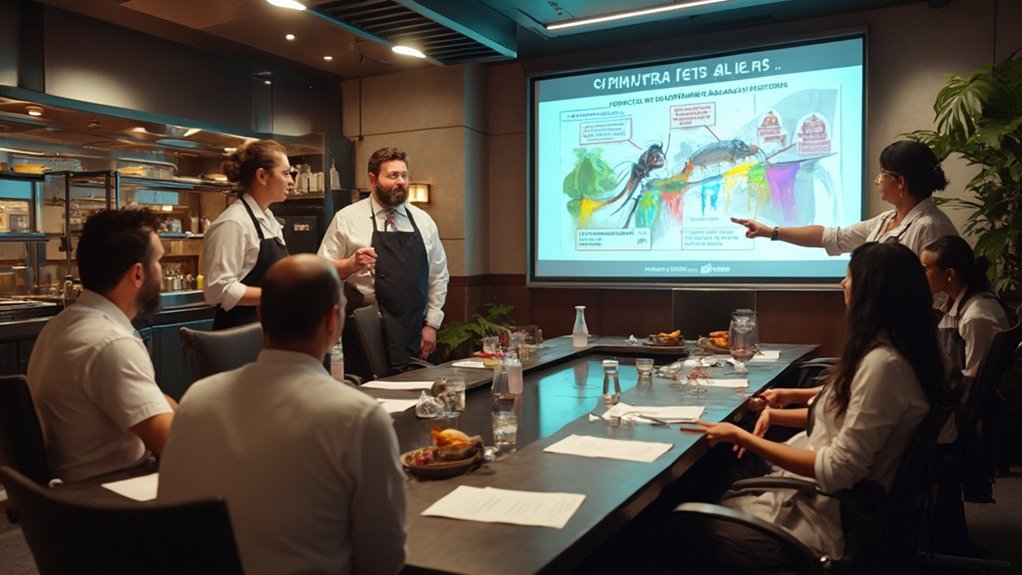
Training your staff on pest awareness is essential for maintaining a pest-free restaurant environment. Start by integrating Integrated Pest Management (IPM) into their daily routines to prevent infestations and mitigate health risks. Educate your team on the potential health threats and financial repercussions of pest issues, emphasizing the importance of pest control during complimentary training sessions with professionals.
Establish clear pest sighting protocols. Teach employees how to recognize signs of infestations, including how to catch and identify pests. Encourage open employee communication, creating a culture where team members feel comfortable reporting any pest sightings immediately. This quick response can greatly reduce the likelihood of a full-blown infestation.
Make sure to post educational materials, such as sanitation checklists and pest identification sheets, in common areas. Regular cleaning tasks should be assigned to staff, focusing on emptying trash cans and sweeping away food debris. Additionally, ensure that employees understand the importance of pest management in maintaining compliance with health regulations.
Schedule routine inspections and maintenance to identify vulnerabilities and apply low-toxicity insecticides as needed. By equipping your team with knowledge and skills related to pest awareness, you're laying the foundation for a proactive pest control strategy that keeps your restaurant safe and inviting.
Monitor and Evaluate Results
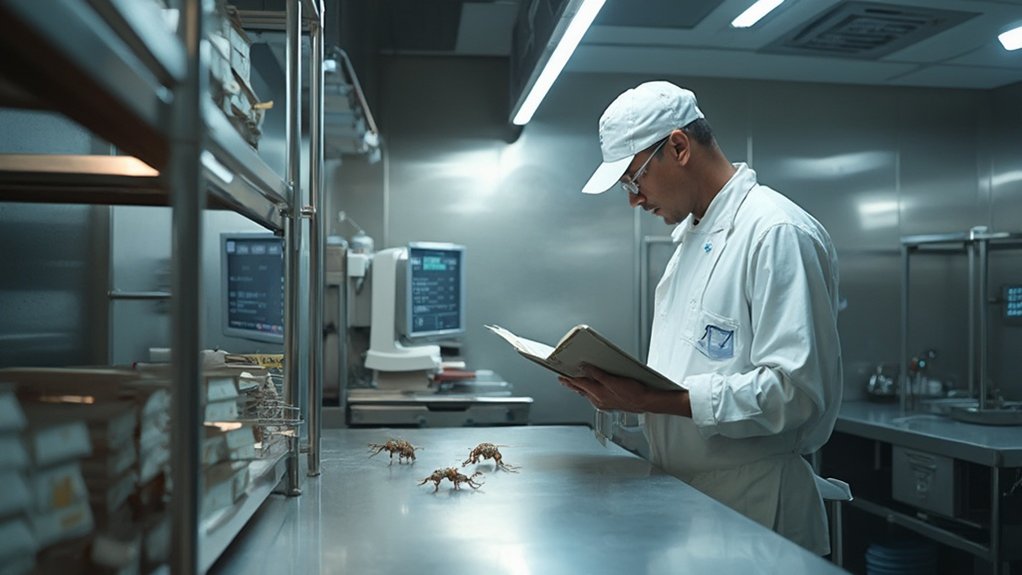
Establishing a culture of pest awareness among your staff sets the stage for effective monitoring and evaluation of pest control efforts.
Begin by utilizing sticky traps or stations to monitor rodent activity, detecting early signs of pest behavior. Regular inspections are essential; you should look for infestation signs such as droppings, gnaw marks, and any visible pests. Document these observations, noting specific locations to enhance communication with pest control experts.
Implement targeted monitoring strategies by maintaining a rigorous cleaning schedule in high-risk areas like food preparation and storage zones. Store food in airtight, pest-proof containers, and inspect them regularly for signs of infestation. Employ a thorough pest control checklist to guarantee you're covering all bases. Approximately 3,000 deaths from foodborne illnesses each year highlight the importance of pest control in maintaining food safety.
Evaluate the extent of any infestation by recognizing signs like pest waste and unusual noises. This assessment will help you gauge the severity of the problem and facilitate prompt action.
Use photos or notes to document infested areas, securing accurate communication with pest management professionals. By consistently monitoring and evaluating your pest control measures, you're not only protecting your restaurant but also fostering a proactive approach to pest management. Implementing effective restaurant pest control strategies requires collaboration with your staff, ensuring everyone understands their roles in maintaining a pest-free environment. Regular training sessions can empower your team to identify potential issues early, thereby minimizing the risk of an infestation. Ultimately, a well-coordinated approach not only enhances the dining experience for your customers but also strengthens the overall reputation of your establishment.
Professional Restaurant Pest Control Services
We would love to be your local pest control partner. Contact My Pest Pros for professional restaurant pest control services in Northern Virginia, Maryland, and Washington, D.C. Whether you need to protect a restaurant, mall, warehouse, retail space, office building, or other commercial space, we can create a commercial pest control solution for you. Call us today at 703-665-4455.