
If you've noticed black and white striped bugs or unusual damage to your fabrics, you might be dealing with a carpet beetle infestation in your home. These small pests can wreak havoc in your home, particularly if you don't act quickly. Understanding how to identify carpet beetle species and recognizing the signs of an infestation is essential for effective control. Plus, knowing their life cycle can help you anticipate their behavior and take preventive measures. But what are the best strategies to protect your home from these unwelcome visitors? Let's explore your options.
Identifying Carpet Beetles

When it comes to identifying carpet beetles, you'll find that several distinct species exhibit unique characteristics.
The black carpet beetle measures about 1/8″ to 3/16″ and features a pill-shaped body with a solid black elytra. Its habitat preference leans towards dark, undisturbed areas, often in closets or storage spaces. Many of the ones we see are black and white striped bugs, but the coloring can vary.
In contrast, the varied carpet beetle, slightly smaller at 1/10″ to 1/6″, boasts a mottled appearance with zig-zagging white bands on its elytra. This species often thrives in environments rich in organic materials, such as wool or fur, aligning with its behavioral patterns of seeking out food sources.
Lastly, the furniture carpet beetle, measuring 1/12″ to 1/6″, displays a wide, oval shape adorned with symmetrical patches of colors. Its habitat preferences include areas where furniture accumulates dust, providing excellent nutrition for its larvae.
How Long Do These Black and White Stripe Bugs Live?
The life cycle of carpet beetles consists of four distinct stages: egg, larval, pupal, and adult. It begins with egg development, where a female lays between 25 to 100 eggs in hidden areas near food sources like textiles or animal nests. These eggs, smaller than a grain of salt, typically hatch within 1-2 weeks, depending on temperature.
Once hatched, the larvae emerge, measuring about 2.5 cm long and covered with dense hairs. During this larval stage, which can last from several months to two years, the beetles engage in voracious larval feeding, damaging natural fibers, pet hair, and lint. The larvae are the most destructive phase as they prefer dark, undisturbed spaces, such as closets and attics, and molt several times as they grow.
After the larval stage, the beetles enter the pupal stage, lasting 1 to 3 weeks. In this phase, they remain inactive, pupating in their final skin or a white cocoon, usually near food sources.
Signs of A Carpet Beetle Infestation
After understanding the life cycle of carpet beetles, it's important to recognize the signs of infestation to take timely action. You should start by examining your home for infestation symptoms of these black and white striped bugs.
Look for visual indicators like bald patches or fraying on carpets and rugs, which signify damage from beetle larvae. Adult carpet beetles may be spotted crawling near windows or light fixtures, while small, elongated larvae often lurk near food sources.
Inspect your fabrics for small, irregular holes in bedding and clothing—these are telltale signs of feeding activity. You might also find translucent shed skins in dark, undisturbed areas like closets or attics, indicating larvae presence. The presence of shed skins is a clear indicator of ongoing infestation.
Pay attention to behavioral patterns as well; adult beetles often gather near light sources, and fecal pellets, resembling tiny dark specks, accumulate near their feeding sites.
If you notice skin irritation or allergic reactions, it could be a response to contact with larvae or their cast skins. Recognizing these signs early can help you mitigate the infestation effectively, ensuring your home remains a safe and comfortable space.
Prevention Strategies
Effective prevention strategies are crucial for safeguarding your home against carpet beetle infestations. Start with regular vacuuming; target all carpets, rugs, upholstered furniture, and curtains at least once a week. Focus on high-traffic areas daily during active infestations to eliminate potential food sources. Maintain cleanliness by decluttering, as fewer hiding spots reduce risk. Proper storage is vital. Store clothing, especially furs and leather, in pest-proof containers. For secondhand items, inspect and clean thoroughly before bringing them into your home. Additionally, clean up spills promptly and seal food containers, including pet food, to cut off food sources.
Seasonal maintenance plays a key role. Use dehumidifiers to control humidity, particularly in damp areas. Inspect plants brought indoors for pests and seal entry points by repairing cracks and crevices. Consider natural repellents, such as essential oils, to deter carpet beetles without harsh chemicals. Adult carpet beetles often enter homes through open windows during warmer months, highlighting the importance of installing insect screens on windows and doors to block entry. Maintain continuous vigilance through consistent cleaning and inspections; this proactive approach is essential for long-term prevention against carpet beetles.
Carpet Beetle Treatment Options
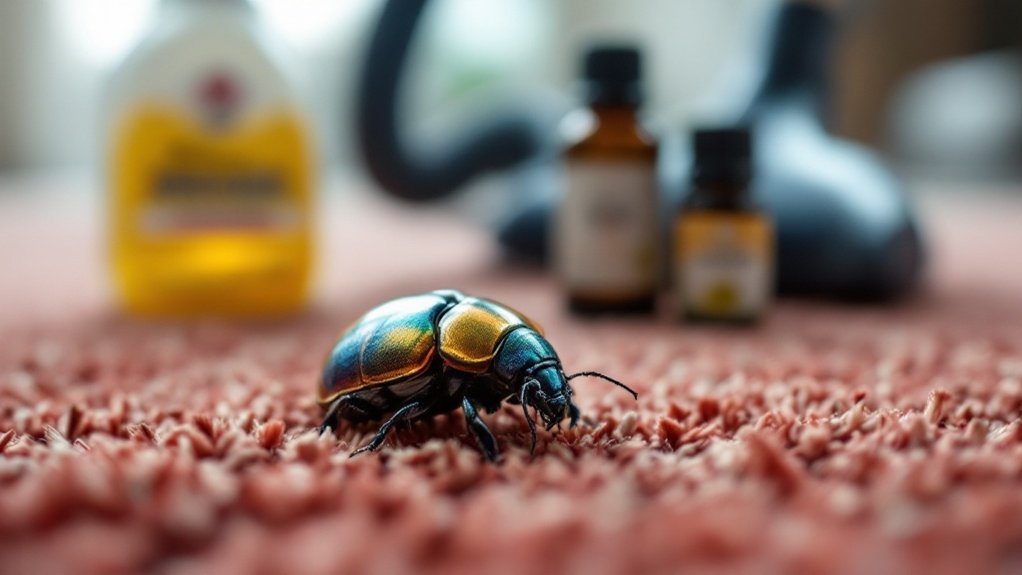
Carpet beetle infestations require prompt and thorough treatment to protect your home and belongings. Start by identifying key areas prone to infestation, such as dark storage rooms and corners laden with lint. Use sticky traps as monitoring techniques to assess adult beetle activity; checking these traps regularly will inform your next steps.
For non-chemical control, vacuum daily, focusing on edges, under furniture, and in seldom-used areas. Wash or dry clean fabrics in hot water to eliminate eggs and larvae, and consider freezing non-washable items for two weeks. Additionally, regularly vacuuming can help remove adult beetles, larvae, and eggs, making it an essential part of your pest management strategy.
When opting for chemical control, select insecticides labeled for carpet beetles, ensuring their chemical effectiveness. Apply these products to edges of carpets, under rugs, and in closets. Utilize insecticide dusts in hard-to-reach areas for comprehensive coverage. Always follow manufacturer instructions to ensure safety for both humans and pets.
After initial treatment, continue monitoring with sticky traps and conduct regular checks to evaluate effectiveness. Retreatment may be necessary if signs of infestation persist.
Consistent vacuuming and proper storage of susceptible items in airtight containers can further enhance your treatment efforts and prevent future infestations.
Contact My Pest Pros for Carpet Beetle Control
Effectively managing carpet beetles requires a thorough understanding of carpet beetle identification, life cycle, signs of infestation, and preventive measures. By regularly vacuuming and properly storing fabrics, you can minimize the risk of an infestation. If you do encounter these pests, consider both non-chemical and targeted treatment options to eliminate them. Staying vigilant and proactive will help protect your home from the damaging effects of carpet beetles, ensuring your natural fibers remain intact.
For expert carpet beetle pest control assistance, don't hesitate to contact My Pest Pros at 571-512-5817. Let us help you safeguard your home from carpet beetles and other pest control issues today!