
If you're tired of cricket noises in your house disrupting your peace at night, you're not alone. You can start by tuning in to their sounds during the evening hours, which is when they're most active. Once you pinpoint their location, you can explore various strategies to eliminate these pests from your home. However, understanding the specific behaviors and preferences of crickets is essential for effective prevention and elimination. What might surprise you are the simple changes you can make that could significantly reduce these noises and keep your home tranquil.
Understanding Cricket Sounds
Cricket sounds are fascinating and serve various purposes, making them essential for species identification and communication. These sounds are produced through a method called stridulation, where crickets rub a scraper on one forewing against the teeth of the opposite forewing. Each species has its unique chirping patterns, which help you distinguish between them.
Notably, crickets are primarily nocturnal, meaning they're most active at night. This nocturnal behavior reduces their risk of predation and allows their sounds to travel farther in the quieter nighttime environment. In fact, male crickets produce chirping that varies from 1,500 to nearly 10,000 cycles per second, showcasing the diversity in their sound production.
You'll notice that the chirping rate varies with temperature; warmer nights lead to faster chirping. In fact, you can estimate the temperature by counting chirps in 14 seconds and adding 40, thanks to Dolbear's law.
Seasonal changes also influence chirping frequency, with an uptick in summer and early fall. The unique pitch ranges and rhythmic patterns of different species provide critical clues for identification. For example, tree crickets typically sing between 2500 and 4000 Hz, while ground crickets sing at higher frequencies.
Understanding these chirping patterns can deepen your appreciation for these intriguing insects even if the cricket noises in your house are still unwelcome.
Locating the Source of Cricket Noises
How can you effectively pinpoint the source of those persistent cricket noises in your home?
Start by understanding cricket behavior—they're nocturnal and tend to hide in dark, warm places during the day. Listen closely for their chirping sounds, which are particularly loud indoors, especially at night. Move toward the sound, and when it stops, stand still. Crickets often stop chirping when they sense vibrations, so patience is key. Wait for them to resume their calls, allowing you to track their location.
Check common areas where moisture accumulates, like bathrooms, basements, and crawl spaces. If you notice chewed fabric, that's another sign of their presence. Additionally, since crickets prefer outdoor environments, you may want to inspect areas near windows and doors where they could have entered.
You can also set traps with bait in suspected areas to help locate them. Sticky traps are effective as they catch crickets as they pass by. Consider using essential oils, such as thyme or peppermint, to deter crickets while you search.
Cricket Prevention Strategies

To keep those annoying cricket noises at bay, it's essential to implement effective prevention strategies in your home.
Start by inspecting common entryways, such as gaps around windows, doors, and foundation walls. Use caulk or weather stripping to seal these openings, blocking potential cricket entry points. Don't forget to check for cracks in the foundation and seal holes in masonry to enhance your pest control efforts.
Next, reduce attractants by minimizing exterior lighting. Crickets are drawn to bright lights, so consider using yellow or sodium vapor bulbs that are less appealing. Turn off outdoor lights at night and keep your yard tidy—regularly mow the lawn and trim bushes to eliminate hiding spots.
Moisture control is another crucial aspect. Fix leaks and use dehumidifiers in damp areas to prevent excess humidity. Crickets thrive in warm, humid conditions, making it even more important to ensure proper ventilation in crawl spaces and basements to keep these areas dry.
Lastly, maintain your yard by removing piles of leaves, wood, and debris, which serve as havens for crickets.
Effective Elimination Methods
Eliminating cricket noises effectively requires a multifaceted approach that combines trapping, environmental adjustments, and strategic prevention.
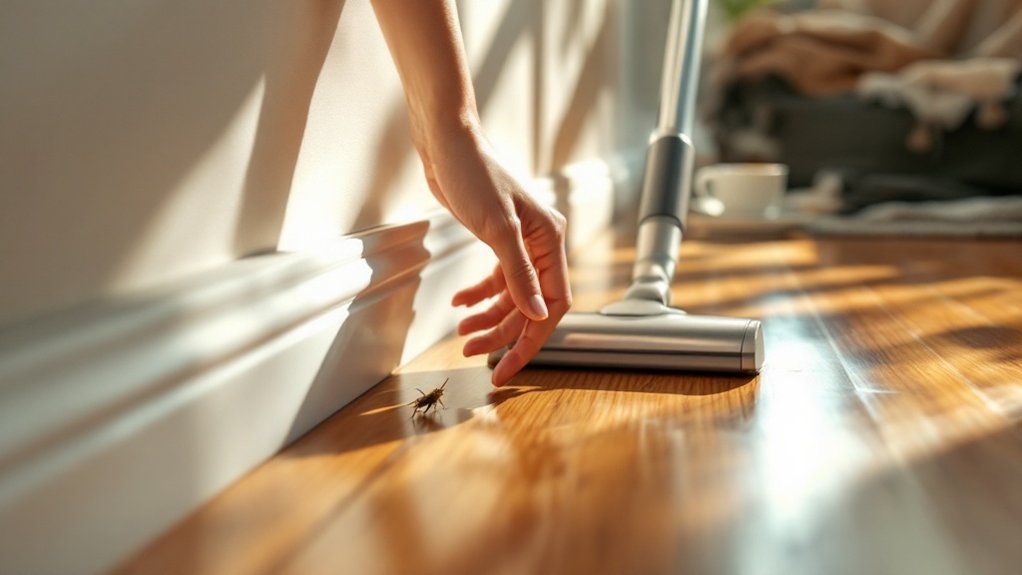
Start with trapping techniques. Utilize sticky traps placed in areas where you notice cricket activity; these can capture them efficiently. Alternatively, you can set shallow dishes filled with soap and water to attract and drown crickets. A vacuum can also be used for quick removal, but remember to empty the vacuum bag outside immediately after.
Next, make essential environmental modifications. Reduce moisture by repairing leaks and using dehumidifiers, as crickets thrive in damp conditions. Eliminate potential food sources, and consider lowering your home's temperature to decrease cricket activity. Using essential oils like peppermint or thyme can repel these pests, and introducing certain plants that crickets dislike can also help.
Maintaining a Silent Home
Maintaining a silent home involves implementing consistent preventive measures to keep crickets at bay. Start by sealing entry points; use caulk or weatherstripping to close gaps in your foundation, windows, and doors. Regularly inspect for new cracks and ensure your doors and windows are fitted with fine mesh screens. Door sweeps can also help minimize gaps.
Next, focus on reducing moisture and humidity, which attract crickets. Repair leaky faucets and pipes, and ensure proper ventilation in crawl spaces. Turning off the main water valve can help prevent further leaks during repairs. Dehumidifiers can assist in damp areas, while a clean and organized home prevents moisture buildup.
Maintaining outdoor areas is crucial, too. Regularly mow your lawn, weed plant beds, and trim trees and shrubs to eliminate hiding spots. Keep outdoor lighting minimal and consider using yellow bulbs that deter crickets.
Lastly, employ soundproofing techniques to enhance your home acoustics. This can involve adding insulation or using acoustic panels to dampen sound, creating a more serene environment.
Contact My Pest Pros for Cricket Noises in Your House
By understanding cricket sounds and effectively locating their source, you can take proactive steps to eliminate these pests. Implementing prevention strategies and utilizing effective elimination methods will help maintain a quieter environment. Remember to keep your home tidy and reduce moisture levels to deter crickets from entering. If you're struggling with persistent cricket noises, don't hesitate to reach out to My Pest Pros for expert cricket pest control assistance. Call us at 703-665-4455 today, and let us help you create a more peaceful living space free from the disruptive chirping of crickets.