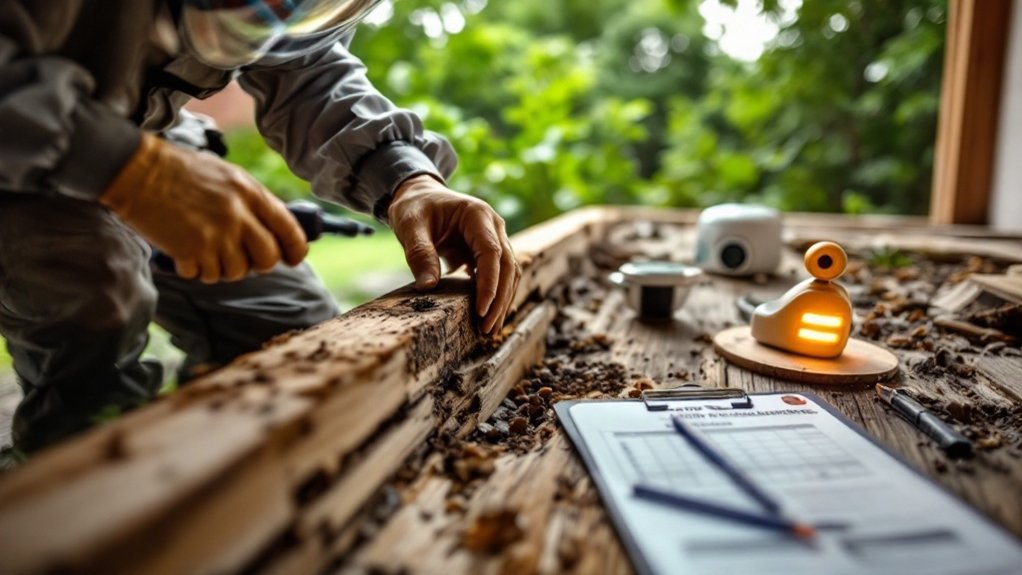
When it comes to
termite control, you need a solid strategy that combines
prevention and effective treatments. You might start by addressing moisture issues in your home and considering natural remedies that can help repel these pests. However, when infestations escalate,
professional interventions become vital. It's important to understand the
signs of a termite problem and the best methods for both immediate action and long-term prevention. What you might not realize is that some techniques can greatly enhance your home's defenses against these destructive insects.
Key Takeaways
- Implement regular inspections to detect signs of termite activity, such as mud tubes and discarded wings, to ensure early intervention.
- Utilize soil and barrier treatments that create long-lasting protection around the home's foundation, preventing termite access.
- Consider termite baiting systems that use non-toxic and toxic baits to eliminate colonies effectively while being environmentally friendly.
- Apply natural remedies like neem oil or boric acid to repel and disrupt termites without harsh chemicals.
- Engage professional extermination services for comprehensive treatment options, including fumigation and Integrated Pest Management (IPM) strategies.
Understanding Termite Behavior
Understanding
termite behavior is vital for effective control and prevention strategies. Termites exhibit
complex communication methods, primarily through
vibrations and pheromones. By banging their heads against nest walls, they create vibrations that alert colony members to potential threats.
Pheromones play an essential role in coordinating activities, recognizing members, and signaling danger, while also regulating their caste system. This
eusociality guarantees efficient colony operations, as termites work in
specialized roles—workers, soldiers, and reproductives. In a typical colony, the king and queen lead reproduction, with the queen capable of laying thousands of eggs daily. If the queen dies, the colony can develop a new queen, reinforcing survival. Understanding these communication techniques and social structures allows you to anticipate termite behavior, making it easier to implement
targeted control measures. Additionally, termite colonies are most active during peak seasons, which can help inform the timing of control efforts.
Signs of Termite Infestation
Recognizing the signs of
termite infestation is key to early detection and effective treatment. One of the first indicators you might notice is
swarm behavior, particularly during
springtime when
winged termites, or swarmers, emerge. If you see swarmers near windows or doors, or find
discarded wings on windowsills, take this as a serious warning sign of a new colony forming.
Additionally, inspect your wood and structures for damage. Tapping on wood that sounds hollow can indicate internal damage caused by termites. Look for blistered surfaces, crumbling baseboards, or sagging floors, all of which signal potential
wood damage. Uneven or bubbling paint may also suggest hidden moisture issues related to termite activity.
Mud tubes, which are often found along your foundation, can further confirm active termite presence.
Other signs include
termite droppings (frass) and
mud tubes along your foundation. These tunnels and galleries in the wood, often filled with dirt, point to active feeding. If you notice live worker termites or dead ones near infested areas, it's time to act quickly.
Stuck windows or doors can also signal warped frames from termite damage. Keeping an eye out for these signs can help you address the problem before it escalates.
Prevention Strategies for Homeowners
Proactive prevention strategies can greatly reduce the risk of termite infestations in your home. Start with diligent home maintenance by eliminating moisture; fix leaks and guarantee proper drainage around your property.
Repair any
structural weaknesses, including damaged fascia and rotted roof shingles, to block potential access points for termites.
Sealing gaps around water and gas lines with caulk or foam sealant is essential.
Next, consider your
landscaping design. Keep plants and mulch at least 12 inches away from your foundation to
improve airflow and discourage termite activity. Opt for
non-organic mulch materials, like pine needles or gravel, which termites find less appealing.
Elevate firewood at least 20 feet from your home to further reduce risk.
Regular inspections of your foundation will help you catch any signs of termite activity early. Additionally, ensure that you conduct routine inspections of the home's foundation to look for
mud tubes indicating termite activity.
Create barrier zones by installing a 4-inch barrier between mulch and your home's foundation. Finally, use
termite-resistant materials in construction, such as pressure-treated wood, to provide an additional layer of defense.
Natural Remedies for Termite Control
We do not recommend natural remedies for termites. These are not effective from our experience with termite control. Additionally, some of these solutions such as heat treatments can be dangerous if not performed properly. However, we are often asked about natural remedies for
termite control that are both
environmentally friendly and accessible. You can tackle termite infestations using common household items and natural substances. Here are some powerful options to take into account:
- Neem oil: Inject it into wooden structures to repel and kill termites.
- Clove oil: Mix it with water to create a potent spray that eliminates pests.
- Cayenne pepper: Use a spray containing this spice to destroy termites' nerve systems.
- Diatomaceous earth: Sprinkle it around infested areas; it's lethal to termites and other pests.
- Boric acid: This disrupts the nervous system of termites, making it a reliable remedy.
Additionally, subterranean termites are a common type that can cause significant damage to wooden structures, making these treatments particularly vital for homeowners.
Other effective methods include using a
salt solution to dehydrate and kill termites, a
white vinegar mixture for direct application, or even creating a
cardboard trap that attracts termites for burning.
You can also try
heat treatment by exposing infested areas to high temperatures.
With these
natural remedies, you can effectively combat termite problems while remaining environmentally conscious.
Chemical Treatments Overview
Chemical treatments provide a robust solution for controlling
termite infestations, with various options that cater to different needs and situations. One popular choice is
liquid termiticides like Termidor, which create
long-lasting barriers in the soil around your home. This method not only offers
high chemical efficacy by eliminating entire termite colonies but also guarantees that termites can't detect the treatment, enhancing control.
Foam applications and dusts serve as
targeted treatments for specific locations, such as tree stumps, while termite repellents use active ingredients like bifenthrin to deter infestations. You can apply these chemicals through soil spraying, trench pouring, or directly to foundation walls, providing thorough protection.
Regular inspections are vital for early detection of infestations, ensuring that chemical treatments are applied promptly and effectively.
While
chemical treatments are effective,
treatment safety is a priority. Many termiticides, such as permethrin, are of
low to medium toxicity to humans, but it's crucial to follow safety guidelines and regulatory standards.
Professional pest control experts can assess your situation and recommend the best approach, guaranteeing both efficacy and safety in your termite management strategy.
Regular applications help maintain your protective barriers, keeping your home safeguarded from future infestations.
Baiting Systems Explained
While chemical treatments effectively combat termite infestations, baiting systems such as
Sentricon termite protection we offer an alternative approach that emphasizes precision and
ongoing monitoring. These systems rely on
strategic bait station placement around your property, targeting areas where termite activity is most likely.
- Termite Bait Stations: Installed around the structure's perimeter.
- Monitoring Base: Provides early detection of termite presence.
- Inspection Cartridges: Attract termites to facilitate monitoring.
- Toxic Baits: Such as Trelona or Sentricon, designed to eliminate termites after detection.
- Non-Toxic Baits: Used for monitoring, made from cellulose-based materials.
Once termites locate and feed on the bait, it indicates their presence. The process involves replacing non-toxic bait with toxic bait, maximizing toxic bait effectiveness. This allows termites to carry the termiticide back to their colony, facilitating
thorough elimination. Additionally, the use of non-toxic options helps those who wish to avoid chemicals in their surroundings.
Regular inspections are essential to guarantee the system's efficiency and adjust bait as needed. Baiting systems are less invasive and
environmentally friendly, providing
ongoing protection against new infestations while being adaptable to changing termite activity.
This all-encompassing strategy can help you maintain a
termite-free home effectively.
Professional Extermination Services
Most Effective Methods for Termite Control
Professional Extermination Services
When faced with a
termite infestation,
professional extermination services are crucial for effectively managing and eradicating these pests.
Trained technicians, equipped with pest control certifications, understand the termite life cycle and can identify the most appropriate treatment for your situation.
One common method is
soil and barrier treatments, where
liquid termiticides create a
protective chemical barrier around your foundation. This method is highly effective for eliminating existing termites and preventing future infestations.
Professionals often combine this method with
baiting systems, strategically placing in-ground and above-ground stations to attract and eliminate colonies.
Fumigation is another option, involving the sealing of the infested area and the dispersal of sulfuryl fluoride gas to eradicate termites. While effective, it requires careful aeration and monitoring for safety.
Integrated Pest Management (IPM) takes a thorough approach, utilizing a combination of chemical treatments, physical barriers, and baiting systems tailored to your property's specific needs. This method not only addresses the current infestation but also provides
ongoing monitoring against future termite problems. When dealing with termites, trusting professionals guarantee the safest and most efficient eradication.
Building Materials and Termite Resistance
After addressing
termite infestations through
professional extermination services, it's important to contemplate
long-term prevention strategies, particularly through the use of
termite-resistant building materials.
Choosing the right materials can greatly enhance your home's defenses against future infestations. Here are some effective termite-resistant options:
- Cedar: Naturally repels termites with its oils.
- Teak: High-density wood that discourages termite activity.
- Fiber Cement Siding: Tough for termites to chew through.
- Concrete: An impenetrable barrier against termite invasion.
- Steel: A durable framing material that termites can't damage.
Incorporating these building material benefits not only protects your home but also reduces maintenance costs in the long run. Additionally, Cedar's low-density wood is effective for termite control, making it a great choice for siding.
By selecting termite-resistant options like
pressure-treated wood and brick, you can create a sturdy foundation for your property.
Additionally, consider utilizing metals or composite materials in vulnerable areas.
By being proactive and informed about your choices, you can safeguard your investment and guarantee your home remains a
termite-free sanctuary.
Investing in the right materials is an essential step in
effective termite control and overall property maintenance.
Monitoring and Maintenance Practices
Effective monitoring and maintenance practices are essential for keeping termites at bay and ensuring the longevity of your property. To maximize detection,
termite monitoring stations are typically installed at 10- to 20-foot intervals around your home, placing them in areas with
expected termite activity, such as near tree stumps or existing damage.
For ideal station placement, consider
high moisture areas like around air conditioning units or outdoor faucets. Utilizing monitoring techniques like
regular visual inspections can be highly effective. Sentricon termite protection is the most widely used and trusted baiting system. It is designed to eliminate termite infestations and protect against new ones.
Regular surveillance of these stations not only reduces inspection time and labor but also helps you
promptly identify any issues.
Long-Term Termite Control Solutions
Long-term termite control solutions are essential for safeguarding your property against persistent infestations.
By implementing a combination of strategies, you can effectively manage and prevent termite activity.
Consider these
eco-friendly options as part of an integrated pest management approach:
- Soil and barrier treatments create a chemical barrier around your foundation, protecting both the interior and exterior of your home.
- Termite bait stations lure termites in and use slow-acting termiticides to eliminate entire colonies over time.
- Fumigation is a last-resort option for severe infestations, enveloping your property in sulfuryl fluoride gas.
- Wood treatments can be applied directly to wood surfaces, making them inhospitable to termites.
- Preventive measures like reducing moisture and maintaining proper ventilation help deter termite activity. Additionally, regular inspections are crucial for early detection of infestations.
What Are the Most Effective Methods for Permanently Controlling Termites?
To achieve a pest-free environment, homeowners should consider effective strategies for permanent termite control. These may include regular inspections, bait systems, and the application of barrier treatments. Combining multiple methods enhances efficacy, ensuring that termites are deterred from infesting your property for years to come. Protect your investment today!
Effective Termite Control Near You
There are numerous effective methods for termite control—ranging from simple preventive measures like proper home maintenance and natural remedies to more comprehensive professional treatments, chemical applications, baiting systems, and the use of termite-resistant building materials. By understanding termite behavior, recognizing early signs of infestation, and proactively implementing prevention strategies, you can protect your home against these destructive pests.
Don’t wait until termites cause costly damage to your property. Take the next step toward safeguarding your home.
Contact My Pest Pros at
571-512-5817 today to discuss a customized termite management plan or schedule an inspection. Our experts will ensure your home remains secure and termite-free for the long haul.