
Ants are most active during the warmer months, particularly in spring and summer. As temperatures rise, they emerge from winter dormancy, leading to significant foraging and nest expansion. During this period, worker ants engage in various tasks, such as resource gathering and defense, driven by social and ecological adaptations. Different ant species exhibit unique activity patterns; for example, leafcutter ants thrive in warmth for harvesting, while carpenter ants are often nocturnal. Environmental conditions like temperature and moisture levels play essential roles in their behavior. If you're curious about the fascinating specifics of these patterns, there's plenty more to uncover.
Understanding Ant Behavior

Understanding ant behavior requires a keen look at their complex social structures and communication methods. Ants live in colonies that can consist of thousands to millions of individuals, showcasing intricate hierarchies. You'll find a division of labor, where worker ants perform tasks like foraging, nursing, and defending the colony. Each role is essential for the colony's survival and efficiency. Communication among ants is largely chemical. They release pheromones to signal danger, mark trails, or indicate food sources. This chemical language allows them to coordinate activities seamlessly, fostering unity among members. Additionally, their tactile communication, through touch, helps maintain social bonds within the colony. Ants are also known for their remarkable adaptability. Depending on environmental factors, such as food availability and temperature, their behavior can shift. For instance, some species might display aggressive foraging during a food surplus, while others might conserve energy during scarcity.
Seasonal Activity Patterns
Ants exhibit distinct seasonal activity patterns that reflect their adaptability to changing environmental conditions. As temperatures rise in spring, you'll notice an increase in ant activity. This is when ants emerge from their winter dormancy, driven by the search for food and the establishment of new colonies. They actively forage and communicate through pheromones, signaling to their colony members about food sources and potential threats. During summer, you might observe a peak in activity. Ants are busy gathering resources, tending to their young, and expanding their nests. The warmth stimulates their metabolism, making them more efficient foragers. However, as summer shifts to fall, you'll see a gradual decline in activity. Ants prepare for the colder months by storing food and reducing foraging efforts. In winter, many species enter a state of dormancy, retreating deeper into their nests to survive the cold. Yet, some species remain active, albeit at a reduced level. These seasonal patterns are essential for their survival, showcasing the remarkable adaptability of ants to their environment. By understanding these patterns, you can gain deeper insights into their complex social behaviors and ecological roles.
Species-Specific Activity Peaks
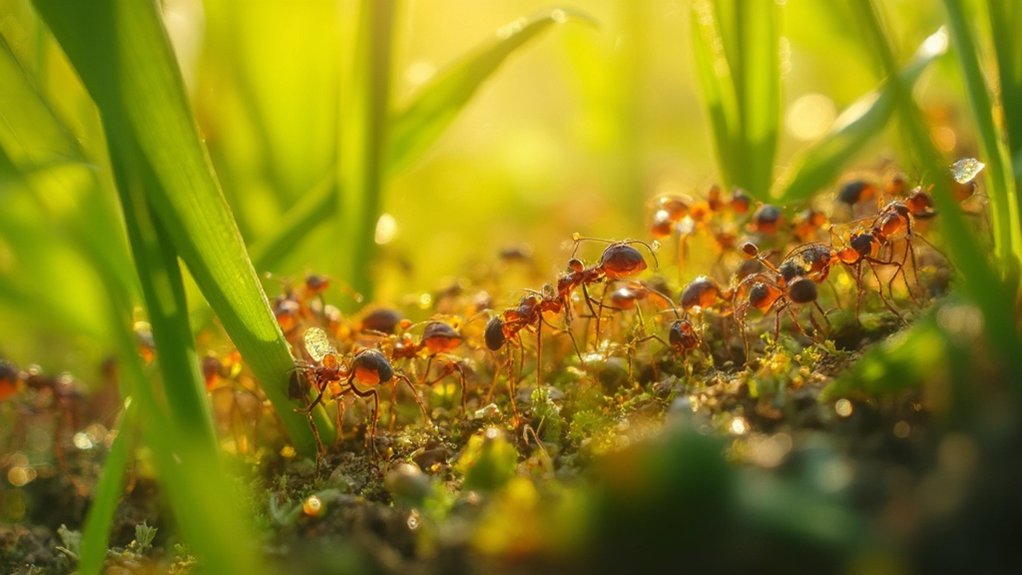
While seasonal activity patterns provide a broad overview, specific species of ants exhibit unique peaks in activity that are influenced by their ecological niches and behaviors. For instance, leafcutter ants thrive during warm months, as they depend on the growth of vegetation to harvest leaves for their fungal gardens. Their activity surges in late spring, coinciding with the lushness of new plant growth. In contrast, fire ants are often most active during the warmer parts of the day, especially in summer. Their aggressive foraging behavior peaks in the early afternoon when temperatures are high, allowing them to maximize their food intake. Meanwhile, carpenter ants show increased activity during nighttime in spring and summer, taking advantage of cooler temperatures and reduced competition. Understanding these species-specific activity peaks can deepen your appreciation for the diverse roles ants play in their ecosystems. By observing these patterns, you can better appreciate how each species adapts and thrives in its environment. This knowledge not only enriches your connection to nature but also fosters a sense of belonging within a community that values ecological awareness and biodiversity.
Environmental Influences on Ants
Species-specific activity peaks highlight how individual ants adapt to their environments, but broader environmental factors also play a significant role in shaping their behaviors and populations. Temperature is a critical influence; for instance, warmer conditions typically enhance foraging activity, while extreme heat can lead to reduced movement and nest abandonment. Moisture levels are another key player; ants often thrive in environments with adequate humidity, which supports their hydration needs and food resource availability. Light exposure impacts their circadian rhythms, with many species exhibiting increased activity during daylight hours. Seasonal changes also dictate behavior; as spring arrives, ant colonies often expand their foraging range, seeking food to support their growing populations. Moreover, the presence of other species can affect ant behavior. Competition for resources may drive ants to adapt their foraging strategies or modify their nesting sites to optimize survival. Understanding these environmental influences is essential for anyone keen on observing ant populations and their intricate social structures. By recognizing how these factors interplay, you gain a deeper appreciation for the resilience and adaptability of these fascinating insects in diverse ecosystems.
Observing Ants in Nature

A keen observer can uncover a wealth of information about ant behavior by spending time in their natural habitats. As you watch ants, take note of their activity patterns throughout the day. You'll find that many species are most active during warmer periods, particularly in the late morning and early afternoon. Observe how temperature influences their foraging behavior; ants tend to be more efficient when it's warm but retreat during the hottest parts of the day. Look for communication methods, such as pheromone trails. These chemical signals guide other ants to food sources and nest sites. You might also witness impressive teamwork during food retrieval, where ants collaborate to transport larger prey. Pay attention to the interactions between different species, as competition for resources can lead to fascinating behaviors. Documenting these interactions can deepen your understanding of ecological relationships.
Do Ants Being Considered Pests Affect Their Activity Levels Throughout the Season?
Seasonal changes significantly impact ant activity levels, influenced by environmental factors and food availability. As temperatures rise, understanding ants: pests or beneficial insects? becomes crucial, as it determines their role in ecosystems. While some species harm crops, others contribute to soil health, showcasing nature's complex balance between pests and allies.
Professional Help When Ants Are Most Active
Whether you’re a curious observer or actively seeking pest control solutions, understanding when are ants most active and how to prevent ant infestations during peak ant season can make all the difference in safeguarding your home. By appreciating their seasonal patterns and ecological adaptations, you can take proactive steps to keep unwanted ants at bay. If you’re dealing with an infestation or simply want professional ant extermination, our team at My Pest Pros is here to help. Call us today at 703-665-4455 to schedule a consultation and reclaim your home from these persistent invaders.