
Effective commercial pest control in D.C. is essential for your business's health and reputation. Pests like cockroaches, rodents, and ants pose significant health risks, leading to contamination and allergic reactions. You also face financial repercussions, including operational downtime and increased insurance costs. Compliance with local regulations is important to avoid penalties and protect community health. Implementing Integrated Pest Management (IPM) offers a sustainable approach, focusing on prevention and employee training. By prioritizing pest control, you enhance your brand image and create a safer environment for employees and customers alike. There's much more to understand about maintaining a pest-free space.
Understanding Pest Control Needs

When it comes to pest control needs, understanding the specific challenges your property faces is essential. Each type of commercial establishment has unique vulnerabilities, whether you manage a restaurant, office building, or retail space. Identifying these vulnerabilities helps tailor an effective pest management strategy.
Start by evaluating the environment. Look for areas with moisture, food sources, and potential entry points that pests might exploit. Regular inspections are key; they allow you to spot early signs of infestation before they escalate. You should also consider seasonal changes, as certain pests may be more active during specific times of the year.
Understanding local regulations regarding pest control is equally important. Compliance not only protects your business but also fosters a healthier community. Create a pest management plan that includes preventative measures, treatment options, and emergency protocols.
Engaging with a professional pest control service can provide valuable insights. Their expertise can help you navigate the complexities of pest management tailored to D.C.'s unique environment. By taking these steps, you can guarantee your property remains pest-free, promoting a safe and welcoming atmosphere for your clients and employees alike.
Common Pests in D.C
In the diverse ecosystem of Washington, D.C., several common pests pose challenges to commercial properties. Understanding these pests is essential for maintaining a healthy business environment.
First, you might encounter cockroaches, which thrive in warm, humid areas and can quickly multiply. Their presence often signals unsanitary conditions, making effective management imperative. Ants are another frequent nuisance, particularly in food-related businesses, as they forage for sustenance.
Rodents, including mice and rats, are notorious for invading commercial spaces. They not only damage property but also contaminate food supplies. Bed bugs, though often associated with residential spaces, have made their way into hotels and businesses, causing significant distress and reputational harm.
Termites are a hidden threat, silently damaging wooden structures and requiring vigilant monitoring. Finally, various types of flies can become problematic, especially in restaurants, as they breed rapidly and are attracted to decaying organic matter.
Health Risks of Infestations
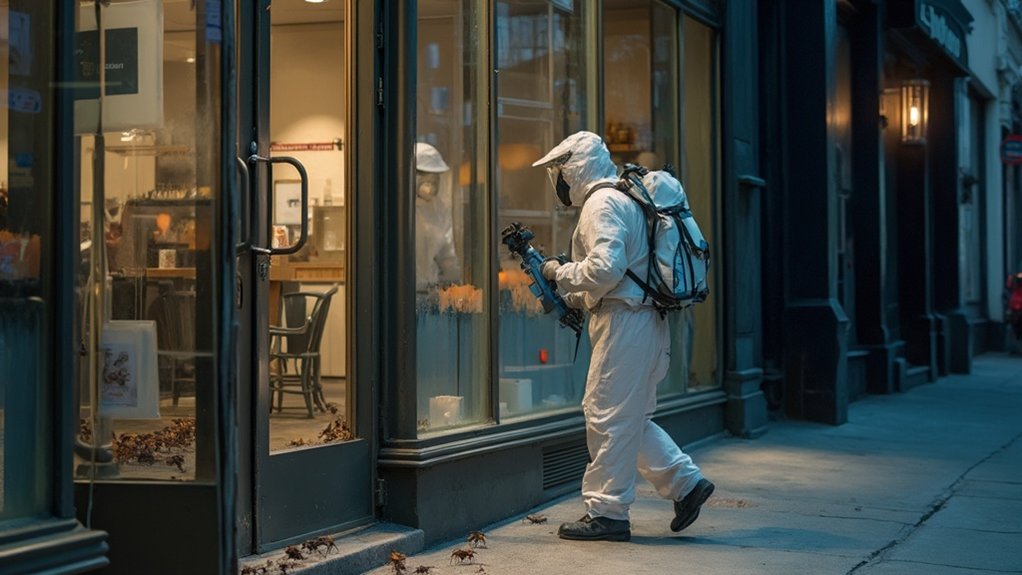
Infestations can pose serious health risks to employees and customers alike, with various pests acting as carriers of diseases and contaminants. Rodents, for instance, can transmit hantavirus and salmonella through their droppings, urine, and nesting materials. This can lead to severe respiratory issues and gastrointestinal illnesses that affect your workplace environment.
Cockroaches are another concern; their saliva and waste can trigger asthma and allergic reactions, particularly in vulnerable populations such as children and those with pre-existing conditions. Additionally, pests like mosquitoes and ticks can transmit viruses such as West Nile and Lyme disease, creating an urgent health crisis.
Economic Impact on Businesses
How much can a pest infestation really cost your business? The financial implications can be staggering. Beyond the immediate costs of extermination, you may face revenue losses due to operational downtime. If customers see pests, they're likely to take their business elsewhere, hurting your reputation and bottom line.
Furthermore, the damage pests can inflict on your property and inventory isn't just a nuisance; it's a direct hit to your finances. Structural repairs and replacing contaminated goods can escalate quickly.
In addition to tangible losses, there are hidden costs associated with decreased employee morale. A pest-infested environment can make your team feel uncomfortable and less productive, which can further impact your profitability.
Insurance premiums may also rise if you file claims related to pest infestations, adding another layer of expense.
Ultimately, investing in effective commercial pest control is not just a matter of keeping your space clean; it's a strategic move to protect your financial interests. By proactively managing pest issues, you safeguard your business's reputation, maintain customer trust, and create a healthier work environment for your employees. The cost of inaction can far outweigh the expense of prevention.
Regulations and Compliance

Maneuvering the complex landscape of regulations and compliance is essential for businesses when it comes to pest control. In D.C., various local and federal laws govern pest management practices, ensuring public health and safety. You need to understand these regulations, as non-compliance can lead to hefty fines and damage to your reputation.
First, familiarize yourself with the Environmental Protection Agency (EPA) standards, which dictate pest control methods and chemical usage. Additionally, local ordinances may impose stricter guidelines, so consulting with the D.C. Department of Energy and Environment (DOEE) is imperative. They provide resources to help you understand your obligations.
Moreover, it's essential to work with licensed pest control professionals who stay updated on compliance requirements. They can guide you through the necessary documentation and reporting processes, ensuring you meet all regulatory standards.
Proactive Pest Management Strategies
To maintain a pest-free environment, implementing proactive pest management strategies is crucial for your business. Start by conducting regular inspections to identify potential pest entry points and harborages. Look for gaps in doors, windows, and foundation lines, and seal them promptly. Keeping your premises clean is equally important; make sure that food waste is disposed of properly and that spills are cleaned up immediately.
Next, establish a monitoring system using traps or bait stations. This allows you to detect pest activity early, enabling swift action before infestations escalate. Integrating proper waste management practices, like using sealed containers, can deter pests from being attracted to your environment.
Additionally, educate your staff about pest awareness and prevention techniques. Training them to recognize signs of an infestation can greatly reduce risks. Consider creating a detailed pest management plan that outlines procedures and responsibilities, making certain everyone understands their role in maintaining a pest-free space.
Importance of Professional Services

When it comes to pest control, relying on professional services can make all the difference in maintaining a healthy business environment. By engaging experts, you guarantee that your pest management strategies are based on the latest research and best practices. Professionals such as My Pest Pros posses specialized knowledge and tools that allow them to identify pest problems accurately and implement effective solutions.
Using professional services means you're not just treating symptoms; you're addressing the root causes of infestations. Trained technicians can evaluate your facility, pinpoint vulnerabilities, and tailor a pest management plan specific to your business needs. This targeted approach minimizes disruptions to your operations and enhances your reputation as a clean and safe establishment.
Moreover, professionals stay updated on local regulations and best practices, assuring compliance and peace of mind. They also provide valuable insights into preventative measures, empowering you to maintain a pest-free environment long-term.
In a bustling area like D.C., where competition is fierce, investing in professional pest control services is essential to safeguard your business's integrity. By prioritizing expert assistance, you foster a welcoming atmosphere that resonates with clients and employees alike.
Integrated Pest Management Approach
Integrated Pest Management (IPM) combines a variety of techniques to effectively control pest populations while minimizing risks to people and the environment. This holistic approach involves identifying pests and understanding their life cycles, behavior, and environmental needs. By focusing on prevention, you can reduce the likelihood of infestations before they occur.
With IPM, you'll use a combination of methods tailored to your specific situation. These methods may include physical barriers, habitat modification, and biological controls, such as introducing natural predators. Chemical treatments are also used, but they're applied judiciously and as a last resort, guaranteeing minimal impact on non-target organisms and your surrounding environment.
Monitoring is key in IPM. Regular inspections help you assess the effectiveness of your strategies, allowing you to make informed adjustments as needed. This adaptive management guarantees that your pest control efforts remain effective over time.
Employee Training and Awareness

Regular employee training and awareness are essential components of effective pest control in commercial settings. You need to understand that your role goes beyond just maintaining cleanliness; it's about recognizing potential pest threats and taking proactive measures. Training programs should cover the identification of common pests, the signs of infestations, and safe handling of pest control products.
By fostering awareness, you empower your team to act swiftly when they notice unusual activity, such as droppings or chewed materials. Knowledge of preventative practices—like proper food storage and waste disposal—plays a critical part in avoiding infestations.
Incorporating regular refresher courses reinforces this knowledge, ensuring that everyone stays updated on the latest pest control techniques and regulations. It's equally important to cultivate a culture of communication; encourage your colleagues to report concerns without hesitation.
Ultimately, when each team member understands their responsibilities regarding pest management, it contributes to a more effective pest control strategy. This collective effort not only safeguards your workspace but also enhances everyone's comfort and productivity, creating a pest-free environment that everyone can enjoy.
Building a Pest-Free Reputation
Consistently maintaining a pest-free environment is essential for building a strong reputation in the commercial sector. When you prioritize pest control, you demonstrate a commitment to health, safety, and professionalism. This proactive approach not only protects your employees and customers but also enhances your brand's image.
First, establish a regular pest management schedule with a qualified professional. This guarantees that potential issues are identified and addressed before they escalate, minimizing disruption to your operations. Next, promote transparency by sharing your pest control practices with employees and clients. This fosters trust and reinforces your dedication to maintaining a clean environment.
Additionally, be vigilant about cleanliness and sanitation within your premises. Encourage your team to adopt best practices for food storage, waste management, and general hygiene. This collective effort creates a culture of responsibility, further solidifying your reputation.
Effective Commercial Pest Control in Washington DC
Embracing effective commercial pest control practices in D.C. is a proactive investment in your business’s long-term success. By prioritizing prevention, compliance, and expert guidance, you create a healthy, inviting environment for both employees and patrons. Don’t let pests undermine your reputation or disrupt your operations. Call My Pest Pros today at 703-665-4455 to discuss a customized strategy that safeguards your brand’s integrity and keeps your commercial space pest-free.