
Key Takeaways
- Inspect your home for signs of termites, including mud tubes, discarded wings, and structural damage to identify infestations early.
- Utilize a flashlight and moisture meter to check basements, crawl spaces, and around windows for signs of termite activity.
- Apply natural remedies for small infestations, or consider treating termites with Sentricon for larger issues and effective termite control.
- Remove debris and maintain proper moisture levels around your home to prevent future infestations from occurring.
- Schedule regular professional termite inspections to ensure early detection and long-term termite protection.
Understanding Termite Types

Signs of Termite Infestation
How can you spot the signs of a termite infestation before it causes severe damage? Start by observing swarm behavior. If you notice discarded wings near windows or doors, it's a clear indicator of recent termite activity. Termite swarmers shed their wings after mating, typically in the spring, often near light sources. Next, focus on mud tube identification. Look for narrow, muddy tubes around your home's foundation, crawlspaces, or basements. These structures serve as concealed pathways for subterranean termites, connecting them to moisture sources. Their presence indicates ongoing termite activity and potential infestations. Mud tubes are a critical indicator of subterranean termite activity, making their identification essential. Additionally, check for structural damage. Knock on wooden surfaces; if they sound hollow or feel soft, termites might be eating the wood from the inside out. Signs like blistered or sagging surfaces can also indicate damage. Lastly, keep an eye out for frass, which looks like tiny wood pellets near infested areas. Uneven or bubbling paint, along with stuck windows or sagging floors, can signal termite presence. Regular inspections and prompt action are essential to prevent extensive damage from these pests.Inspecting Your Home
Inspecting Your Home For Termites
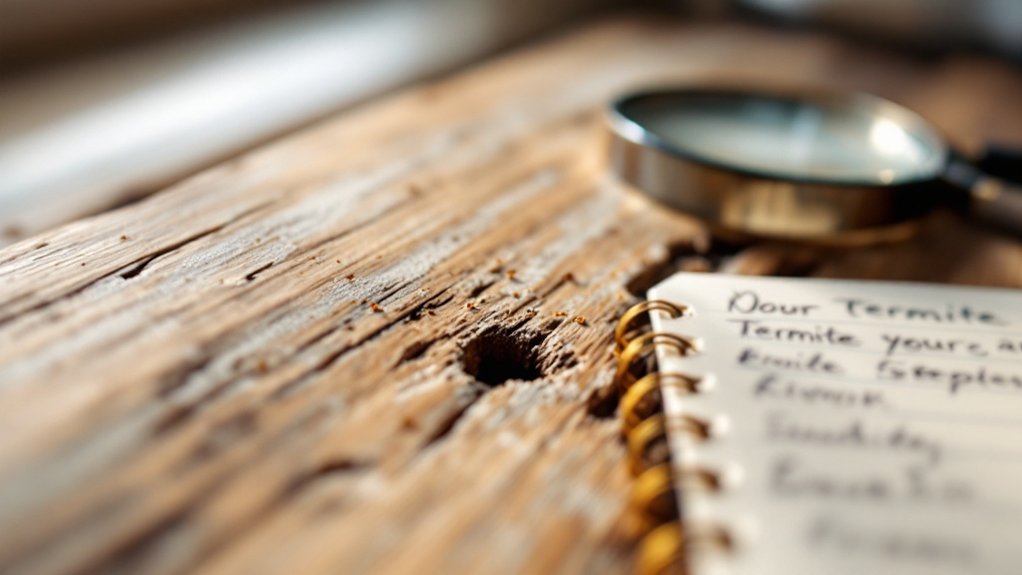
After identifying the signs of termite infestation, the next step is to inspect your home thoroughly. Use effective inspection techniques to guarantee you cover all potential areas of concern. Start in the basement or crawl space, where moisture often attracts termites. Equip yourself with a flashlight, flat-headed screwdriver, probe, moisture meter, and possibly a borescope for hard-to-reach spots. Inspect areas like window sills, frames, and any cracks in the foundation and walls. These are common entry points for termites. Check utility line entries and look for plumbing leaks, as moisture can signal termite activity. As you work around the perimeter, look for mud tubes on walls and signs of wood damage. Treatment of the ground around the foundation is effective for control, especially against eastern subterranean termites. It's crucial to perform these inspections regularly—ideally annually—especially for homes with wood in contact with the ground. High moisture readings from your moisture meter can also indicate potential termite issues. If you encounter difficulties reaching certain areas, consider professional assistance. Experts have specialized tools and can provide a thorough assessment, guaranteeing your home remains termite-free.Common Areas for Infestation
Termites can invade various areas of your home, making it crucial to know where to look for potential infestations. Start by examining exterior conditions; overflowing gutters and moisture accumulation near your foundation create inviting environments for termites. Verify gutters are clear and direct water away from your home to minimize these risks. Next, pay attention to your crawl space. Moisture from plumbing leaks or condensation can attract termites, especially if you have inadequate clearance for inspections. Proper grading and drainage can help keep soil dry around your foundations, reducing the chances of termite infestations. Dirt-filled porches and wood in contact with soil, like firewood or scrap wood, are also prime targets. Don't overlook the basement; its humidity and darkness make it a favorite spot for termites. Inspect wooden beams and structures for signs of damage. Additionally, attics and garages can harbor termites, particularly if wooden items are stored in damp conditions.DIY Treatment Methods

Professional Pest Control Options
For homeowners dealing with termite issues, professional pest control options offer reliable solutions for treating termites that can effectively eliminate infestations and prevent future damage. One prominent method is the application of liquid termite barriers, which are chemical treatments positioned around your home's foundation. These barriers kill termites on contact and provide long-lasting protection against subterranean termites, maintaining their effectiveness for several months with minimal upkeep. Additionally, proper selection of pesticides leads to better results in termite control. Alternatively, termite bait systems such as Sentricon installed by My Pest Pros serve as a non-toxic, environmentally friendly solution. These systems utilize pesticides placed in bait stations around your property, effectively attracting and eliminating termites by spreading the poison throughout the colony. Sentricon has been shown to be among the most effective termite treatments. Unlike liquid treatments, the active ingredient in Sentricon will eliminate the entire termite colony. Monitoring stations help detect termite activity, guaranteeing timely bait administration. For severe infestations, fumigation may be necessary, involving the use of sulfuryl fluoride gas to eradicate termite colonies. However, this method doesn't assure future protection and is often combined with liquid barriers for thorough results. A professional inspection is vital for determining the infestation's extent and selecting the most appropriate treatment method. Regular follow-ups further verify any remaining pests are effectively eliminated, safeguarding your home from potential damage.Preventative Measures to Take

Cost of Treating Termites
Termite treatment costs can vary widely based on several factors, making it essential to understand what influences these expenses. The type of termites you're dealing with plays a significant role; subterranean, drywood, dampwood, and Formosan termites each require different treatment methods, affecting treatment pricing. The severity of the infestation is another critical factor; more extensive infestations demand more thorough treatments, which can escalate costs. Subterranean termites are the most common in the U.S. and usually have treatment costs that range from $250 to $2,000. Property size and structure also matter. Larger homes or those with complex layouts will incur higher treatment costs due to the increased labor and materials required. When it comes to treatment methods, options like chemical soil treatments range from $3 to $20 per linear foot, while bait systems generally cost between $1,000 to $2,500. Fumigation can run anywhere from $2,000 to $8,000, depending on your home's size. Don't forget about additional costs, such as pre-treatment inspections ($75 to $150) and ongoing monitoring fees (up to $400 annually). Ultimately, understanding these factors will help you budget accordingly and make informed decisions about termite treatment.Long-Term Home Protection Strategies

How Can Understanding Different Termite Species Help in Identifying and Treating Termites in My House?
Understanding different termite species and treatments is crucial for effective pest control. Each species has unique behaviors and preferences, influencing their nesting and feeding habits. By identifying the specific termite species in your home, you can tailor your approach, ensuring that the treatments are effective and targeted for optimal results.